Bearing Selection for Cardan Couplings: Needle Roller vs. Plain Bearings
A deep-dive engineering guide for UK industrial procurement engineers, design teams, and plant maintenance managers comparing needle roller and plain bearing technologies in cardan coupling systems.
The Physics Behind Each Bearing Type
Needle Roller Bearing Construction and Materials
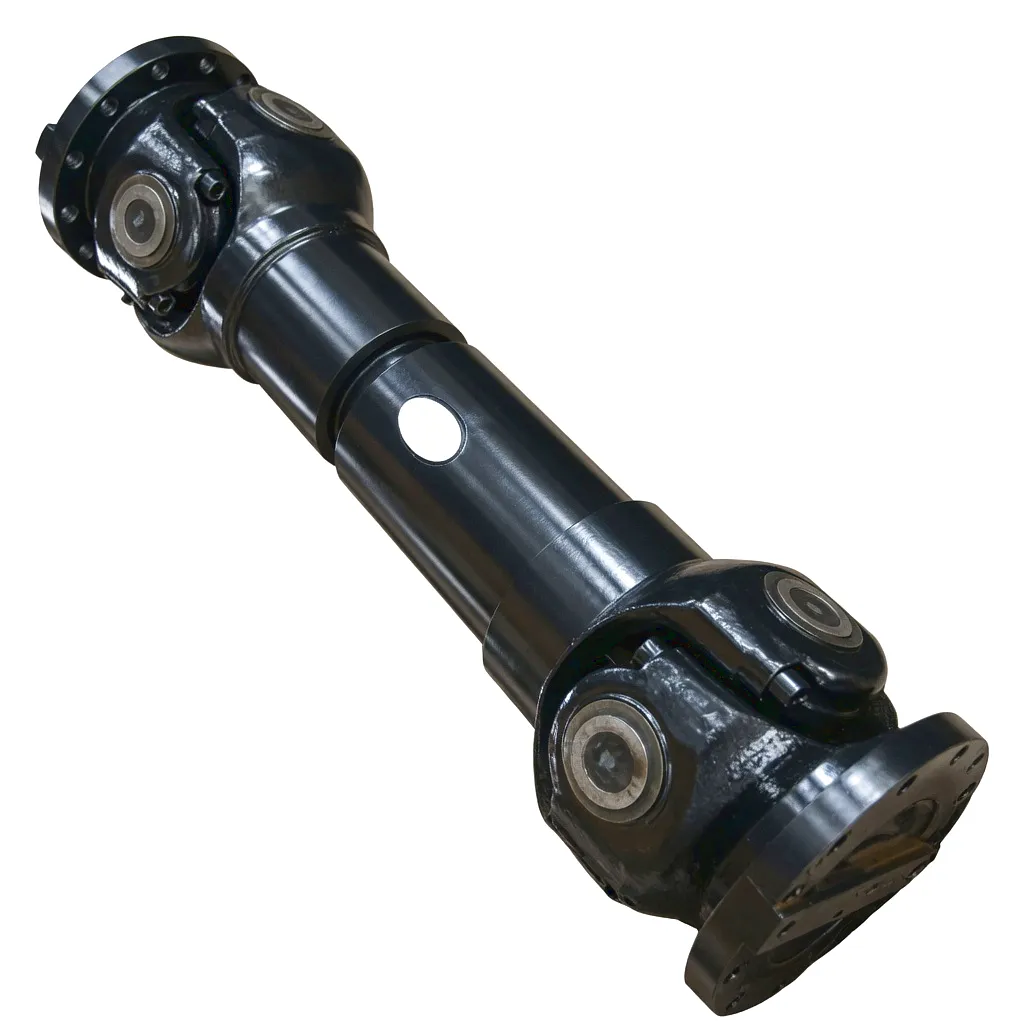
The needle roller bearing assembly in a cardan coupling trunnion cup consists of five principal components: the bearing cup (outer ring), the needle rollers themselves, the roller cage (where present), the trunnion journal (inner raceway), and the sealing arrangement. Each element demands specific material properties that must survive the combined loading of torque transmission, centrifugal force at speed, and the repetitive stress reversals imposed by continuous angle changes. The bearing cup is typically deep-drawn from case-hardening steel — grades such as 16MnCr5, 17CrNiMo6, or their British equivalents under BS EN 10084 — and carburised to achieve a case hardness of 58–62 HRC to a depth of 0.5–1.0 mm, leaving a tough, ductile core beneath. The needle rollers are similarly processed, though through-hardened grades in 100Cr6 bearing steel are also widely used for standard industrial applications.
Cage design has evolved significantly and the choice between caged and full-complement (cageless) needle bearings matters operationally. A caged needle bearing uses a stamped steel or polyamide cage to maintain roller spacing, preventing skewing under oscillating conditions and allowing lubricant to circulate more freely between rollers. Full-complement designs pack more rollers into the same radial space, increasing static load capacity — which is relevant in shock-loaded applications such as the mill drives found in Birmingham’s forging sector — but at the cost of higher friction and reduced dynamic speed capability. For cardan couplings working at articulation angles above 6° with rotational speeds above 500 rpm, caged needle bearings generally represent the technically superior choice, as cage-guided rollers resist the erratic motion that damages unguideed rollers under combined angular and radial load.
16MnCr5, 17CrNiMo6 — carburised to 58–62 HRC case hardness, ductile tough core, excellent shock resistance
100Cr6 through-hardened or case-hardened variants; ground to Ra 0.1–0.2 µm surface finish for optimum Hertzian contact
Stamped steel (standard to +120 °C), glass-reinforced PA66 polyamide (–40 °C to +150 °C), or solid machined brass for severe-duty applications
NBR lip seals (standard), FKM Viton for high-temperature and chemical environments; double-lipped designs for mud, grit, and washdown duty
Plain Bearing Construction and Materials
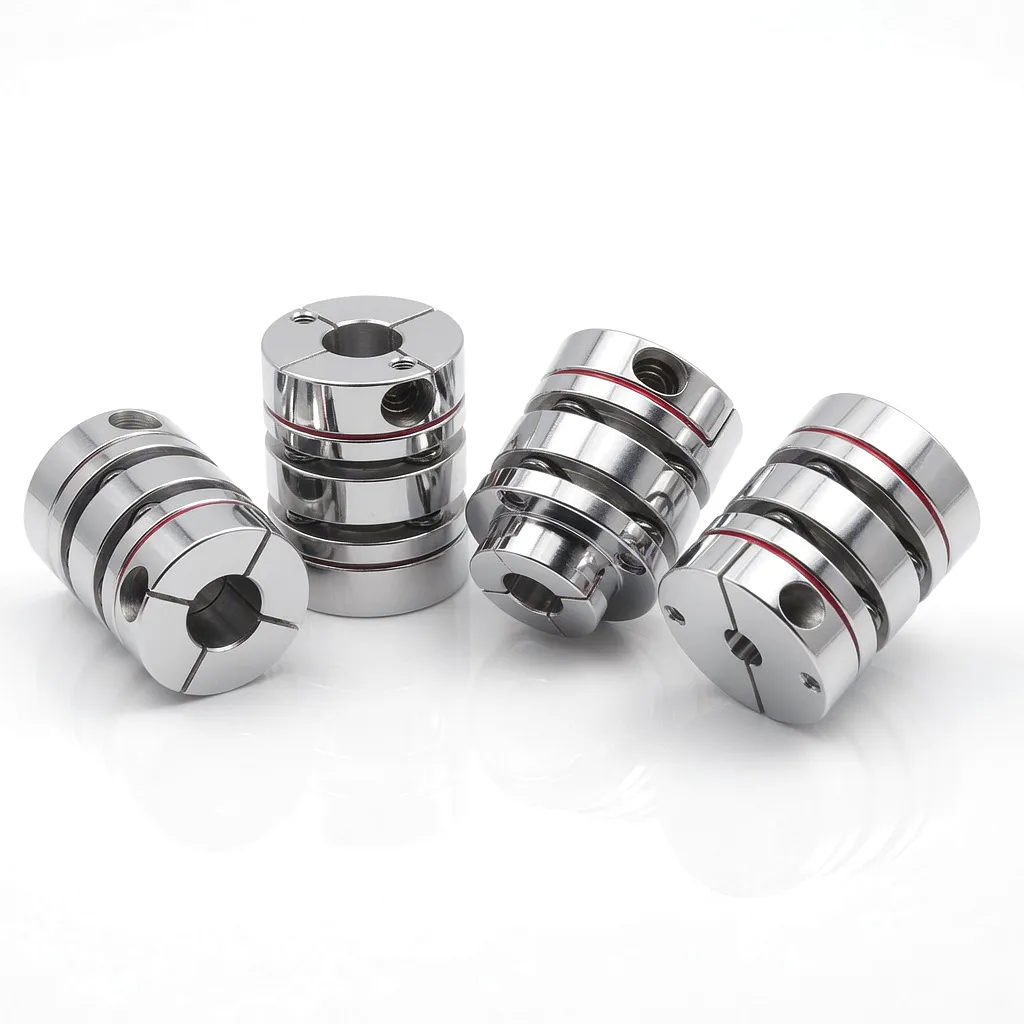
The trunnion journal surface finish specification for plain bearings differs fundamentally from needle roller requirements. While needle roller applications demand a journal hardness of 58 HRC minimum and a ground finish of Ra 0.2–0.4 µm to support rolling contact, plain bearing journals are typically specified at a somewhat lower hardness of 45–55 HRC to avoid brittleness, with a slightly broader finish tolerance of Ra 0.4–0.8 µm. The rougher (relative to needle roller standards) journal surface actually assists in retaining a thin oil film during the oscillating motion of the joint, as microscopic surface valleys act as micro-reservoirs. Chromium plating, nitriding (ion or gas), or physical vapour deposition (PVD) hard coatings are frequently applied to improve journal wear resistance where maintenance intervals are long and the operating environment is abrasive — conditions common in the quarrying and mineral processing industries spread across Wales and the South West of England.
Technical Performance Parameters: Needle Roller vs. Plain Bearings
The table below consolidates the principal engineering parameters relevant to bearing selection in cardan couplings. Values represent typical ranges for industrial grades and should be cross-referenced with the specific coupling series datasheet and the actual operating envelope before final specification.
| Parameter | Needle Roller Bearing | Plain (Sliding) Bearing |
|---|---|---|
| Friction Coefficient (lubricated) | 0.001 – 0.005 | 0.05 – 0.15 (boundary film) |
| Max Operating Torque (typical industrial) | Up to 80 kNm (series dependent) | Up to 500 kNm+ (heavy series) |
| Recommended Max Articulation Angle | Up to 35° (standard grades) | Up to 45° (heavy-duty grades) |
| Max Rotational Speed (0° angle) | Up to 8,000 rpm (light series) | Up to 1,500 rpm (typical heavy) |
| Operating Temperature Range | –40 °C to +150 °C | –20 °C to +300 °C (material dependent) |
| Shock Load Tolerance | Moderate (cage risk at extreme shocks) | High (bush conforms and absorbs) |
| Lubrication Requirement | Grease (NLGI 2–3), re-greasing intervals 500–2,000 hr | Oil film or grease; self-lube grades available |
| Trunnion Journal Hardness | 58–62 HRC (min) | 45–55 HRC (or coated) |
| Trunnion Journal Surface Finish (Ra) | 0.1 – 0.2 µm | 0.4 – 0.8 µm |
| Typical Radial Clearance (assembled) | 0.01 – 0.05 mm | 0.05 – 0.15 mm |
| Service Life (typical heavy duty) | 3,000 – 10,000 hr (grease maintained) | 8,000 – 25,000 hr (oil bath or self-lube) |
| Initial Unit Cost (relative) | Lower to moderate | Moderate to higher (heavy grades) |
| Primary Application Suitability | Automotive, PTO, medium industrial, food processing | Rolling mills, press lines, marine, mining |
Working Principles Under Oscillating Motion
Industrial Application Scenarios Across the UK
The bearing type choice in a cardan coupling is ultimately an application decision, not a brand or budget one. Across the United Kingdom’s diverse heavy-industrial landscape, the same question — needle roller or plain bearing — resolves itself differently depending on the operating environment and production demands of each sector.
High torque at low speed (typically 20–150 rpm) with severe shock loading during billet entry. Plain bronze or Babbitt bush bearings dominate because of their shock absorption, large diameter trunnion capacity (up to 150 mm), and tolerance of scale contamination. Needle rollers would be destroyed by the first billet cobble event without a buffer.
Medium torque at moderate speeds (200–800 rpm), relatively clean environment, demanding precision. Needle roller bearings are standard here, offering the low friction and long fatigue life that keeps press line output rates consistent. Re-greasing is scheduled into planned maintenance windows, and contamination is manageable with good housekeeping.
Salt atmosphere, waterside contamination, and variable speed operation. Self-lubricating PTFE-lined plain bushes are used in wet bilge shafting and anchor windlass drives where greasing access is limited. Needle rollers are preferred in enclosed, sealed intermediate shaft couplings where access permits regular grease replenishment.
Wide operating angle range (up to 35°), highly variable speed, outdoor contamination. Needle rollers in sealed cups are the agricultural standard, with grease-nipple re-greasing on each joint. The cardan coupling between tractor PTO and implement gearbox sees the full range of this bearing type’s capability — and its limits when maintenance is neglected.
Abrasive dust, vibration, and high shock loads from crusher and screen drives. Heavy-series plain bearing cardan couplings with bronze bushes and nitrided journals dominate, because the conformability under shock and the ability to function in contaminated lubrication conditions outweigh the friction efficiency advantage of needle rollers.
Demanding remote maintenance schedules, corrosive salt air, and variable generator input speeds. Sealed needle roller bearing cardan couplings with stainless-compatible greases are increasingly used in pitch and yaw drive systems, while large main shaft interconnects may employ plain bush designs for extended service intervals in line with planned vessel maintenance cycles.
Product Advantages: What Each Bearing Type Does Best
- Significantly lower friction coefficient (0.001–0.005) reduces heat generation and power loss in high-cycle applications
- Compact radial envelope allows smaller yoke bore diameters for a given trunnion journal size, enabling lighter driveline design
- Well-characterised fatigue life data (L10h calculations) facilitates predictive maintenance scheduling in ISO 9001 environments
- Highly responsive to speed variation — ideal for servo-driven and variable-frequency drive (VFD) connected systems
- Wide temperature grease options allow deployment from deep-freeze food processing facilities to foundry environments
- Precise radial clearance (0.01–0.05 mm) delivers consistent coupling stiffness and reduces torsional vibration amplification
- Widely available globally, multiple-source supply resilience, important for UK manufacturing supply chain continuity post-Brexit
- Superior shock and overload tolerance — bush deformation absorbs peak loads that would statically indent a needle roller raceway
- Potential for extremely long service life (25,000+ hr) in oil-bath or forced-lubrication arrangements with appropriate bush materials
- Self-lubricating PTFE-lined grades can operate in hard-to-access locations where re-greasing scheduled maintenance is impractical
- Higher operating temperature ceiling — graphite-bronze and ceramic-impregnated bushes function reliably above 250 °C
- Better performance under combined radial and axial loading typical of vertical-shaft or inclined drive configurations
- Repair/refurbishment by rebushing in the field — eliminates the need to replace the entire trunnion cross assembly
- Greater design freedom for bespoke heavy-duty cardan couplings where standard needle roller cup dimensions are limiting factors
Lubrication Strategy: The Deciding Factor in Long-Term Performance
A Practical Decision Framework for Specifying Engineers
Given the wealth of technical variables involved, a structured decision framework helps procurement engineers and plant designers cut through the complexity without getting lost in data sheets. The following parameters, evaluated in sequence, typically resolve the needle roller versus plain bearing question for the majority of cardan coupling applications encountered in UK industrial practice.
| Decision Parameter | Needle Roller | Plain Bearing |
|---|---|---|
| Torque > 100 kNm | Not recommended | Preferred |
| Speed > 1,500 rpm | Preferred | Marginal at best |
| Shock loading frequent and severe | Risk of false brinelling | Preferred |
| Greasing access is limited or impractical | Requires sealed grease-for-life design | Self-lube bush option available |
| Operating temp > 150 °C continuously | Grease limitation unless PFPE | Bronze/graphite bush to 300 °C |
| Food/pharma contamination zone | H1 grease with sealed cup | PTFE self-lube no-lubrication option |
| Field rebushing preferred over exchange | Full cup/cross replacement needed | Rebush in situ, cost-effective |
| Torsional vibration is a design concern | Lower backlash, stiffer | Some clearance, minor damping |
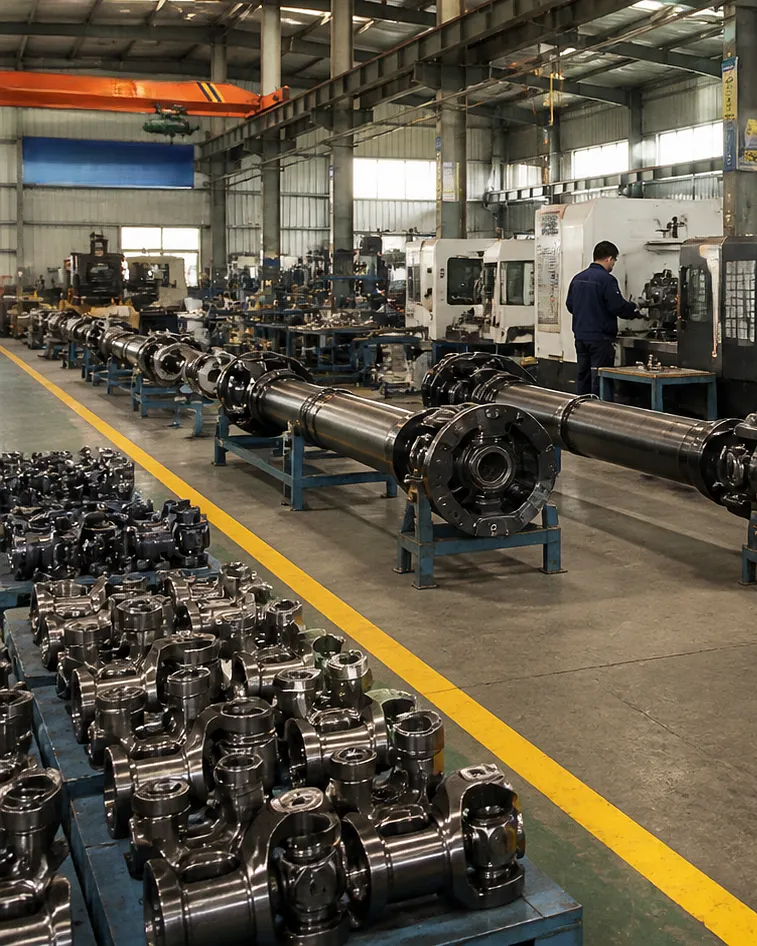
Ever Power: Custom Cardan Coupling Manufacturing for UK Industrial Standards
Customer Success Story: Rotherham Steel Processing Plant
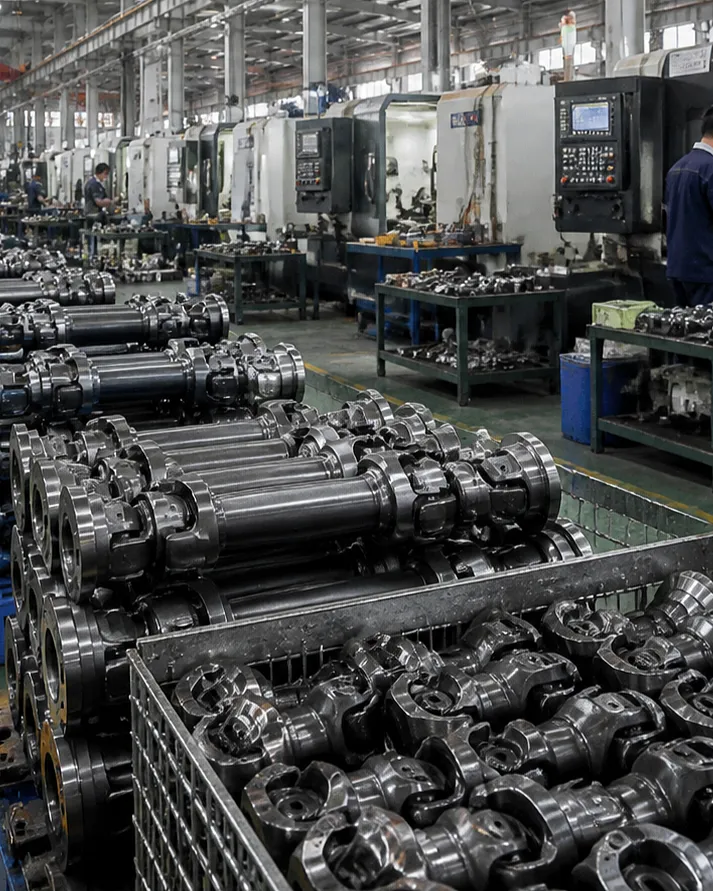
A steel bar rolling mill in Rotherham had been experiencing cardan coupling trunnion bearing failures at intervals of approximately four to six months on its intermediate stand drive spindles. The existing couplings used standard sealed needle roller bearing cups, which had been the specified design when the line was commissioned in the early 2000s. As production volumes increased and a pass schedule rescheduling introduced heavier reduction ratios per stand, the torque peaks on billet entry began exceeding the static load capacity of the needle roller assemblies, leading to progressive false brinelling damage visible at each shutdown inspection. The maintenance team was replacing complete spider cross assemblies at each failure event, at a combined parts and labour cost that, when multiplied across four mill stands and three failures per year, represented a six-figure annual maintenance spend directly attributable to bearing type mismatch.
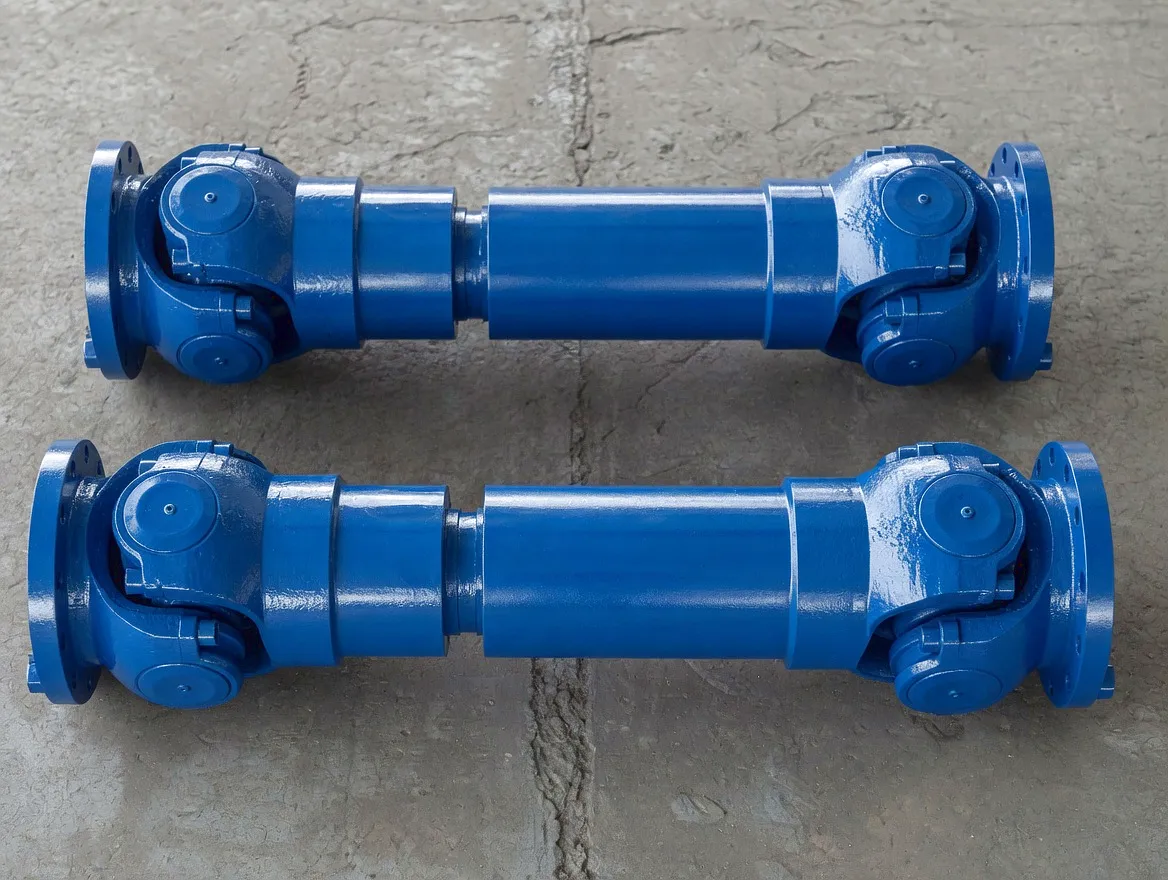 The plant engineering manager contacted Ever Power’s technical team after reviewing the application parameters against current bearing selection guidance. Following a joint application review — covering peak torque logs, articulation angle measurements, and lubrication interval records — Ever Power recommended a transition to a custom heavy-duty cardan coupling series featuring phosphor bronze (CuSn8) plain bush bearings with nitrided trunnion journals, combined with a centralised grease lubrication connection to the plant’s existing automatic lubrication system. The custom yoke geometry was designed to match the existing spindle connection dimensions to allow direct replacement without modifying the mill stand housings, avoiding a significant reengineering cost.
Following installation of the Ever Power plain bearing cardan coupling assemblies across all four mill stands during a scheduled annual shutdown, the plant ran for twenty-two months before any bearing inspection was required. At inspection, the phosphor bronze bushes showed acceptable wear levels within the service limit and were cleared for continued operation, with the next inspection set at a further twelve-month interval. The total maintenance cost saving over the first two years against the previous needle roller failure rate was calculated by the plant maintenance team at approximately £87,000, exclusive of the value of reduced unplanned downtime. The plant engineering manager subsequently specified the same Ever Power plain bearing configuration for a fifth rolling stand added to the line during an expansion project later that year.
“The technical guidance we received from Ever Power before placing the order was exactly what we needed. Their team understood the oscillating duty cycle problem immediately and recommended the right bush specification without overselling. The couplings have now outlasted anything else we’ve put on those stands — and the delivery schedule for our first order was met exactly, which matters enormously when you’re planning a shutdown to the day.”
Steel Bar Processing, Rotherham
“We switched two of our large press line spindles from a competitor’s needle roller design to Ever Power’s sealed needle roller configuration after a lot of false brinelling issues. The difference in the re-greasing interval alone has been worth it — we went from every 400 hours to 1,600 hours with the polyurea grease fill they specified. The quality documentation package, including the EN 10204 3.1 certs, also went straight through our supplier approval process without any queries.”
Automotive Stampings, West Midlands
“For our offshore wind turbine yaw drive test rigs based out of Aberdeen, we needed a custom cardan coupling that could handle both the sealed bearing requirements for salt atmosphere operation and the very specific flange geometry of the test frame. Ever Power produced the drawings, agreed the tolerances, and delivered within a lead time that other suppliers couldn’t match. The precision on the trunnion journals was exactly to specification on all units delivered — our incoming QC passed them first time.”
Wind Energy Test Systems, Aberdeen
Frequently Asked Questions
The decision comes down primarily to torque level, speed, shock loading, and maintenance access. If your application involves torque above roughly 100 kNm — which is common in steel rolling and heavy press work in Sheffield and Birmingham — then plain bearing designs are almost always more appropriate because of their superior shock tolerance and rebushable maintenance model. Needle roller bearings are the right answer when speed is the priority, when friction efficiency matters (as in long automotive prop shafts), or when the application environment is relatively clean and re-greasing can be scheduled into planned maintenance windows. A detailed application data sheet from your engineering team sent to a specialist supplier like Ever Power will typically resolve the question quickly.
For standard industrial sizes, needle roller cardan coupling assemblies typically cost less upfront than comparable plain bearing configurations because the needle cups are mass-produced and the trunnion machining tolerances are easier to achieve in volume. However, in heavy-duty mill applications, the total cost of ownership calculation usually favours the plain bearing design: longer bearing service life, field rebushing rather than complete cross replacement, and the avoidance of production loss from unplanned failures typically return a lower five-year cost despite the higher initial purchase price. For a specific price quote against your torque and size requirements, contacting Ever Power at [email protected] with your application data will give you a like-for-like comparison.
In food and beverage processing environments operating under BRCGS, SQF, or BRC Global Standards requirements, PTFE-lined self-lubricating plain bearing cardan couplings are increasingly the preferred specification because they eliminate the need to introduce grease to the driveline entirely, removing a contamination risk. Where needle roller bearings are used — which remains appropriate for many enclosed motor-to-gearbox connections — they should be specified with H1 food-grade grease (ISO 21469 or NSF H1 registered) in sealed-for-life cups. The coupling yoke material should ideally be stainless steel or at minimum a high-build food-safe coated carbon steel to pass CIP wash-down procedures without surface corrosion introducing debris into the process area.
Ever Power specialises in both standard and fully custom cardan coupling configurations, supplying UK industrial customers across sectors from steel processing to renewable energy with bearing-specific designs backed by full technical documentation. Standard ranges are held in inventory for rapid despatch, and custom designs with non-standard bore sizes, special materials, or specific flange connections are handled by the technical sales team with competitive quoted lead times. You can reach the UK export team directly at [email protected] with your drawing or specification sheet, and a technical review with a quotation will typically be returned within one working day for standard enquiries.
In a typical steel processing environment with moderate contamination and operating temperatures up to 80 °C, a re-greasing interval of 500–800 operating hours is a reasonable starting point for NLGI 2 lithium complex or polyurea grease in needle roller cardan coupling trunnion cups. However, this should be validated against grease condition monitoring (oil bleed check and colour assessment) at the first two intervals after installation, and adjusted accordingly. If the coupling operates at high articulation angles (above 15°) or if the duty cycle includes frequent stop-start reversals, the interval should be shortened by 20–30% to compensate for the accelerated grease working. Automatic lubrication systems, where existing plant infrastructure permits their connection to coupling grease nipples, significantly reduce the risk of interval breaches and the false brinelling damage that follows them.
For offshore wind drive train applications in Scottish waters, the corrosive salt atmosphere is the environment’s most demanding characteristic, alongside the requirement for extended maintenance-free intervals dictated by the cost and operational complexity of offshore access. Needle roller cardan couplings for this duty should be specified with FKM Viton seals (not standard NBR), stainless steel bearing cups where budget permits, and grease fills using calcium sulphonate complex grease with excellent water resistance and a minimum dropping point of 260 °C. Plain bearing alternatives using PTFE-lined self-lubricating bushes are competitive for larger diameter slow-speed yaw and pitch actuator drives where the oscillation amplitude is small enough to prevent effective EHL film formation in needle roller designs. Either bearing type should be accompanied by a full certificate of conformity, EN 10204 3.1 material test reports, and dimensional inspection records as a minimum documentation standard for offshore procurement under the relevant LOLER and PUWER regulatory framework.
Send your application data to Ever Power’s technical team and receive a detailed bearing selection recommendation with a full quotation — typically within one working day.
edit by gzl