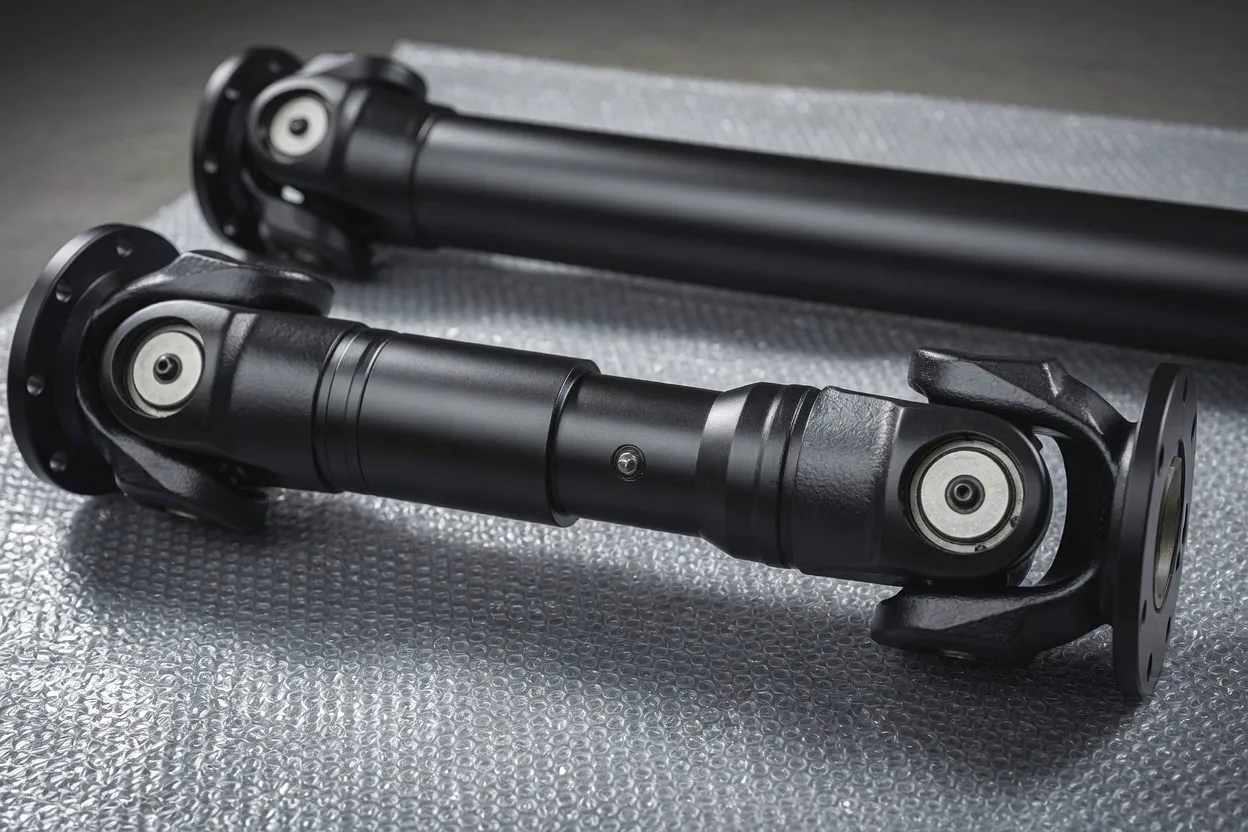
Working Principle of Cardan Couplings
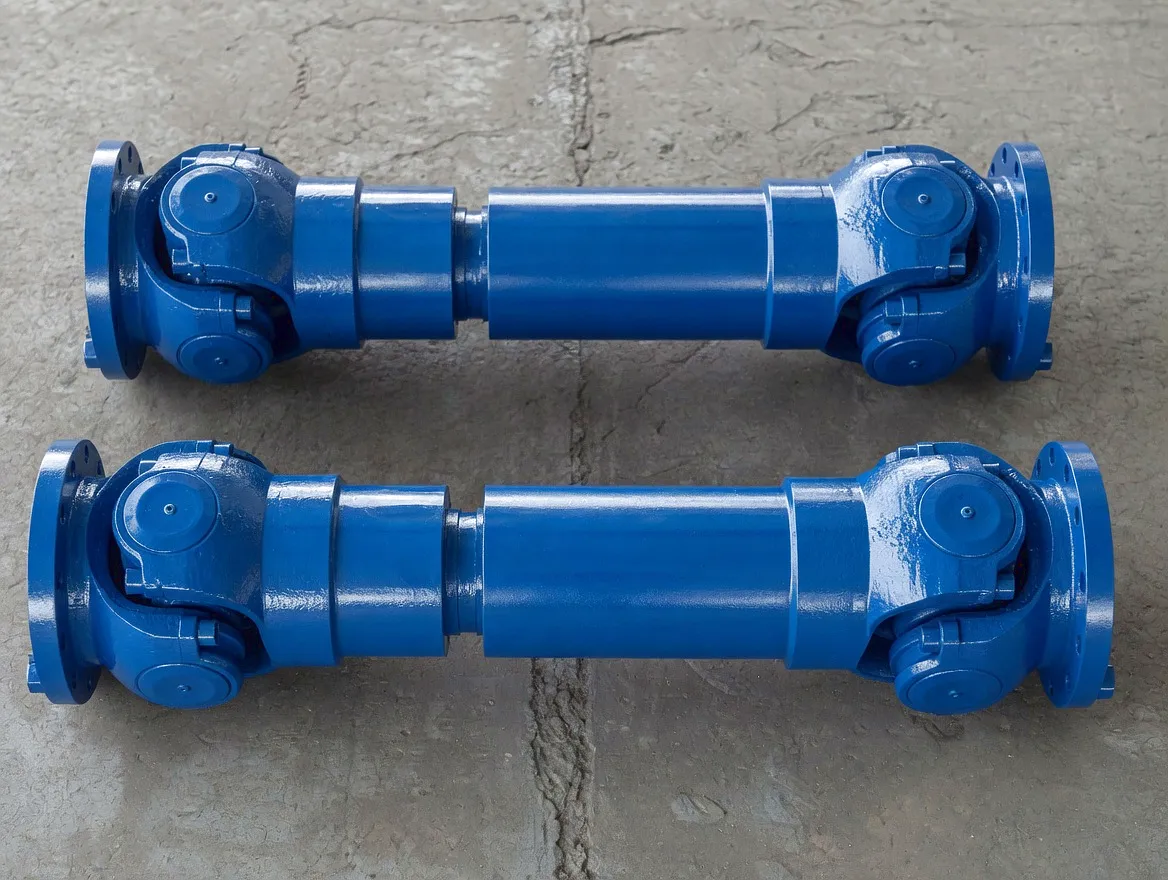
The Single Cardan Coupling
The single cardan coupling represents the baseline configuration of universal joint technology — a single cross-and-yoke assembly that joins two shaft ends. In structural terms, it consists of two yoke forks, one spider cross with four precision-machined trunnion journals, four needle bearing caps, and a corresponding set of retaining circlips or U-bolts depending on the design series and rated torque capacity. Despite its apparent mechanical simplicity, the engineering that goes into a high-quality single cardan coupling is far from trivial. The trunnion journals must be ground to extremely tight diameter tolerances — typically within a few microns — to ensure uniform bearing load distribution across all four needle bearing assemblies simultaneously. Uneven load sharing accelerates fatigue cracking at the trunnion root and drastically reduces the service life of the cross piece.
Single cardan couplings are particularly well-suited to applications where the operating misalignment angle is consistently low — typically below twelve degrees — and where cyclic velocity variation is acceptable within the dynamic tolerances of the application. Agricultural power take-off (PTO) shafts, certain industrial conveyor drives, and some rolling mill auxiliary drives all fall within this category. In the industrial landscape of the English Midlands, where Birmingham’s metal fabrication and stamping industries generate demand for robust, cost-effective drive components, single cardan couplings remain the workhorse solution for medium-torque, moderate-angle installations. Their relative mechanical simplicity also translates to lower initial procurement cost, reduced spare parts inventory requirements, and faster field replacement compared to more complex configurations.
The rated torque capacity of a single cardan coupling is primarily governed by the bearing capacity of the needle roller assemblies at the trunnion journals, the shear strength of the spider cross material at the trunnion root radius, and the fatigue endurance limit of the yoke fork material at the bore-to-flange transition zone. In steel and stainless steel construction, a correctly sized single joint can handle continuous torques ranging from a few Newton-metres in instrumentation shafts to several hundred thousand Newton-metres in large rolling mill main drives. The selection process must account for the combined effect of nominal torque, dynamic shock factor, misalignment angle derating, and operating speed — all variables that a competent coupling manufacturer will incorporate into their selection software or engineering tables.
The Double Cardan Coupling
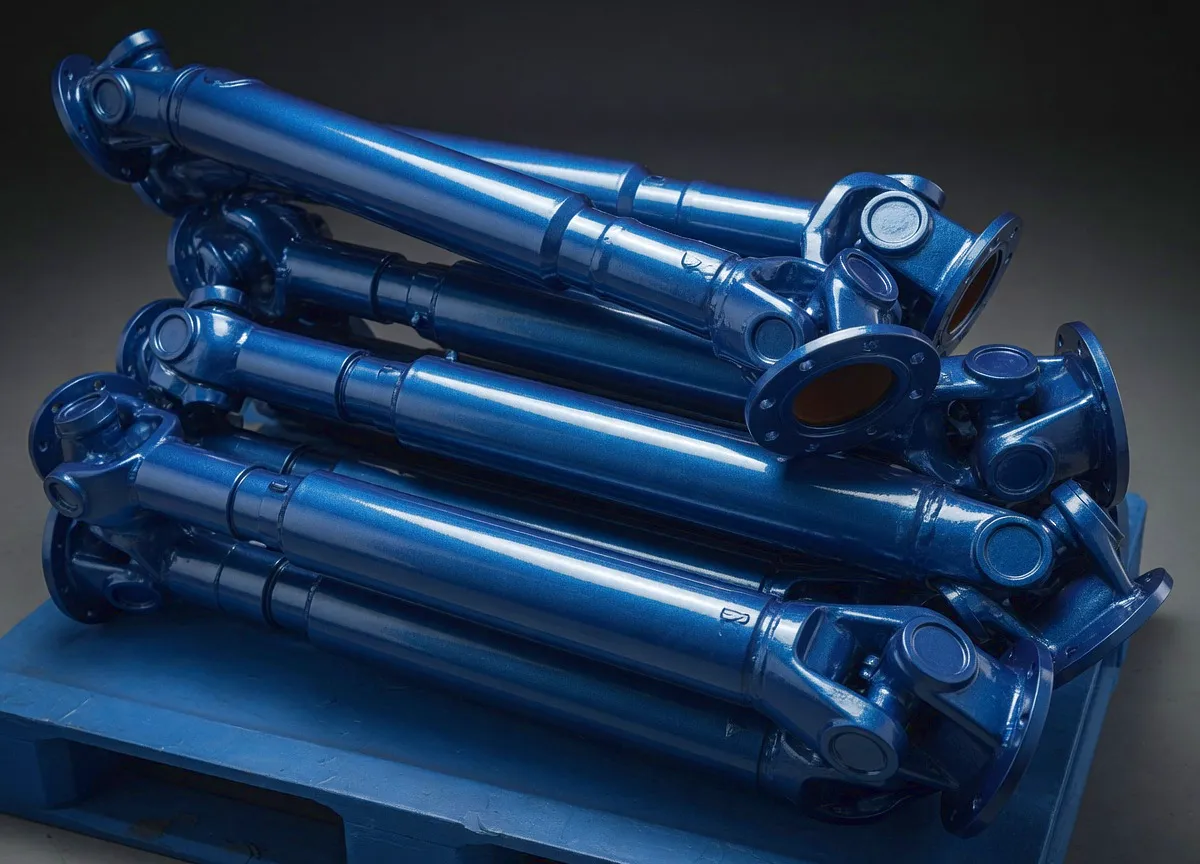
The double cardan coupling addresses the single joint’s inherent velocity irregularity by placing two single universal joints in series, separated by a centering mechanism — typically a centring ball-and-socket or a centring yoke assembly — that maintains equal phasing and equal misalignment angles at each of the two cross-piece assemblies. When configured correctly, the angular velocity error introduced by the input-side cross-piece is precisely cancelled by the equal and opposite error introduced by the output-side cross-piece, resulting in a constant-velocity (CV) output regardless of the operating angle. This principle is the same one exploited in automotive constant-velocity joints, though the industrial double cardan coupling achieves it through a quite different mechanical arrangement suited to much higher torque ratings and shaft diameter ranges.
The engineering precision required to manufacture a correctly functioning double cardan coupling is considerably greater than for a single joint. The centring mechanism must constrain both yokes to maintain strictly equal bisecting angles relative to the coupling’s own midline, otherwise the cancellation of velocity error is incomplete and residual cyclic variation remains. In practice, machined centring components are held to tight geometric tolerances — particularly regarding spherical radius accuracy and clearance fit — because any eccentricity or angular error in the centering assembly directly corrupts the CV characteristic. Leading manufacturers specify the centring ball diameter to within microns and perform hardness testing on the contact surfaces to guarantee resistance to fretting wear under oscillating contact stresses.
Industries where the double cardan coupling has become the engineering standard include precision rolling mills in Sheffield’s steel district, paper machine drive sections where velocity ripple would corrugate the finished sheet, glass handling conveyors, and high-speed test rigs where any rotational non-uniformity would corrupt measurement data. The increased manufacturing complexity of the double configuration translates directly into a higher procurement price, but in applications where velocity irregularity imposes fatigue loads or process quality penalties, the premium is invariably justified within the first operating season.
The Telescopic Cardan Coupling
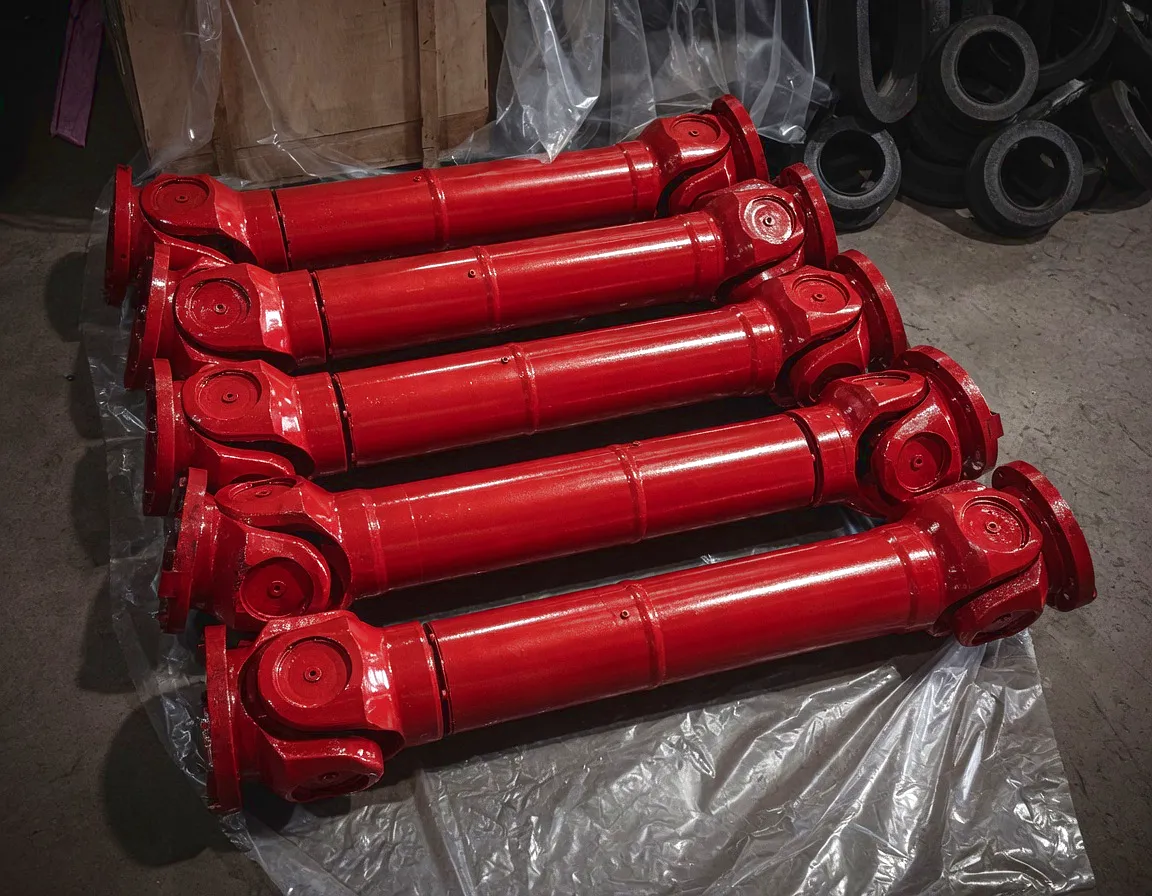
The telescopic cardan coupling introduces a third dimension of geometric flexibility that neither the single nor double configuration alone can provide: axial displacement accommodation. By incorporating a splined or profiled sliding section — typically a male inner tube sliding within a female outer tube, with either involute splines, square-section profiles, or polygonal cross-sections depending on the torque level and application — the telescopic cardan shaft can change its effective working length while continuing to transmit torque. This capability is not merely a convenience feature; in many critical industrial applications, the ability to accommodate axial movement between a drive motor and a driven machine is a fundamental engineering requirement arising from thermal expansion of machine frames, deliberate positioning of rolling mill roll stands, or the need to disengage and re-engage the drive shaft without demounting either connected machine.
In the rolling mill industry — an application sector with particularly strong presence across South Yorkshire and the wider Sheffield manufacturing corridor — telescopic cardan couplings are the standard solution for connecting mill motor gearboxes to roll spindles. As rolls wear and are reground, the roll stack geometry changes, requiring the spindle length to adjust. Similarly, when a new product profile is being rolled and the roll gap is adjusted hydraulically, the spindle must accommodate the resulting axial shift without transmitting longitudinal thrust loads back into the gearbox bearings. The sliding section of the telescopic coupling absorbs these movements while the universal joints at either end continue to accommodate the angular offset between the gearbox output shaft and the roll spindle axis.
The lubrication of the sliding section is one of the most technically demanding aspects of telescopic cardan coupling design and maintenance. Spline contact pressures during combined torque transmission and axial sliding can be extremely high, particularly during dynamic loading events such as cobble impacts in a rolling mill. Insufficient lubrication at the splines leads to fretting corrosion on the spline flanks, which progressively increases the axial sliding resistance and eventually seizes the assembly entirely. Most high-quality telescopic cardan couplings are equipped with grease nipples positioned to inject lubricant directly to the spline interface, and maintenance schedules typically specify re-lubrication intervals linked to operating hours or tonnage throughput rather than calendar time.
Core Materials in Cardan Coupling Manufacturing
The most widely used material for yoke bodies and spider crosses in heavy-duty cardan couplings. Chromium-molybdenum alloy steel offers excellent tensile strength (typically 900–1100 MPa after heat treatment), high fatigue endurance limit, and good toughness at elevated temperatures. Components are typically induction hardened at bearing journals to 58–62 HRC while the core remains tough to resist shock loading.
Specified for food processing lines, pharmaceutical manufacturing, and marine applications where corrosion resistance is paramount. 316L austenitic stainless steel offers excellent pitting and crevice corrosion resistance in chloride environments. Precipitation-hardening grades such as 17-4PH are selected when both corrosion resistance and high tensile strength are simultaneously required — common in offshore platform equipment.
Spheroidal graphite (SG) cast iron grades provide a cost-effective alternative for medium-duty cardan coupling flanges and yoke bodies where complex geometries make machining from solid steel bar prohibitively expensive. GGG-70 ductile iron provides tensile strength up to 700 MPa and sufficient ductility to prevent brittle fracture under shock loading, making it suitable for pump drives, mixer agitators, and materials-handling equipment.
Boron-alloyed steels such as 27MnCrB5 offer exceptional hardenability relative to carbon content, making them attractive for large-section spider crosses where through-hardening with conventional alloy steels becomes inconsistent. Case-carburising of low-carbon steels to produce a hard wear-resistant case over a tough low-carbon core is the preferred approach for high-volume automotive production volumes, though industrial cardan coupling manufacturers generally opt for through-hardened alloy steels for their more predictable fatigue performance.
Core Technical Advantages of Cardan Couplings
Cardan couplings can transmit torques in excess of several million Newton-metres in the largest mill drive configurations, with a power-to-weight ratio that few other coupling technologies can match at equivalent torque levels. The all-steel construction and rigid load path through the cross-and-yoke geometry maximise the structural efficiency of the joint.
Single cardan couplings can accommodate operating misalignment angles up to approximately 35–45 degrees in light-duty applications, while double cardan configurations rated for constant-velocity operation typically work to 25 degrees per joint. This angular range far exceeds what is achievable with disc couplings, gear couplings, or jaw couplings at comparable torque ratings.
The absence of rubber or elastomeric elements means that cardan couplings are not susceptible to the thermal degradation, ozone cracking, or progressive hardening that limits the service life of flexible-element couplings in arduous environments. All-metal construction provides reliable performance across wide temperature ranges and under repeated torque shock events that would destroy softer coupling types.
Modular construction allows individual worn components — spider crosses, bearing cups, seals — to be replaced in the field without removing the entire coupling from the driveline. This serviceability is of particular value to continuous-process industries such as paper mills and cement plants where planned maintenance windows are tight and unplanned downtime carries severe financial penalties.
Product Technical & Performance Parameters
| Parameter | Single Cardan | Double Cardan | Telescopic Cardan |
|---|---|---|---|
| Max. Continuous Torque | 50 Nm – 2,500,000 Nm | 80 Nm – 1,800,000 Nm | 100 Nm – 3,000,000 Nm |
| Max. Operating Angle | 45° (light duty) | 50° total (25° per joint) | 45° per joint |
| Velocity Output Type | Variable (cyclic) | Constant velocity | Variable (single joint ends) |
| Axial Float / Telescoping | None (rigid) | Limited (flange clearance) | Up to 800 mm (custom) |
| Primary Material | 42CrMo4 alloy steel | 42CrMo4 / 34CrNiMo6 | 42CrMo4 + spline steel |
| Typical Speed Range (RPM) | 0 – 8,000 | 0 – 6,000 | 0 – 5,000 |
| Operating Temperature Range | -40°C to +180°C | -40°C to +180°C | -30°C to +160°C |
| Surface Treatment Options | Phosphate, nickel plate, paint | Phosphate, Zn plate, paint | Heavy-duty epoxy, Zn-Mn phosphate |
| Bearing Type at Cross | Needle roller + sealed cups | Needle roller + sealed cups | Needle roller, sliding bushings |
Industrial Application Scenarios
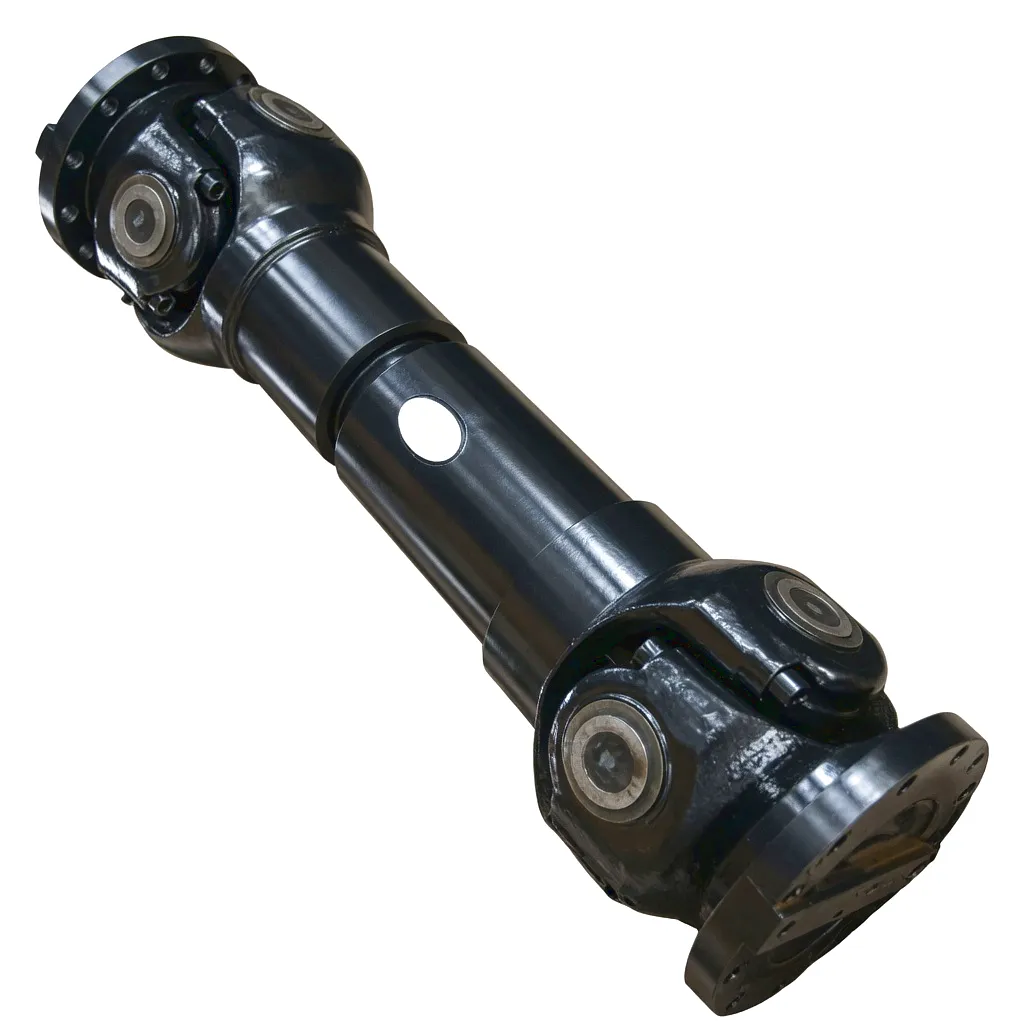
Conveyor head drives, crusher drives, and dragline slewing systems in mining operations across Wales and northern England use heavy-duty telescopic cardan couplings to handle extreme shock loads and angular offsets that arise from ground settlement and structural deflection.
Yaw and pitch actuator drive trains in offshore and onshore wind turbines across the North Sea and Scottish highlands incorporate compact cardan couplings to accommodate dynamic structural deflections in the turbine nacelle and tower while transmitting the high torques required for blade and nacelle positioning.
Traction motor to bogie gearbox connection in heavy rail applications uses cardan shafts to accommodate the relative motion between the suspended motor and the bogie frame across the full suspension travel range without transmitting bending loads into the motor bearings or gearbox input shaft.
Telescopic cardan shafts are standard components in the drive trains of mobile concrete mixers, road reclaimer machines, and compaction equipment assembled at manufacturing facilities in the Midlands and Yorkshire, providing the necessary combination of torque capacity and geometric flexibility that these applications demand.
Customer Success Story: Rotherham Structural Steel Processor
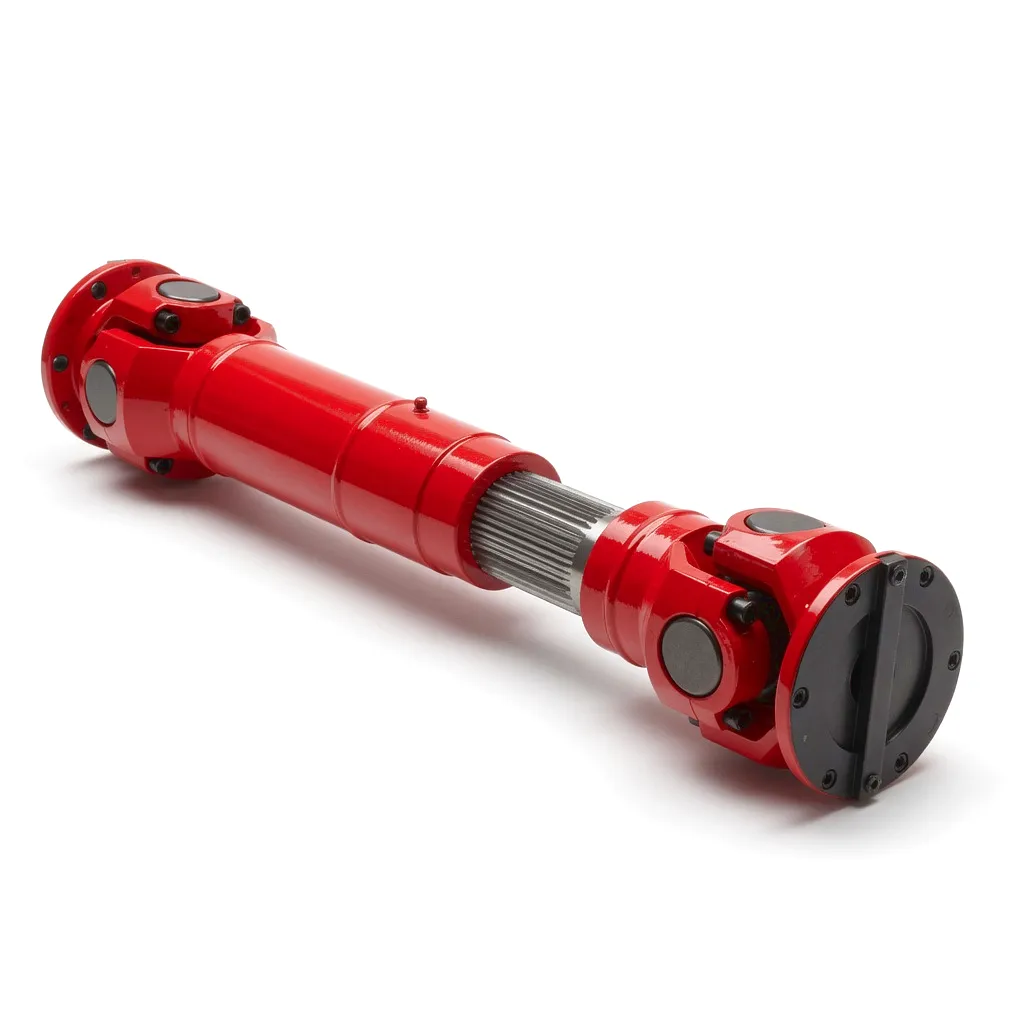
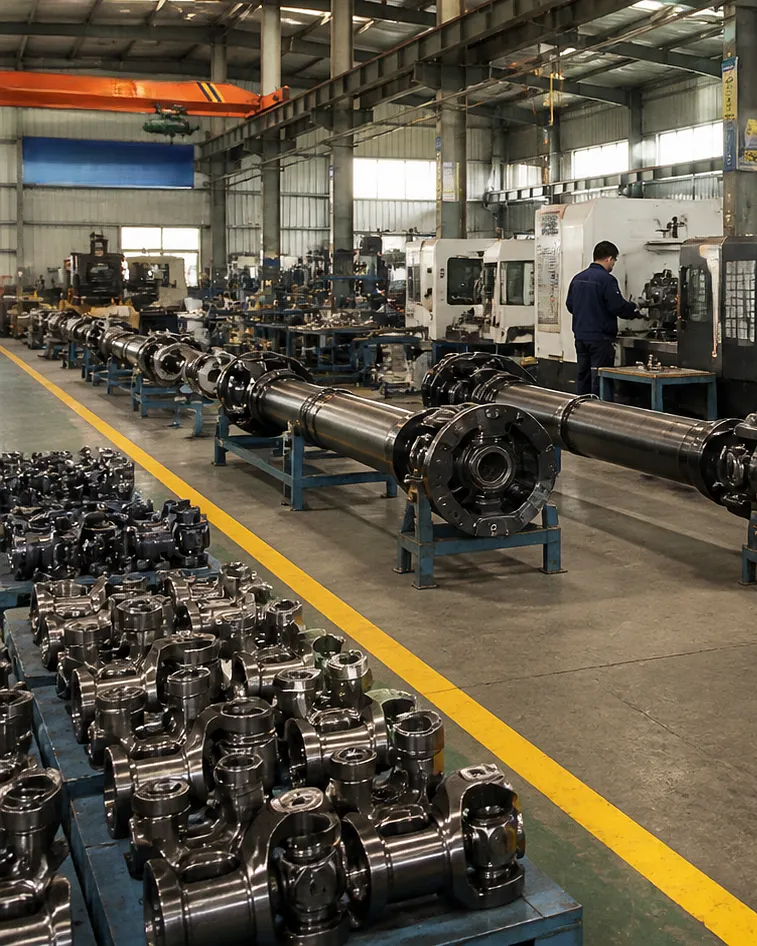
A structural steel rolling facility in Rotherham — operating a medium section mill producing universal beams and channels for the UK construction market — contacted Ever Power following repeated premature failures of the telescopic cardan couplings connecting their intermediate mill stand gearboxes to the roll spindles. The failures were occurring at intervals of between six and fourteen weeks on the most heavily loaded stands, well below the rated theoretical service life, and the resulting unplanned outages were costing the facility significant lost production throughput on a campaign rolling schedule that left very little contingency time.
Ever Power’s engineering team conducted a site survey and failure mode analysis that identified two contributing factors: the operational misalignment angles at the intermediate stands were consistently exceeding the rated envelope of the installed coupling series by approximately four degrees due to frame distortion accumulated over years of production, and the previous supplier’s spider cross material had been specified with insufficient surface hardness at the trunnion journals to resist fretting corrosion under the oscillating contact loads imposed by the misalignment condition. The combination of elevated angle and inadequate surface treatment had produced a rapid fretting-fatigue damage cycle at the bearing cups.
Ever Power designed and manufactured a replacement series of telescopic cardan couplings rated to the corrected angle range, with spider crosses produced in 42CrMo4 steel through-hardened to 42–46 HRC with a superfinished trunnion journal surface roughness of Ra 0.2 micrometres. Sealed needle bearing assemblies with a higher dynamic load rating were specified for the replacement series, and an improved spline lubrication arrangement was incorporated into the sliding tube assembly to reduce fretting at the torque transmission splines. The Rotherham facility has now operated the Ever Power replacement couplings through two complete annual campaigns — a period covering over fourteen months of continuous production — without a single unscheduled coupling-related outage. Maintenance intervals have been extended from six weeks to six months, reducing the total maintenance labour cost per coupling position by more than 70%.
“The Ever Power team identified a failure mode our own engineering group had missed, and the redesigned couplings have completely transformed our maintenance schedule on the section mill. The build quality on the spider crosses and bearing cups is noticeably better than what we were previously using — very precise fits and an excellent surface finish on the journal diameters.”
“We needed custom flange drilling to match our existing mill pinion stands, and Ever Power turned around engineering drawings for approval within three working days and delivered the finished couplings to our site ahead of schedule. The customisation service is exactly what a plant like ours needs — we simply cannot afford to be modifying couplings in our own workshop under time pressure during a scheduled outage.”
“We specified Ever Power double cardan couplings for a new engine test cell installation at our Birmingham facility, and the constant-velocity performance has been exactly as specified — our NVH data acquisition is no longer contaminated by coupling-induced torsional variation. Getting technical drawings with full material certifications and inspection reports as standard documentation is exactly what we need for our quality management system.”
Frequently Asked Questions
Ever Power’s engineering team works with B2B customers across the UK and internationally to specify, manufacture, and deliver the correct cardan coupling solution — whether standard, customised, or fully bespoke.
edit by gzl