Kinematics of the Cardan Joint
Understanding Non-Constant Velocity
An in-depth engineering guide to the velocity fluctuation behaviour of universal joints, its consequences for industrial drive systems, and how precision-engineered Cardan couplings address the challenge across UK industry.
🔧 Mechanical Engineering
🇬🇧 UK Industry
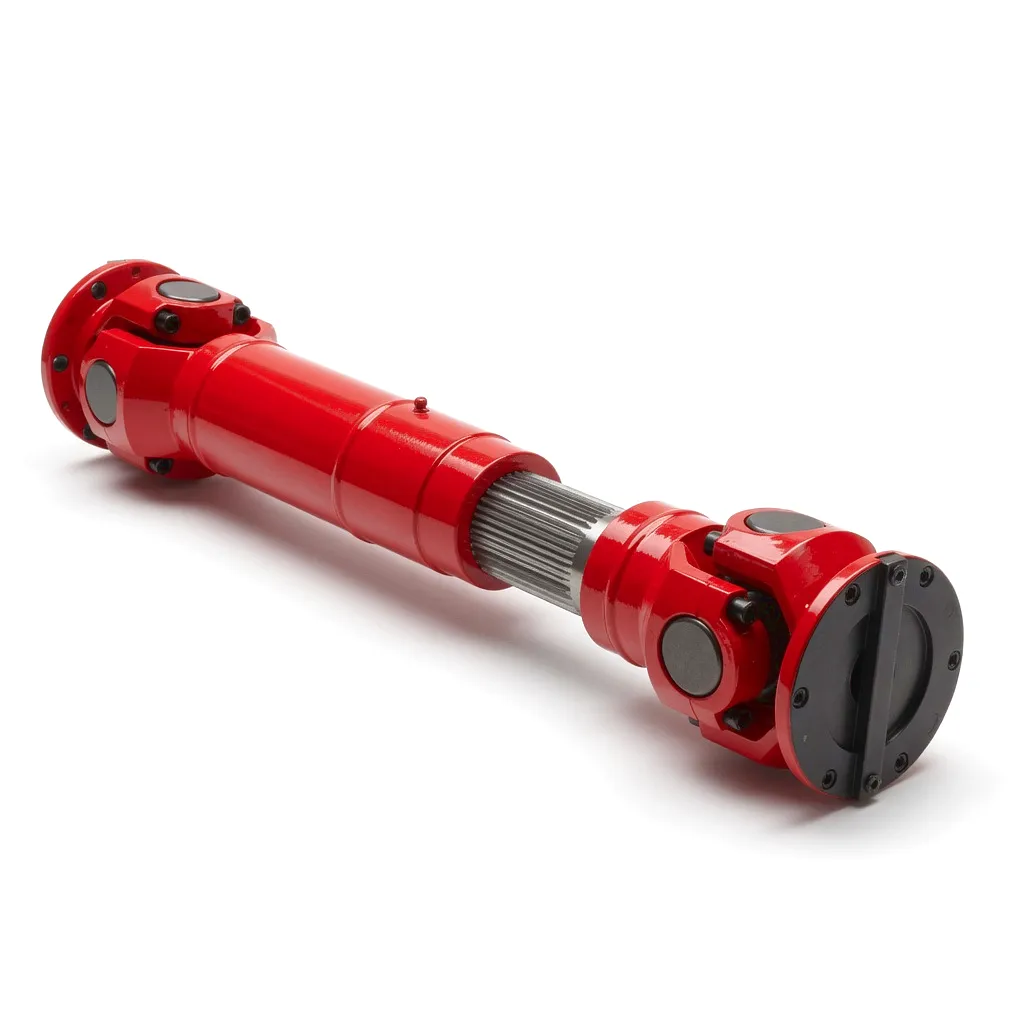 The Cardan coupling — variously called a universal joint, Hooke’s joint, or U-joint in engineering practice — is one of the most enduring inventions in the history of mechanical power transmission. Its conceptual origins trace to the Italian mathematician Gerolamo Cardano and were later developed into a working mechanism by Robert Hooke in the 1670s. Today, this compact cross-and-yoke assembly is indispensable across the full breadth of British industry: it drives rolling mill stands in Sheffield’s speciality steelworks, powers the propeller shafts of vessels berthed at Southampton and Plymouth, turns feed screws on injection moulding machines throughout the West Midlands, and enables the pitch-control actuators of offshore wind turbines operating off the coasts of East Anglia and Scotland. Wherever two shafts meet at an angle and torque must flow between them, the Cardan coupling is likely the engineer’s first choice. Yet beneath that mechanical simplicity lies a kinematic subtlety that continues to catch engineers off guard: the joint does not transmit a constant output velocity for a constant input. Instead, the driven shaft accelerates and decelerates twice per revolution, producing a cyclic speed fluctuation whose amplitude grows with the joint angle. Understanding this behaviour in rigorous detail — its mathematical origin, its engineering consequences, and the design solutions that eliminate it — is the central purpose of this article.
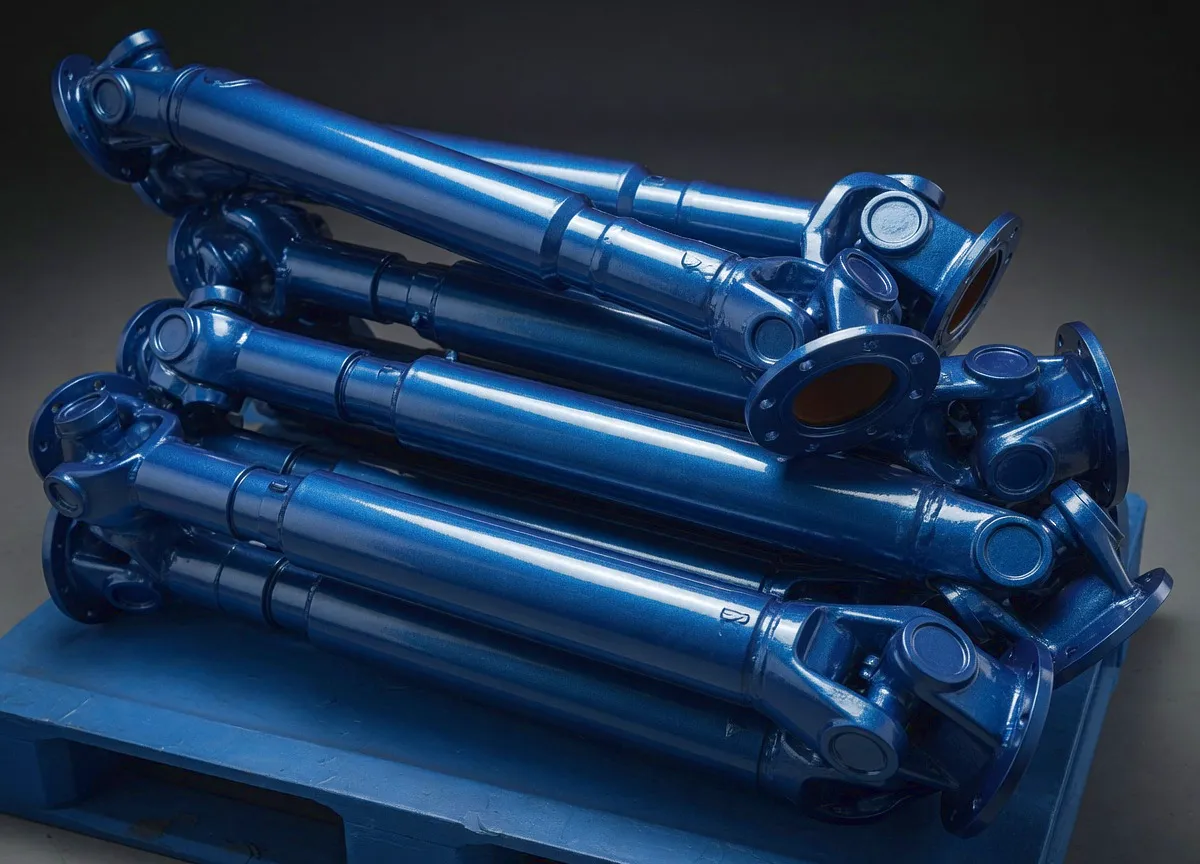
Ever Power industrial-grade Cardan coupling — engineered for high-torque, large-misalignment applications
Need a custom Cardan coupling for your UK facility?
Send your drawings or application details — our engineering team responds within 24 hours.
What Is a Cardan Coupling and How Does It Work?
Anatomy of the Joint
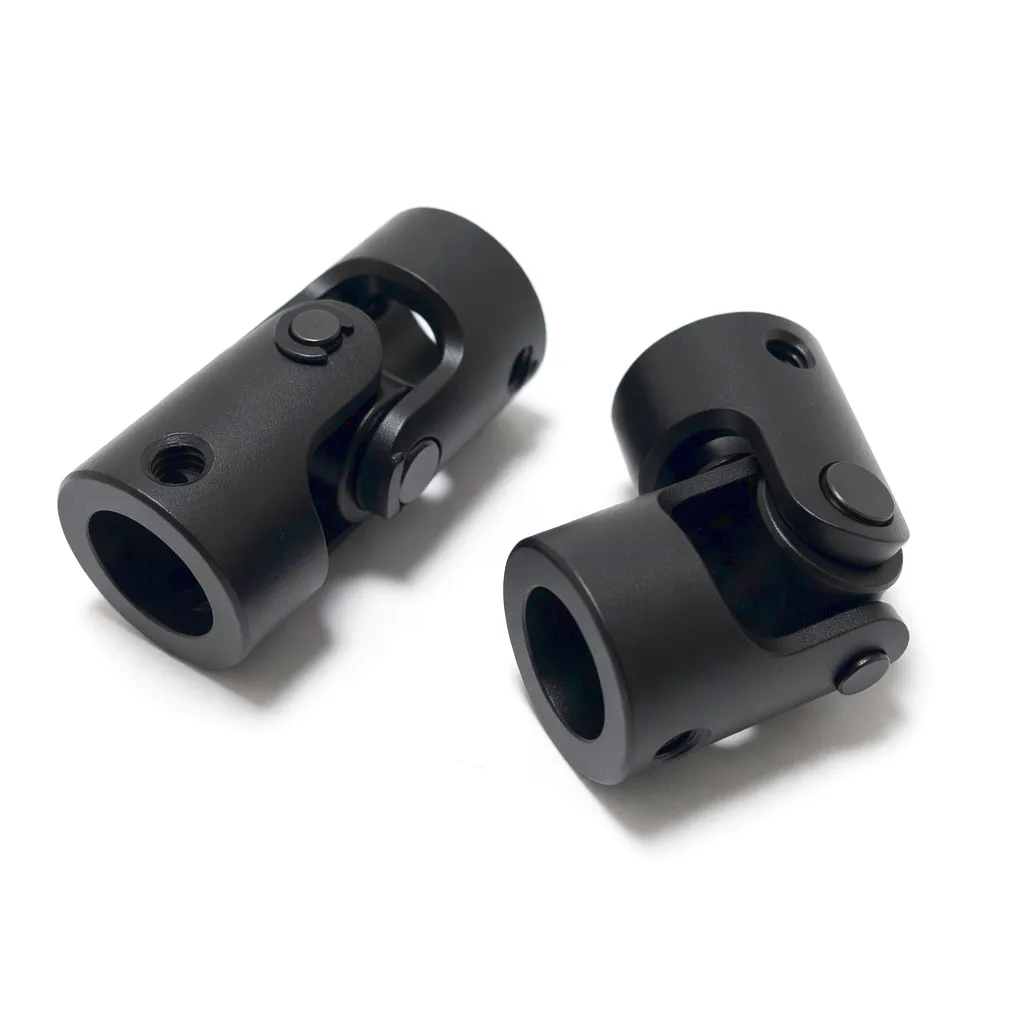
At its core, a Cardan coupling comprises two forked yokes — one keyed to the driving shaft and one to the driven shaft — connected by a central cross-shaped element universally known as the spider, cross-piece, or trunnion journal. Each of the spider’s four arms carries a precision needle-roller or plain bearing housed within the yoke ears, and it is across these four bearing contact zones that the full transmission load travels. The geometry is elegantly balanced: two mutually perpendicular pivot axes allow three-dimensional rotation while maintaining a continuous torque path. The result is a coupling that can bridge angular misalignment, absorb certain impulsive shock loads, and — when deployed as a double-joint assembly with a telescoping slip shaft — simultaneously accommodate axial displacement of the connected machinery. Unlike elastomeric couplings, there is no rubber element to age, creep, or degrade with heat or ozone exposure; unlike disc-pack couplings, there is no thin laminate to fatigue under repeated flex cycles. The Cardan coupling transmits power through rigid metallic contact at the bearing interfaces, conferring a torque density that few other coupling architectures can rival. For demanding British manufacturing environments — from the aluminium smelters of Anglesey to the continuous-process steel mills of South Yorkshire — that robustness and power density are decisive advantages.
Single Joint vs Double Joint
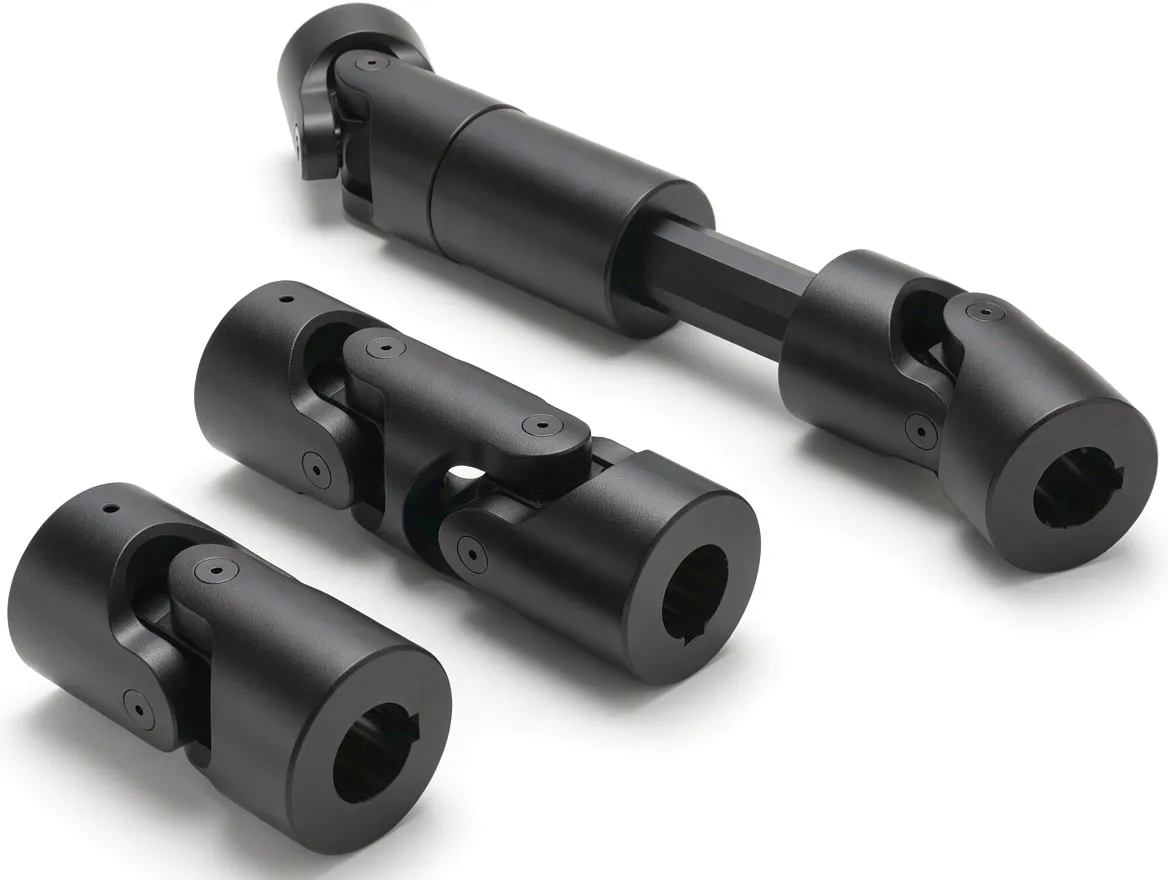
A single Cardan coupling handles angular misalignment continuously but introduces the velocity fluctuation that is the subject of this article — an effect that is impossible to eliminate by refinement of the joint’s components, because it arises from geometry, not from imprecision. A double Cardan coupling places two universal joints in series on an intermediate shaft and — when installed with both joints at equal and opposite angles and their yokes correctly phased — cancels out the velocity error so that the output shaft turns at a constant velocity equal to the input.
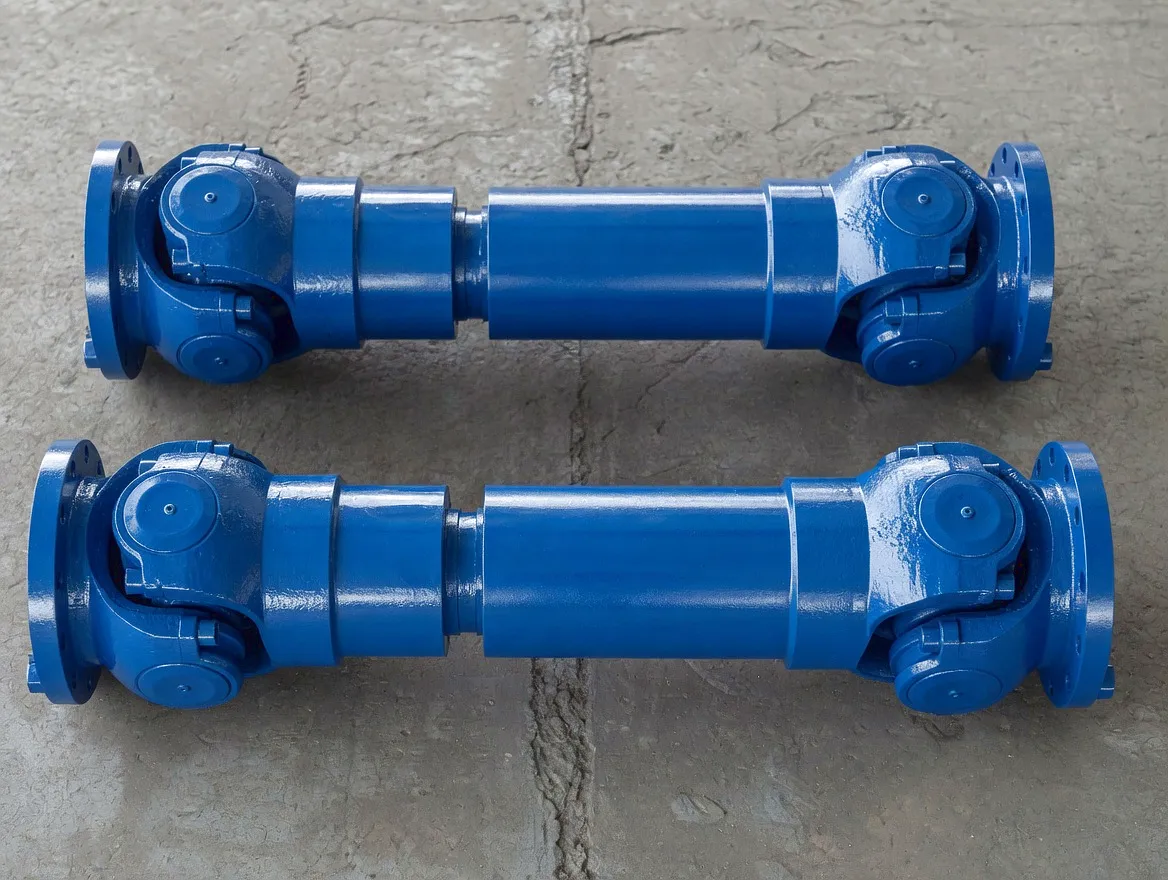
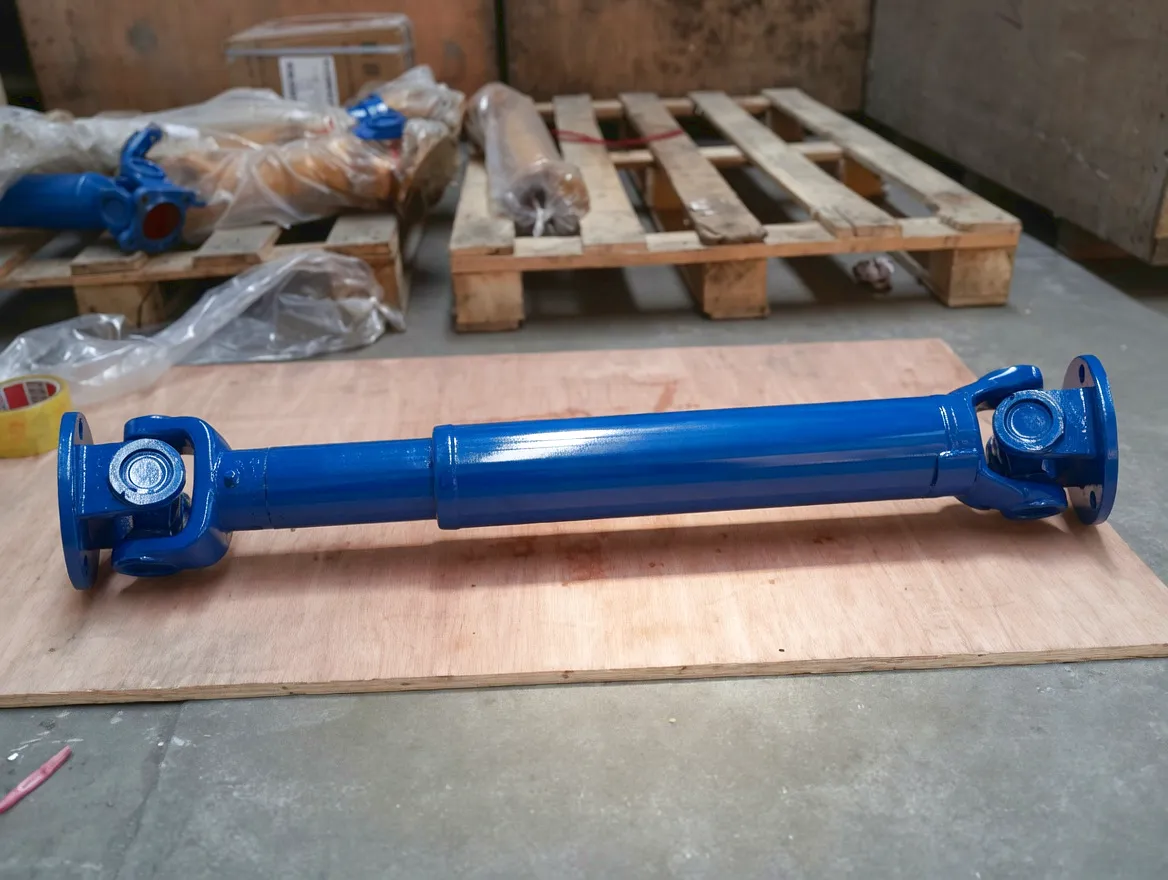
In steel rolling mill applications across Rotherham and Sheffield, for example, a double-joint driveshaft assembly fitted with a telescoping central tube accommodates both the angular offset between drive motor and roll stand and the axial travel that occurs during roll changes. Without the velocity compensation inherent in the double-joint arrangement, the roll surface speed would fluctuate with every revolution of the driveshaft, imprinting a periodic thickness and surface-finish pattern on the finished product — wholly unacceptable in any quality-conscious manufacturing operation.
The Kinematics of Non-Constant Velocity
Why a single Cardan coupling never delivers truly constant output speed — and what the numbers mean for your drive
The phrase “universal joint” implies a geometric universality that is, in strict kinematic terms, overstated. A single Cardan coupling does transmit continuous rotation — unlike an intermittent mechanism or a ratchet — but it does so with a velocity ratio that varies periodically throughout each revolution whenever the input and output shafts are not perfectly collinear. This is not a manufacturing defect, a material shortcoming, or an indicator of wear; it is a direct mathematical consequence of the joint’s geometry, first rigorously analysed by Hooke and later formalised by Euler and subsequent kinematicians. Understanding it is essential for any engineer selecting and installing a Cardan coupling in any drive system operating at a non-zero working angle.
The Velocity Transmission Equation
The instantaneous angular velocity of the output shaft (ω₂) of a single Cardan coupling is related to the constant input angular velocity (ω₁) by an expression derived from the constraint equations of the cross-joint geometry. When the yoke ears of the driving shaft are in the horizontal plane and the joint is bent at angle β in the vertical plane, the driven shaft velocity at instantaneous input rotation angle φ₁ is:
ω₂ = ω₁ × cos(β) ÷ [ 1 − sin²(β) × cos²(φ₁) ]
β = joint angle between shaft axes • φ₁ = instantaneous rotation angle of input yoke
The denominator oscillates between (1 − sin²β) = cos²β and 1 as φ₁ sweeps from 0° to 90°. Consequently, ω₂ fluctuates between a maximum value of ω₁ ÷ cos(β) and a minimum of ω₁ × cos(β) — and it completes two full cycles of this fluctuation per revolution of the input shaft. The ratio of maximum to minimum output speed is 1 ÷ cos²(β), which grows rapidly with increasing joint angle. At a modest 15° working angle, that ratio already exceeds 7%, which is more than sufficient to excite resonances in many practical industrial drive systems.
Speed Variation by Joint Angle
| Joint Angle (β) | ω₂ Max / ω₁ | ω₂ Min / ω₁ | Peak Variation | Practical Guidance |
|---|---|---|---|---|
| 5° | 1.004 | 0.996 | ~0.8% | Negligible — acceptable for most general drives |
| 10° | 1.015 | 0.985 | ~3.1% | Low — monitor in precision-speed applications |
| 15° | 1.035 | 0.966 | ~7.2% | Moderate — double joint recommended for quality-sensitive drives |
| 20° | 1.064 | 0.940 | ~13.1% | Significant — double joint strongly recommended |
| 30° | 1.155 | 0.866 | ~33.3% | Severe — double joint mandatory; reduce speed |
Engineering Consequences of Velocity Fluctuation
Torsional Vibration
The twice-per-revolution speed oscillation generates a second-order torsional excitation on the driven shaft and its connected load. At certain speeds, the excitation frequency coincides with the torsional natural frequency of the shaft-and-load system, triggering resonance. The consequences range from elevated noise and vibration to rapid fatigue cracking of keys, keyways, and shaft shoulders, and in severe cases to catastrophic shaft fracture. Engineers specifying drive systems for steel plants in Sheffield or Birmingham — where motors are large and shaft inertias substantial — must calculate the torsional natural frequencies of the complete drivetrain and confirm that no resonance falls within the normal operating speed range.
Elevated Bearing Loads
Each acceleration-deceleration cycle within the output shaft produces inertial torque that superimposes on the steady transmitted torque, alternately increasing and decreasing the load on the trunnion needle-roller bearings. At high speeds and large joint angles, the dynamic peak bearing loads can substantially exceed the values implied by the nominal torque rating alone. Bearing selection based purely on steady-state transmitted torque — without correction for the dynamic torque factor associated with the joint angle and speed — will produce dramatically shorter-than-expected bearing service life, with all the attendant costs of unplanned maintenance shutdowns in a continuous-process environment.
Product Quality Degradation
In any process where the output shaft of a Cardan coupling drives a product-contacting element — a rolling mill roll, a printing cylinder, a paper machine press roll, or a coating roller — cyclic speed variation translates directly into surface-quality variation on the product being made. Periodic thickness banding in rolled steel, print register errors in multicolour presses, and cyclical coating weight variation on film or paper are all documented consequences of improperly compensated Cardan coupling drives. Identifying the coupling as the root cause of these quality issues and upgrading to a correctly phased double-joint assembly has in many cases eliminated expensive product rework and customer complaints overnight.
The Double Cardan Solution: Restoring Constant Velocity
The mathematical cure for non-constant velocity transmission in a Cardan coupling drive is conceptually simple: install two universal joints in series with an intermediate shaft, set both joint angles equal in magnitude but on opposite sides of the shaft centreline, and ensure that the yoke forks of the intermediate shaft lie in the same plane. Under these conditions, the velocity increase produced by the first joint during one quarter-turn of each cycle is precisely cancelled by the velocity decrease of the second joint. The output shaft of the double-joint assembly then rotates at exactly the same angular velocity as the input, regardless of the working angle — provided that the conditions for compensation are maintained. The mathematical proof shows that the two fluctuation terms in the velocity expressions for the two joints cancel when the intermediate shaft bisects the angle between input and output shaft axes.
In practice, installation tolerances, thermal expansion, and machine deflection mean that true perfect compensation is approached asymptotically rather than achieved exactly. For the overwhelming majority of industrial applications, however, a correctly designed and installed double-joint Cardan coupling assembly reduces the residual velocity fluctuation to well below 0.5% — a level that is acoustically and vibrationally indistinguishable from genuine constant velocity and that causes no measurable quality effect on the product. Ever Power supplies both single-joint and double-joint assemblies; for every double-joint order, the engineering team calculates the required intermediate shaft length and verifies the theoretical velocity compensation under the customer’s actual installation geometry before manufacturing commences.
Materials That Define Coupling Performance
The choice of material for every component of a Cardan coupling governs its torque capacity, fatigue life, operating temperature range, and suitability for corrosive or hygienic environments. Ever Power specifies materials component by component to match the demands of each application precisely.
⚙ Alloy Steel — 42CrMo4 / C45
The workhorse material for yokes, flanges, and spider bodies in high-torque industrial Cardan couplings. 42CrMo4 provides tensile strength up to 1,100 MPa after quench-and-temper treatment, combined with excellent toughness and fatigue resistance. C45 medium-carbon steel offers a more cost-effective solution where torque demands are moderate and the operating environment is not chemically aggressive. Both grades are available with full material test certificates traceable to the steel heat — a standard requirement for safety-critical applications in UK nuclear, aerospace, and structural engineering sectors.
⚡ Stainless Steel — 316L / 304
Specified for Cardan couplings operating in corrosive environments — offshore marine, chemical processing, food and beverage production, and pharmaceutical manufacturing. 316L’s molybdenum addition delivers superior resistance to chloride-induced pitting corrosion, making it the preferred choice for couplings on North Sea support vessels, Scottish salmon farming equipment, and food processing machinery throughout East Anglia. Electropolished internal surfaces are available for hygienic-duty applications where bacterial retention must be minimised.
🔧 Case-Hardened Grades — 18CrNiMo7-6 / 20MnCr5
Spider cross-pieces and trunnion journals are commonly produced from case-hardening grades such as 18CrNiMo7-6 or 20MnCr5. The carburising or induction-hardening process creates a hard, wear-resistant surface layer of 58–63 HRC while preserving a tough, ductile core that absorbs shock without fracture. This dual microstructure is critical for the spider body, which experiences high-cycle reversing Hertzian contact stresses at every bearing journal with each rotation — a fatigue environment that through-hardened materials cannot survive for the expected service life of a well-designed coupling.
🏭 Surface Treatments
Surface engineering contributes substantially to service life and corrosion resistance. Ever Power applies phosphating, electroless nickel plating, hot-dip galvanising, and hard chrome plating depending on the severity of the operating environment. Precision bores and mating flanges are ground and lapped to IT6 or IT7 tolerance grades to BS EN ISO 286-1, ensuring interference or transition fits that transmit torque correctly without micro-slip at the shaft-to-bore interface. Precision balancing at the correct grade for the operating speed eliminates the residual dynamic forces that would otherwise amplify the inherent velocity variation of the joint.
Core Technical Advantages of the Cardan Coupling
Compared with gear couplings, disc-pack couplings, and elastomeric jaw couplings, the Cardan coupling occupies a unique performance space defined by large angle capacity, exceptional torque density, and unmatched operating-environment tolerance.
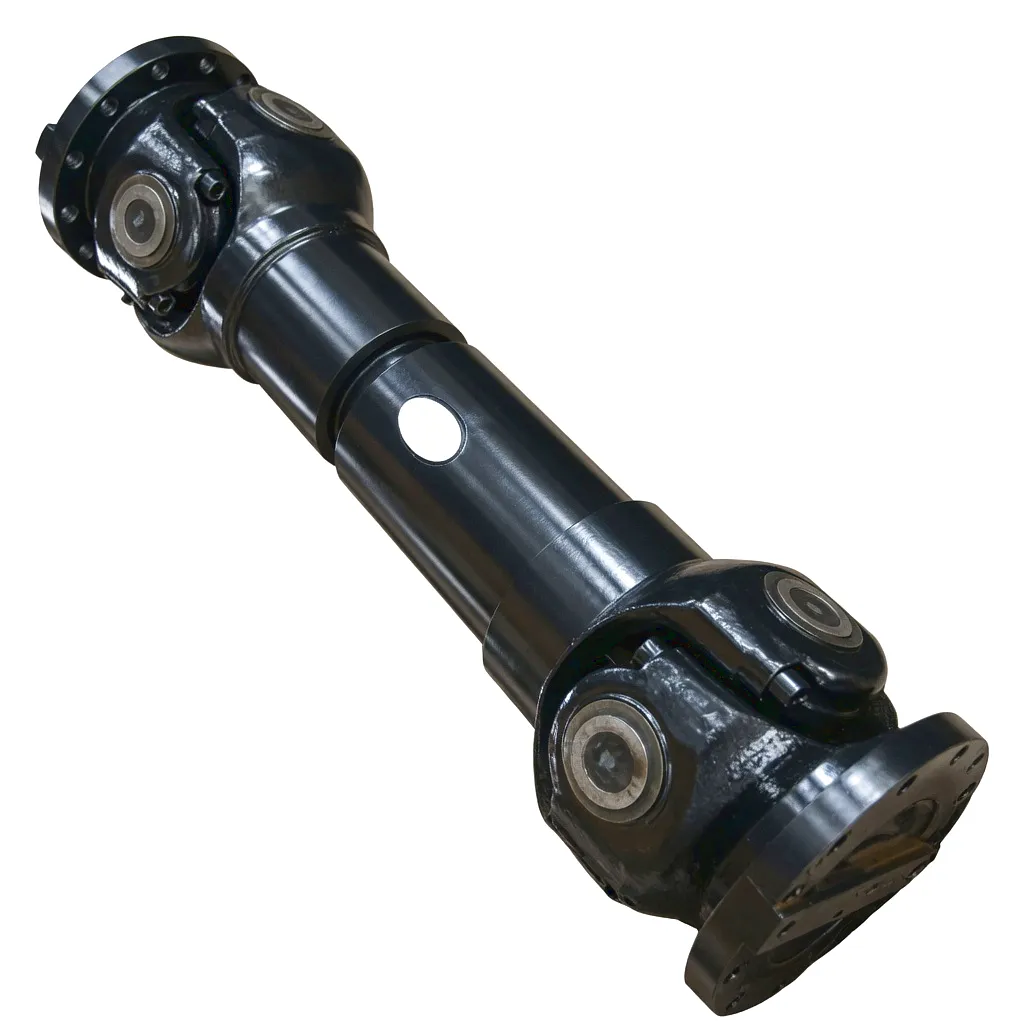
Large Angular Capacity
Standard designs operate at 1°–25°; heavy-duty rolling mill variants reach 45°. No other rigid-geometry coupling type comes close to this range while transmitting high torque continuously.
Extreme Torque Density
All-metal construction delivers torque capacities from below 100 Nm up to 500,000 Nm and beyond in specialised rolling mill assemblies — within an envelope no larger than a comparable disc or gear coupling.
Long, Predictable Service Life
Properly specified and lubricated, high-quality Cardan couplings routinely deliver over 10,000 operating hours. Bearing fatigue life is calculable from standard ISO 281 methods, enabling maintenance to be planned with confidence.
Axial Displacement Tolerance
The telescoping slip shaft allows the connected machinery to move axially — due to thermal expansion or roll-change operations — without generating destructive axial forces on gearbox or motor bearings. This is standard across rolling mill, paper machine, and marine propulsion applications.
No Temperature-Sensitive Elements
The Cardan coupling contains no rubber, polymer, or composite elements. It performs identically at −30°C in a North Yorkshire outdoor plant as at +120°C beside a continuous casting furnace — a resilience that elastomeric couplings fundamentally cannot match.
Field-Maintainable Design
Grease nipples on the trunnion bearing journals enable in-service re-lubrication without disassembly. Spider replacement — the most common wearing maintenance task — is carried out without removing the coupling from the shaft, minimising planned maintenance downtime on continuous-process plant.
Technical & Performance Parameters
The table below summarises the typical performance envelope of Ever Power’s industrial-grade Cardan couplings. Custom designs are readily available for requirements outside these standard ranges. All specifications are subject to application review — contact Ever Power for confirmation on any critical parameter.
| Parameter | Standard Range | Heavy-Duty Range | Notes |
|---|---|---|---|
| Torque Capacity | 50 – 50,000 Nm | 50,000 – 500,000 Nm | Peak torque up to 2× nominal available |
| Working Angle | 1° – 25° | 1° – 45° | Double joint recommended above 15° |
| Maximum Speed | Up to 1,500 rpm | Up to 600 rpm | Speed × angle product limit applies |
| Bore Diameter | 20 – 160 mm | 160 – 400 mm | Keyway and involute spline bores available |
| Primary Material | C45 / 40Cr | 42CrMo4 / 18CrNiMo7-6 | 316L stainless steel for corrosive duty |
| Spider Journal Hardness | 55 – 60 HRC (surface) | 60 – 63 HRC (surface) | Core toughness maintained ≥ 35 HRC |
| Operating Temperature | −20°C to +100°C | −30°C to +120°C | Subject to grease grade selection |
| Surface Treatment | Phosphating / Zinc plate | Hot-dip galv / Hard chrome | Offshore NORSOK C-5 coatings available |
| Bore Tolerance | H7 (standard) | H6 / JS6 / custom | To BS EN ISO 286-1 |
| Quality Certification | ISO 9001:2015 | ISO 9001 + material certs (EN 10204 3.1) | CE Declaration of Conformity on request |
Industrial Application Scenarios Across UK Industry
From South Yorkshire’s specialist steelworks to the automotive assembly corridors of the West Midlands and the offshore wind arrays of the North Sea, the Cardan coupling is a foundational component of British heavy industry.
🏭 Steel & Metal Rolling — Sheffield, Rotherham
Sheffield and Rotherham remain the heartland of UK speciality steel rolling. Here, double-joint Cardan coupling assemblies with telescoping slip shafts connect main drive motors to roll stands, accommodating both angular offset and axial roll-change movement. The velocity-constant output of the double-joint arrangement is non-negotiable in these applications: any speed fluctuation at the roll nip directly translates to periodic thickness variation and surface-finish anomalies on high-value structural sections, bar, and rod products destined for aerospace, oil and gas, and construction markets.
🔌 Offshore & Onshore Wind — East Anglia, Yorkshire
The UK operates the world’s largest installed offshore wind capacity, with major arrays operating off East Anglia, the Thames Estuary, and the north-east England coast. Wind turbine nacelles contain yaw drives, pitch actuators, and generator coupling assemblies that all employ Cardan couplings to accommodate the angular misalignment inevitable in a structure subject to gravity sag, thermal expansion, and variable aerodynamic loading. Stainless steel and heavily corrosion-protected variants are mandatory for any maritime turbine application where saltwater ingress must be positively excluded from the bearing journals.
🚗 Automotive — West Midlands, Sunderland
The West Midlands automotive corridor uses Cardan couplings in vehicle propeller shafts, steering columns, and factory production-line drives. Sunderland’s Nissan plant — consistently one of Europe’s highest-output car factories — relies on the technology in both the vehicles themselves and its own transfer press systems and conveying machinery. Automotive-grade Cardan couplings are manufactured to tighter dynamic balance specifications than general industrial variants, reflecting the higher operating speeds and stringent NVH requirements of passenger vehicle applications.
🚹 Rail Engineering — Derby, Crewe
Derby and Crewe are the traditional heartlands of British rail engineering, and the locomotive and rolling stock designs produced there rely on Cardan couplings for traction unit-to-bogie connections, wheelset turning lathe drives, and track maintenance machine powertrains. The combination of high starting torque, variable-speed operation, shock loading from rail joints, and year-round outdoor exposure demands careful alloy selection, substantial case-hardening depths, and a corrosion protection strategy reviewed for the specific route environment.
🛒 Paper, Print & Packaging — Scotland, South East
Scotland and the South East are home to significant paper and printing operations where wide-web presses run at high speeds and demand precisely velocity-constant roll drives. A Cardan coupling with improperly compensated velocity fluctuation would cause print register errors in multicolour work and caliper variation in coated papers. Double-joint assemblies with custom intermediate shaft lengths calculated for each machine’s geometry are the industry standard, and Ever Power routinely supplies these as bespoke engineering assemblies rather than catalogue items.
⛨ Mining & Quarrying — Wales, Yorkshire
Potash, aggregate, and coal extraction across Wales, Yorkshire, and the East Midlands relies on heavy conveyor and screening equipment continuously subjected to shock loads, abrasive dust, and moisture ingress. In these applications, the Cardan coupling’s ability to absorb shock without transmitting it destructively to the gearbox or motor, and its tolerance of large angular misalignment when belt tensions shift under load, make it the preferred coupling type over gear or elastomeric alternatives. Sealed bearing journals with extended grease nipple access simplify maintenance in confined underground locations.
Ever Power: Precision Manufacturing for the World’s Toughest Drives
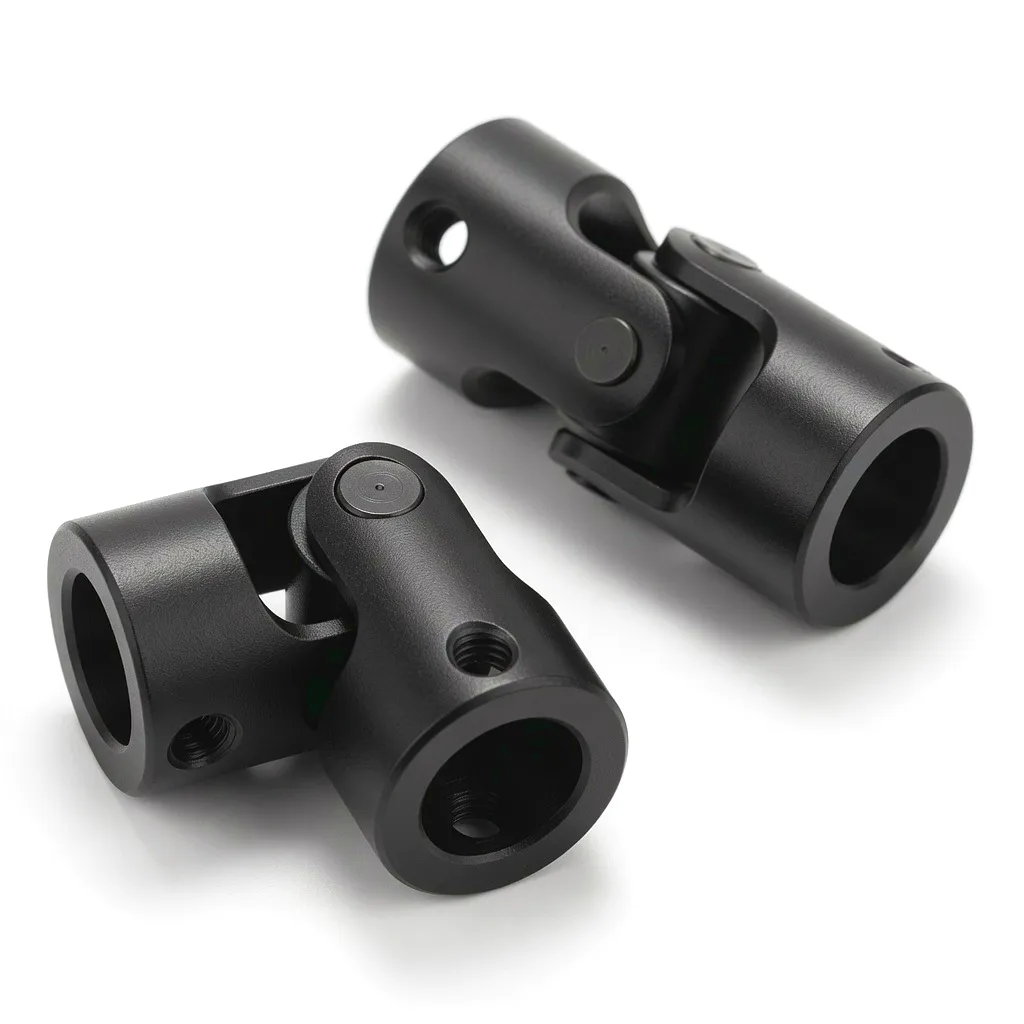
From standard catalogue items to fully bespoke rolling mill driveshaft assemblies, Ever Power’s manufacturing capability covers the full scope of industrial Cardan coupling requirements — with the engineering expertise and supply chain maturity to support UK customers from first enquiry through to long-term aftermarket service.
Manufacturing Capabilities
Ever Power operates a fully integrated facility equipped with multi-axis CNC turning and milling centres, horizontal gear-hobbing machines, cylindrical and profile grinding cells, and automated heat treatment lines including carburising furnaces and induction hardening equipment. Every Cardan coupling begins with certified bar or forged blank material, proceeds through rough machining, case-hardening, finish cylindrical grinding, and ends with full dimensional inspection using coordinate measuring machines and surface roughness profilometers. This end-to-end vertical integration eliminates quality inconsistencies associated with subcontracted operations, and gives Ever Power complete control over lead times — a decisive advantage for UK customers facing urgent replacement requirements that cannot wait for extended multi-supplier logistics chains.
Customisation Without Compromise
No two industrial drive systems are identical, and a catalogue coupling is rarely the optimal engineering solution. Ever Power’s team works directly with UK plant engineers, maintenance managers, and OEM designers to develop custom Cardan coupling solutions from the ground up. The customisation scope encompasses bore dimensions and tolerances, yoke flange bolt-circle and pilot diameters, intermediate shaft length and tube cross-section, spider bearing type and dynamic capacity, material specification, surface treatment, and ISO balance grade. For rolling mill applications, Ever Power provides complete velocity compensation analysis confirming the residual fluctuation at the customer’s working angle before manufacture. CE declarations of conformity, EN 10204 3.1 material certificates, and full dimensional inspection reports are included as standard with every custom order delivered to a UK address.
20+
Years Experience
500+
Custom Designs Delivered
50+
Countries Supplied
24h
Technical Response Time
📥 Discuss your Cardan coupling requirement with our engineers
Send your drawings, application description, or torque and angle requirements. We aim to provide a detailed technical response and competitive quotation within 24 hours for all UK enquiries.
Customer Success Story
📍 Sheffield, South Yorkshire • Speciality Structural Steel Rolling Mill
Eliminating Roll Speed Variation and Surface Banding on a Section Mill
A speciality steel producer operating a structural section rolling mill in Sheffield had been experiencing persistent surface-finish anomalies on their flanged beam products — a periodic banding pattern running across the web and flange faces at intervals corresponding precisely to one-half of a driveshaft revolution. The maintenance engineering team initially investigated the roll surfaces and roll-pass design, but accelerometer data fitted to the roll chocks revealed a clear second-order torsional excitation originating in the driveshaft assembly. The existing Cardan coupling assemblies — installed by a previous contractor and not designed as matched double-joint systems — were operating at a nominal joint angle of 18° with the two universal joints on each shaft phased incorrectly, producing a velocity fluctuation of approximately 11% at the roll nip. Given the mill’s product tolerances and customer quality requirements for certified structural sections, this level of speed variation was wholly unacceptable.
The plant’s chief engineer sent Ever Power a complete set of survey drawings of the driveshaft envelope, motor shaft dimensions, and roll coupling flange specifications. Ever Power’s engineering team carried out a full three-dimensional shaft layout analysis, confirmed the velocity compensation error from the yoke phasing, and designed replacement double-joint Cardan coupling assemblies with an intermediate shaft length of 1,840 mm, equal joint angles of 18° ± 0.1°, and yoke phasing set to the theoretically optimum 90° offset. Dynamic balancing was performed to ISO 1940-1 Grade G6.3 at the maximum operating speed of 280 rpm. 42CrMo4 quench-and-tempered yokes and flanges were paired with 18CrNiMo7-6 case-hardened spider journals ground to IT5 tolerance. The completed assemblies were despatched to Sheffield within six weeks of order confirmation, accompanied by EN 10204 3.1 material certificates and full CMM inspection reports.
Following installation and commissioning, velocity fluctuation at the roll nip was measured at under 0.4% — a reduction of over 96% compared to the previous configuration. The surface banding disappeared entirely from the first section rolled after commissioning. The plant engineering team calculated that the improvement in surface quality and dimensional consistency reduced product downgrading and customer complaints to a level that recovered the full cost of the new driveshaft assemblies within four months of operation. Both assemblies have remained in continuous service for over two years with no unplanned maintenance intervention recorded.
What Our UK Customers Say
“The velocity analysis Ever Power provided before manufacture was genuinely impressive — they identified the yoke phasing error that three previous suppliers had completely missed. The replacement double-joint driveshaft eliminated our banding problem overnight. Two years in service without a single unplanned intervention. We have already ordered for two further mill stands.”
— Senior Plant Engineer
Speciality Steel Rolling Mill · Sheffield, South Yorkshire
“Eight custom Cardan coupling assemblies delivered on a six-week lead time to our Birmingham facility — exactly as promised. Every coupling came with full inspection documentation, and the bore tolerances were within drawing limits on all units with no rework required. Competitive pricing, professional communication throughout, and now our preferred coupling supplier across all categories.”
— Procurement Manager
Automotive Stamping & Pressings Manufacturer · Birmingham, West Midlands
“Offshore access costs mean we cannot tolerate unexpected coupling failures. Ever Power’s stainless steel Cardan couplings for our Yorkshire coast wind turbine yaw drives have now completed two full service intervals with condition monitoring showing no measurable wear acceleration or corrosion. The pre-manufacture geometry review they provided — confirming the double-joint compensation for our actual nacelle layout — is a level of technical engagement we rarely see from coupling suppliers.”
— Maintenance & Reliability Director
Offshore Wind Operations & Maintenance · East Yorkshire Coast
Frequently Asked Questions
Common questions from UK engineers and procurement teams before specifying or purchasing a Cardan coupling
Ever Power — Precision Cardan Couplings for Global Industry
Specialist Cardan Coupling Manufacturer — Supplying UK, Europe & Global Markets
edit by gzl