ページを選択

Mechanical Engineering Knowledge Series

Key Components of a Cardan Coupling:
Anatomy and Function Explained

A deep technical guide for mechanical engineers, procurement specialists, and industrial buyers across the UK manufacturing sector.

Power Transmission
B2B Industrial
UK Market

Cardan Coupling Assembly

In the world of heavy-duty power transmission, few components carry the same mechanical significance as the cardan coupling. Whether you are running a steel mill in Sheffield, coordinating a paper production line in Birmingham, or specifying drive systems for marine applications along the Thames Estuary, understanding every component within a cardan coupling is not just useful — it is essential to optimising uptime, reducing maintenance intervals, and ensuring reliable torque delivery across misaligned shafts. The cardan coupling — also known as the universal joint coupling or Hooke’s coupling — has been a cornerstone of rotating machinery for over a century, and its internal anatomy reveals a carefully engineered balance between flexibility and strength that no simpler device can replicate.

This article takes you through every primary and secondary component of a cardan coupling, explains the physics governing how each part functions, examines the materials chosen by precision manufacturers, and provides the technical reference data you need to make informed procurement and engineering decisions. From the yoke assembly to the sealing system, each element plays a role that directly affects performance under load. If you have ever asked why a cardan coupling handles angular misalignment so effectively where a rigid coupling would fail — or wondered what separates a standard unit from a custom high-torque variant — the answers lie in the component-level detail explored below.

What Exactly Is a Cardan Coupling?

A cardan coupling is a mechanical device engineered to transmit rotational torque between two shafts that are not in perfect linear alignment. Unlike flexible jaw couplings or disc couplings, the cardan coupling accommodates both angular misalignment and, in double-joint configurations, parallel offset — making it the preferred solution where shaft axes diverge by angles ranging from a few degrees up to 35° or even beyond in specialised designs. The name traces back to the Italian polymath Gerolamo Cardano, though the practical development of the device is attributed more directly to Robert Hooke, which is why you will frequently encounter the term “Hooke’s joint” in British engineering documentation and British Standards publications.

In British industry — particularly in the heavy engineering corridors of the West Midlands, Yorkshire, and the Northeast — the cardan coupling forms the backbone of rolling mills, extruders, drivelines for rail maintenance vehicles, marine propulsion systems, and printing presses. Its strength-to-weight ratio, combined with its capacity to operate continuously under high cyclic loads, makes it a component that maintenance engineers often specify once and rely on for years. Understanding the anatomy of a cardan coupling means understanding why it outperforms alternatives in demanding duty cycles, and why the quality of its internal components translates directly into machine reliability.
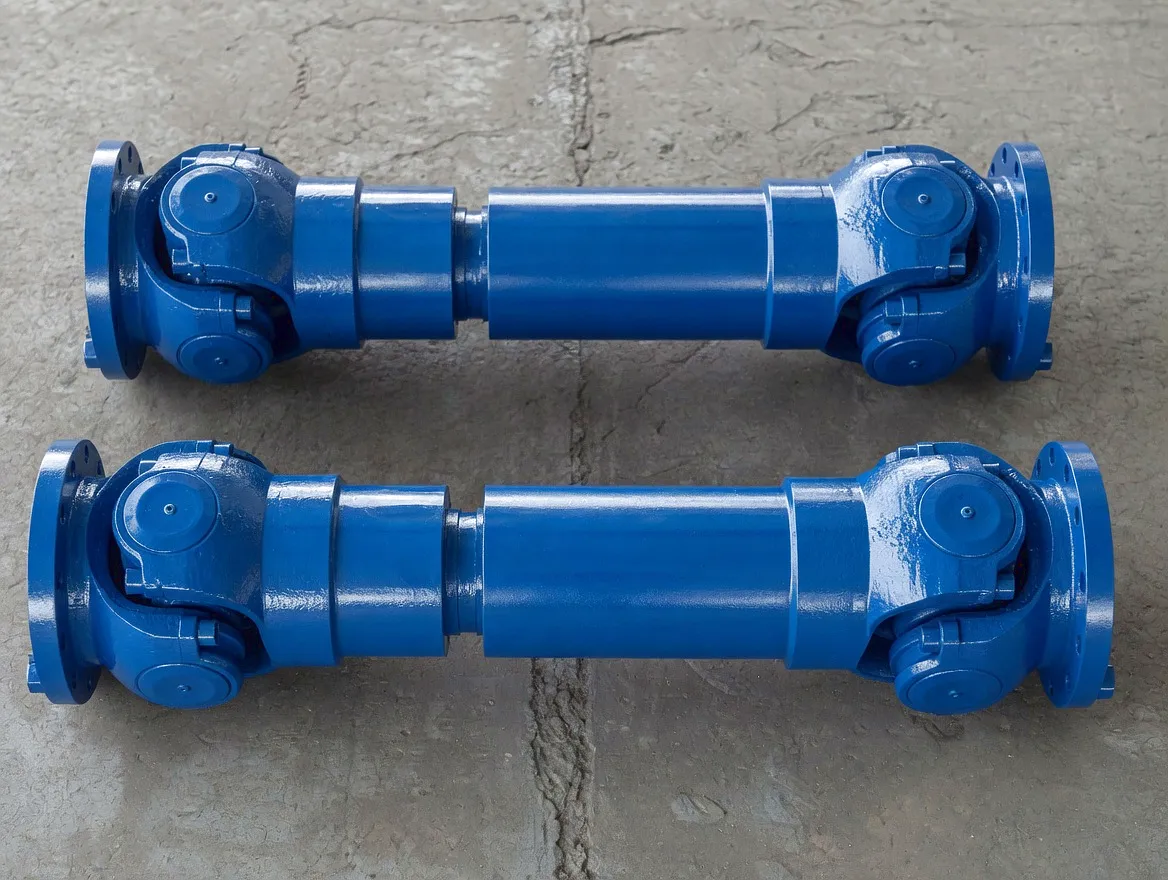
Cardan coupling side profile

The Core Components: An Inside-Out Anatomy

Component 01

The Yoke (Fork)

Cardan coupling yoke

The yoke — commonly referred to as the fork in British workshop terminology — is the primary structural arm of a cardan coupling, and its geometry determines how well the assembly handles angular deflection. Each cardan coupling unit contains two yokes: a driving yoke attached to the input shaft, and a driven yoke attached to the output shaft. These yokes are machined with precisely positioned bearing bores — the holes through which the cross or spider trunnions are fitted. The angular relationship between the two yoke planes, and the dimensional accuracy of those bores, directly determines the smoothness of torque transmission across the operating angle range.

In British-manufactured heavy machinery, forged steel yokes are the standard choice where loads are high and service intervals must be extended. Forging produces a grain structure aligned with the part geometry, which gives the yoke superior fatigue resistance compared to a cast equivalent. For lighter-duty applications found in smaller Sheffield fabrication plants or Birmingham automation cells, ductile iron yokes offer a cost-effective compromise. The bore of each yoke must be held to tight tolerances — typically within ±0.01 mm in premium designs — because any play at this interface introduces backlash and accelerates bearing wear. The connection between yoke and shaft is typically achieved through a keyway, spline, or precision interference fit, with the choice depending on whether the drive system requires frequent disassembly or operates as a permanent installation.

Component 02

The Cross (Spider / Trunnion Cross)

If the yoke is the arm of a cardan coupling, the cross — also called the spider or trunnion cross — is its heart. This cruciform piece, machined from a single billet of alloy steel, provides the four trunnion pins on which the bearing assemblies rotate. The four-pin geometry is what enables the two yokes to rotate at different angles to each other while still transmitting torque continuously. The cross is the single component that bears the highest bending and shear stresses in the entire assembly, which is why it is almost universally manufactured from case-hardened alloy steel with a carburised surface, providing a hard wear-resistant outer layer over a tough, impact-resistant core.

The trunnion pin diameter, pin-centre distance, and pin surface finish are the three dimensional parameters most closely scrutinised during quality inspection. Surface roughness on the trunnion journal is typically specified at Ra 0.4 µm or better to ensure optimal needle bearing life. In heavy industrial cardan coupling units destined for rolling mill drive lines in locations like Rotherham or Scunthorpe, the cross is regularly subjected to peak torque events that can multiply the nominal load by a factor of three or more during mill bite impacts. For this reason, manufacturers such as Ever Power engineer the cross geometry with generous fillet radii at the root of each trunnion, minimising stress concentration and extending fatigue life well beyond standard design expectations.

Component 03

Bearing Cups and Needle Roller Bearings

Cardan coupling bearing assembly

The bearing cups — sometimes called cap bearings — sit over each trunnion pin and contain the needle roller bearing assembly that allows the cross to oscillate freely within the yoke bore. This is where the magic of low-friction articulation occurs. Needle rollers, being long relative to their diameter, provide a much greater load-carrying capacity per unit volume than ball bearings, making them ideal for the combined radial and bending loads that arise in cardan coupling service. The bearing cup itself is manufactured from through-hardened bearing steel, with an internal bore ground to micrometre tolerances to achieve the correct radial clearance with the needle roller complement.

The retention of the bearing cup within the yoke bore is achieved through circlips, welded retaining plates, or press-fit interference arrangements depending on the duty class. In maintenance-friendly designs favoured by British engineering firms operating under strict planned maintenance schedules, the bearing cup assembly is designed for in-situ replacement without the need to dismantle the entire cardan coupling from the driveline. This feature alone can reduce scheduled maintenance downtime by several hours per coupling point in a multi-stand rolling mill configuration. The needle complement within each cup is typically held in a stamped steel or polyamide cage that maintains uniform roller spacing and prevents roller skewing, which would otherwise accelerate surface fatigue and heat generation.

Component 04

The Centering Element and Ball Stud

In double-joint cardan coupling configurations — which are the configuration of choice wherever constant-velocity (CV) output is required — a centering element is positioned between the two single joints to maintain a fixed geometric relationship between the input and output shafts. The centering element, which typically takes the form of a ball-and-socket or centring ball stud assembly, ensures that each single joint in the double-joint arrangement operates at equal and opposite angles to the centreline. This equal-angle condition is the physical requirement that cancels out the velocity fluctuation inherent in each individual Hooke’s joint, producing smooth constant-velocity output at the driven shaft — a fundamental requirement for applications such as marine propeller shafts, automotive driveshafts, and the feed drives of precision CNC machine tools found in West Midlands manufacturing facilities.

The ball stud at the centre of the centring mechanism is manufactured from case-hardened alloy steel, and its spherical surface is ground to achieve a consistent contact area against the mating socket. Grease retention grooves machined into the ball surface ensure that lubricant is maintained at the sliding contact interface throughout the operating life. The centring element itself is typically fabricated from a polymer or sintered bronze material that provides low-friction sliding characteristics while tolerating the oscillatory motion imposed by the shaft articulation angle. In high-cycle applications, the centring mechanism is the component most likely to show wear first, which is why it is engineered as a serviceable item in premium cardan coupling designs — allowing targeted replacement without disturbing the rest of the assembly.

Component 05

Seals, Grease Nipples, and Lubrication Provisions

No discussion of cardan coupling anatomy is complete without addressing the sealing system and lubrication provisions, because no mechanical component — regardless of how precisely it is made — will perform reliably if contamination enters the bearing zones or if grease escapes under centrifugal action. The sealing system of a cardan coupling operates under a demanding combination of conditions: oscillatory motion at variable angles, centrifugal forces at high rotational speeds, and exposure to external contaminants that in industrial environments can include water, process scale, cutting fluids, and fine metallic particles.

Each bearing cup is fitted with a seal — typically a nitrile rubber (NBR) or fluoroelastomer (FKM/Viton) lip seal in premium units — that prevents both ingress of contaminants and egress of lubricant. In cardan coupling units specified for high-speed applications, additional labyrinth-type seal elements are incorporated to provide secondary protection without introducing excessive friction torque. The lubrication system is accessed through grease nipples threaded into the cross body or the bearing cap retaining system, positioned such that grease under pressure can be driven through to reach each needle bearing in sequence. The grease specification matters: EP2 lithium complex grease is the standard in the UK market, though high-temperature or high-speed variants may require specialist greases with specific NLGI grades, shear stability ratings, and temperature ranges that are specified in the engineering documentation supplied with the coupling.

Working Principle: How Torque Moves Through a Cardan Coupling

The operating principle of a cardan coupling is rooted in a simple geometric truth: when two shafts connected by a Hooke’s joint rotate about their respective axes, the cross must oscillate about two perpendicular axes simultaneously to keep both yokes engaged. This dual-axis oscillation is what allows the assembly to accommodate an angular misalignment between the shaft centrelines. The driving yoke rotates at constant angular velocity; the cross transmits this rotation through its trunnion pins to the driven yoke. Because the two pairs of trunnion pins are in perpendicular planes, the driven yoke’s instantaneous angular velocity fluctuates relative to that of the driving yoke — a phenomenon known as the velocity ratio variation or the “kinematic non-uniformity” of the single Hooke’s joint.

The magnitude of this velocity fluctuation increases as the shaft intersection angle increases. The relationship is: the output velocity v_out equals v_in multiplied by cos(beta) divided by (1 minus sin²(beta) times sin²(theta)), where beta is the joint angle and theta is the input shaft rotation angle. At joint angles below 5°, this fluctuation is negligibly small, but at 20° it becomes large enough to induce noticeable torsional vibrations in the driveline — which is why the double-joint constant-velocity configuration, with its geometric cancellation of velocity variation, is critical in precision applications. Understanding this principle is also why cardan coupling manufacturers specify maximum operating angles: not because the coupling cannot physically articulate further, but because the torque amplification associated with high joint angles rapidly increases bearing loads and reduces service life.

The torque transmission path in a cardan coupling runs from the input shaft, through the keyway or spline into the driving yoke, then through the trunnion pins and needle bearings into the cross, and finally back through the opposite pair of trunnion pins into the driven yoke, and from there to the output shaft. Every interface in this path — the shaft-to-yoke connection, the needle bearing contact, the cross journal surface — must be engineered to tolerate both the nominal transmitted torque and the dynamic torque peaks generated by the machinery. In rolling mills, for example, the bite impact when a billet enters the rolls can generate transient torques four to five times the nominal running torque, and the cardan coupling must absorb these without yielding, cracking, or losing dimensional integrity.
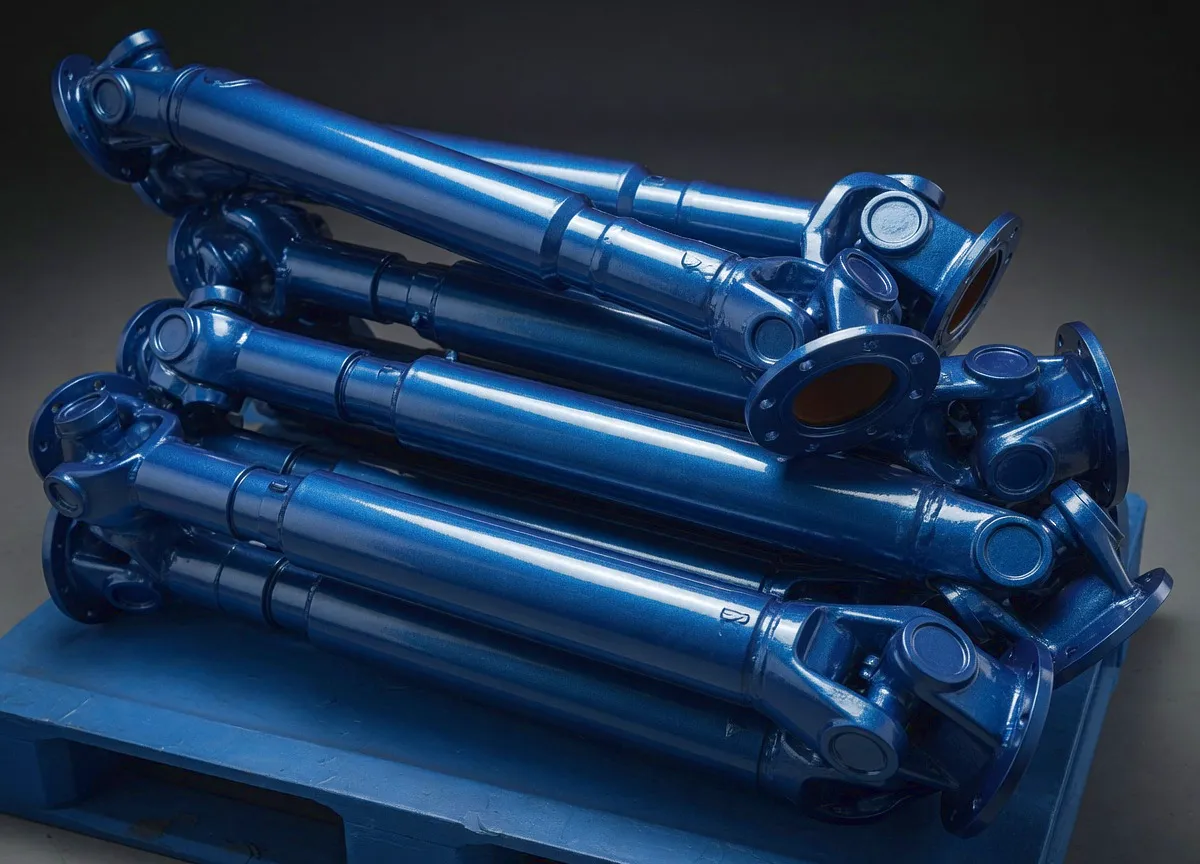
Cardan coupling working principle

Key Mechanical Facts

● Single joint: velocity varies with angle

● Double joint: constant velocity output

● Angle range: up to 35° (standard)

● Torque path: yoke → cross → yoke

Materials: What Cardan Coupling Components Are Made From

Yoke / Fork

Forged Alloy Steel

42CrMo4 / 4140 steel, hardened and tempered to 28–34 HRC. Forged grain flow ensures superior fatigue resistance under cyclic bending loads.

Cross / Spider

Case-Hardened Alloy Steel

20CrMnTi / 8620 steel, carburised to case depth 0.8–1.2 mm, case hardness 58–62 HRC, tough core at 30–38 HRC. Maximum wear resistance on trunnion journals.

Bearing Cups

Bearing Steel

GCr15 / 52100 through-hardened bearing steel, 60–64 HRC. Internal bore ground to H7 tolerance. Resists rolling contact fatigue from needle elements.

Seals

NBR / FKM Elastomer

Nitrile rubber (NBR) for general industrial use; Viton (FKM) for elevated temperatures up to 200°C or where chemical resistance to process fluids is required.

Slip Spline Tube

E355 / 1026 Steel

Seamless precision tube or solid bar, splined to DIN 5481 or customer specification. Phosphate-treated and greased for smooth axial plunge without fretting corrosion.
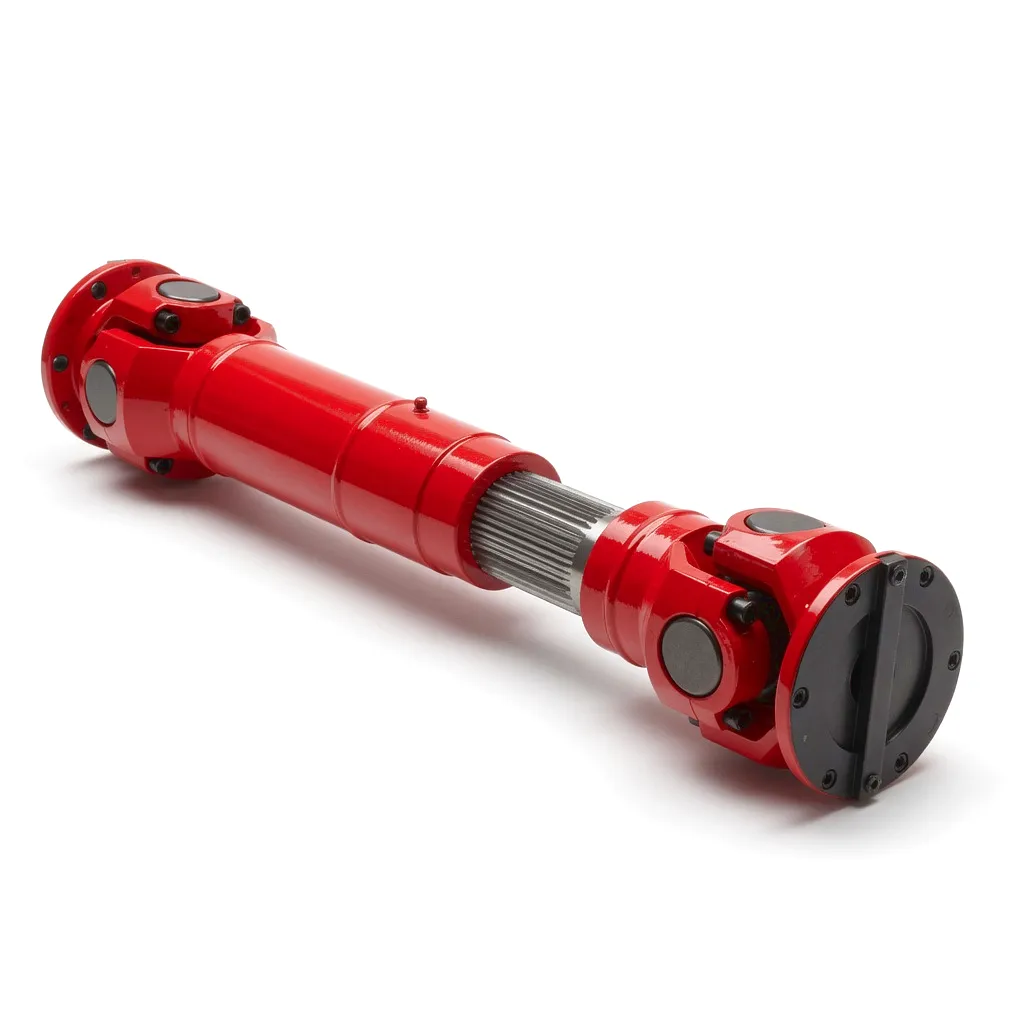
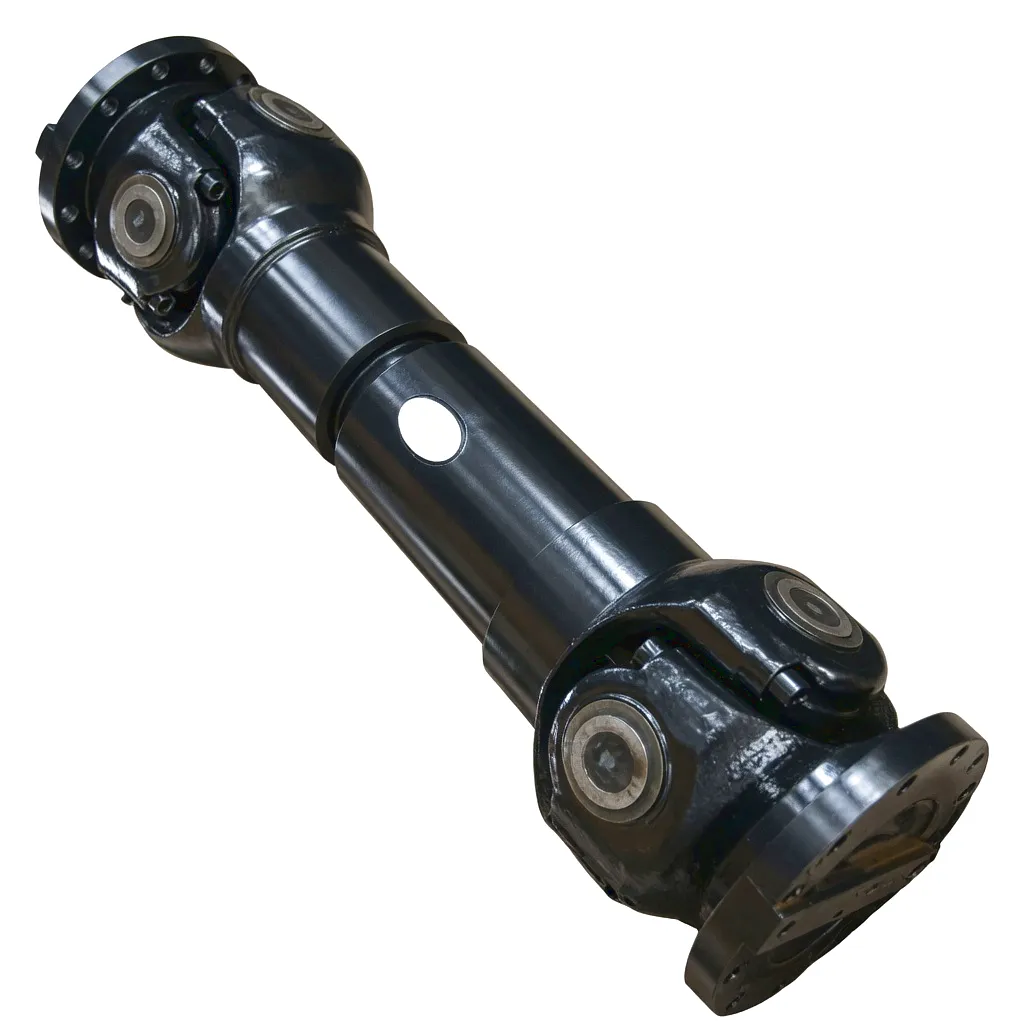
Cardan coupling components

Material selection in a cardan coupling is never a single decision — it is a hierarchy of choices driven by the duty class, the operating environment, the maintenance philosophy of the end user, and the economic constraints of the project. A light-duty agricultural implement coupling and a heavy-duty steel mill coupling both bear the name “cardan coupling,” but they may share fewer than half their material specifications. The mill coupling’s yoke will be a precision-forged and heat-treated alloy steel component tested by Charpy impact test to ensure toughness at operating temperatures; the seal will be a Viton compound resistant to hot rolling oil; the cross will have a case depth verified by magnetic particle inspection or by metallographic sectioning.

One material choice that often surprises buyers is the use of aluminium or aluminium alloy yokes in certain medium-duty cardan coupling designs intended for high-speed applications. Aluminium reduces the rotating mass of the assembly, which lowers the gyroscopic forces that act on the driveline supports at elevated rotational speeds. In applications such as test bench drivelines and high-speed packaging machinery — both of which are significant sectors in the UK’s manufacturing economy — aluminium yoke cardan coupling units can offer genuine performance advantages where inertia management is a design priority. Ever Power’s engineering team regularly advises UK buyers on whether the speed-inertia-torque triangle for a given application justifies an aluminium yoke specification or whether standard alloy steel is the better long-term choice.

Product Technical and Performance Parameters

The table below presents representative technical data for standard cardan coupling series manufactured by Ever Power. Custom specifications are available across all parameters — contact the technical sales team for duty-specific design calculations.

ParameterLight Duty (SWC-B)Medium Duty (SWC-C)Heavy Duty (SWC-D)Mill Duty (SWC-WD)
Nominal Torque (Nm)Up to 3,1503,150 – 31,50031,500 – 315,000315,000 – 2,500,000+
Peak Torque Factor2.0x2.5x3.0x4.0x – 5.0x
Max. Joint Angle (°)35°25°20°15° – 18°
Max. Operating Speed (rpm)Up to 3,000Up to 1,500Up to 750Up to 300
Yoke Material42CrMo4 / Ductile Iron42CrMo4 Forged42CrMo4 Forged34CrNiMo6 Forged
Cross Material20CrMnTi Case Hd.20CrMnTi Case Hd.20CrNiMo Case Hd.18CrNiMo7-6 Case Hd.
Trunnion Hardness (HRC)58 – 6258 – 6260 – 6460 – 64
Seal TypeNBR LipNBR Lip / LabyrinthFKM Lip + LabyrinthFKM Multi-Lip + Felt
Flange ConnectionDIN / Keyway / SplineDIN / Spline / CustomFlange / SplineHeavy Flange / Involute Spline
Axial Plunge (mm)Optional50 – 200100 – 500200 – 1,000+
Surface TreatmentPaint / Zinc PlatePaint / PhosphateEpoxy PaintHigh-Build Epoxy

Core Technical Advantages of Cardan Coupling Design

Why industrial engineers across the UK consistently specify cardan couplings for demanding drive applications.

High Angular Misalignment Capacity

Standard cardan coupling units accommodate operating angles up to 35° continuously, and engineered custom designs can exceed this in intermittent service. No flexible element coupling, disc coupling, or jaw coupling comes close to this angular range, making cardan couplings irreplaceable wherever driven and driving shaft centrelines cannot be aligned due to structural, thermal, or process constraints.

📈

High Torque-to-Weight Ratio

The all-steel construction and needle-bearing articulation of a cardan coupling delivers exceptional torque capacity relative to the component mass. Mill-duty units transmitting over two million Newton-metres are feasible at weights and envelope dimensions that no alternative coupling type can match. This efficiency is critical in large drive systems where minimising rotating mass reduces bearing loads throughout the machine.

🛠

Axial Displacement Compensation

The splined slip tube section within a cardan coupling permits controlled axial movement along the shaft centreline, absorbing thermal expansion, vibration, and positional variations without imposing axial thrust loads on the connected machine bearings. This is a significant structural advantage in hot mill environments or long driveshafts where thermal differential between start-up and operating temperature can generate centimetres of linear movement.

No Elastomeric Elements — No Temperature Limits

Unlike flexible jaw, tyre, or disc couplings, the cardan coupling contains no rubber or polymer drive elements in the torque path. All torque is transmitted through hardened steel-to-steel interfaces and needle bearings. This gives the cardan coupling a wide operating temperature range — typically from -40°C to +200°C in standard configurations — making it reliable in both cold-store environments and high-temperature process drives without risk of elastomeric degradation, hardening, or creep.

🔧

Component-Level Serviceability

A well-designed cardan coupling can be serviced at the component level — bearing cup assemblies, seals, and the cross can all be replaced individually without purchasing a new complete unit. This dramatically reduces the total lifetime cost of the drive system and aligns with the planned maintenance culture prevalent in UK manufacturing facilities that operate under OEE and TPM frameworks. Replacement cross kits and bearing assemblies stocked locally mean that unscheduled downtime is measured in hours rather than weeks.

Industrial Application Scenarios Across the UK
Steel and Metal Rolling Mills

Sheffield, Rotherham, Scunthorpe

The single largest application of heavy-duty cardan couplings in the UK remains steel and metals rolling, where the cardan coupling transmits drive from the main motor gearbox to each individual roll stand. The angular offset between the mill gearbox output and the roll journal can range from a few degrees to over 15° depending on the pass geometry and the product being rolled. Cardan couplings in this sector are subjected to the most severe duty conditions of any application: high cyclic torque, impact loading at bite, scale contamination, water spray, and elevated ambient temperatures all combine to demand the very highest standard of design and material quality.

Automotive and Test Bench Drivelines

Coventry, Luton, Swindon

In automotive powertrain test facilities operated by vehicle manufacturers and tier-one suppliers across the UK Midlands, cardan couplings form the critical link between the dynamometer and the drive under test. The need for constant velocity output at variable speeds and angles, combined with high torsional stiffness and minimal backlash, makes the double-joint cardan coupling the standard specification. Coventry, as a historic centre of UK automotive engineering, hosts numerous test and validation facilities where cardan coupling performance directly affects test data quality.

Marine Propulsion Systems

Glasgow, Southampton, Newcastle

Marine drive systems pose unique challenges that cardan couplings are particularly well suited to address: shaft lines cannot always be aligned perfectly due to hull deflection under load, and the propeller shaft must accommodate angular variation during manoeuvring. Marine-grade cardan coupling units are specified with Viton seals, stainless hardware, and additional corrosion-resistant coatings to meet the demands of the salt-spray environment. Glasgow’s shipbuilding heritage and Southampton’s commercial maritime sector both generate sustained demand for this type of specialised cardan coupling assembly.

Paper, Printing, and Packaging

Leeds, Manchester, Bristol

Paper machines and printing presses operate at high speeds and demand drive systems that transmit torque uniformly without introducing velocity variation that would manifest as print registration errors or paper web tension fluctuation. Double-joint cardan couplings with precision-matched joint angles are the standard solution for nip drives, dryer section drives, and reel drives in paper mills. The Leeds and Manchester printing and packaging corridors have long histories of specifying cardan coupling components for high-speed web-handling machinery.

Rail Maintenance and Mining

Derby, Nottinghamshire, South Wales

Rail tamping machines, ballast regulators, and on-track plant all rely on cardan coupling assemblies to transfer drive from the prime mover through articulating boom structures to the working tools. The continuous angular variation as the machine travels and works demands a coupling that maintains drive without backlash or shock loading. Similarly, in the declining but still significant South Wales deep mining sector, cardan couplings drive conveyor head stations and face cutting machines in conditions of extreme contamination and shock loading.

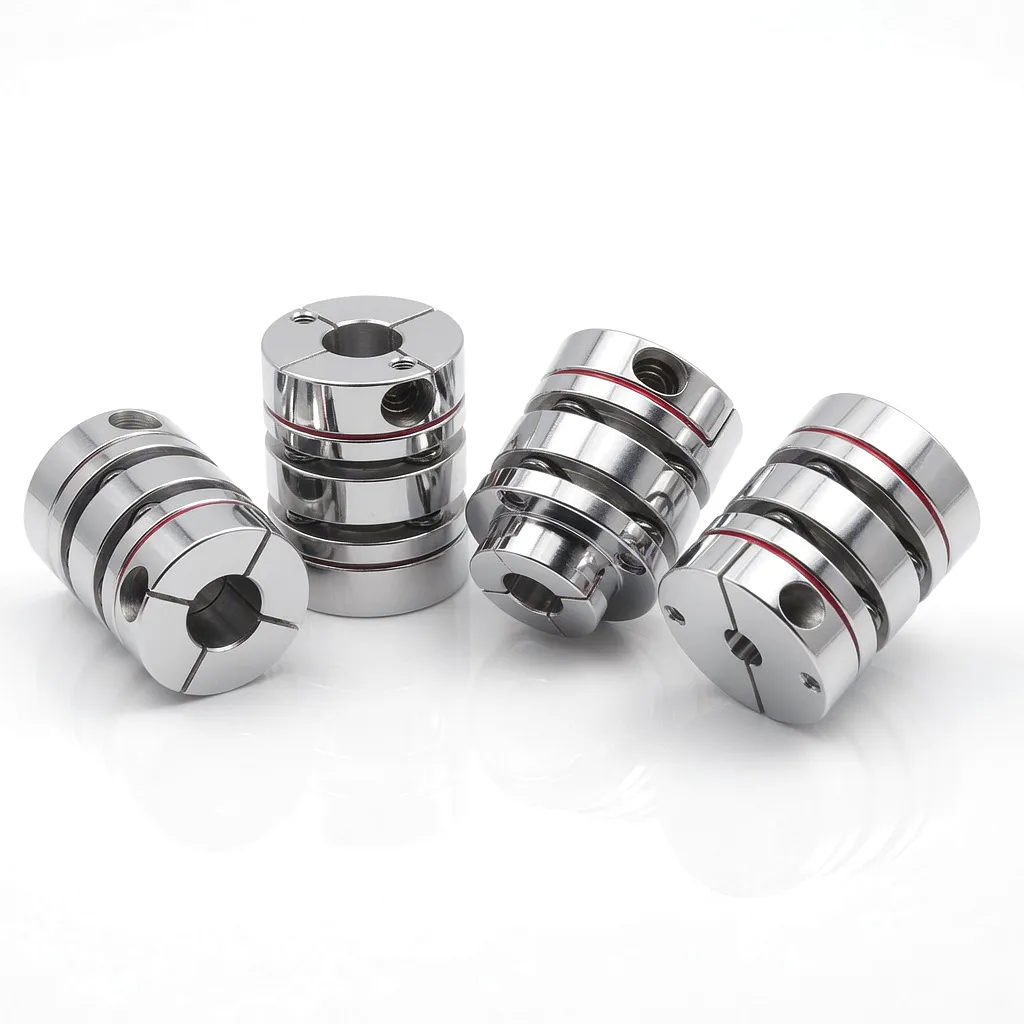
Disc coupling variant for industrial use

Beyond these core sectors, cardan couplings appear in extruder drives for plastics and rubber processing, in cement kiln tyre drives, in sugar mill tandem drives, in water and wastewater pump station drives, and in agricultural machinery from combine harvester headers to large-scale irrigation pivots. The common thread across all these applications is a requirement to transmit significant torque across a shaft intersection angle that exceeds the practical range of any flexible coupling — and to do so reliably, often in adverse environmental conditions, over an operating life that justifies the higher initial procurement cost of a properly specified cardan coupling compared with simpler coupling alternatives.

The UK market’s specific regulatory and standards environment also plays a role in cardan coupling specification. Engineers working under BS EN ISO 4301 for crane classifications, BS 7608 for fatigue of welded steel structures, or the requirements of PSSR 2000 for pressure systems that incorporate coupling-driven pumps will find that documented material certifications, dimensional traceability, and factory acceptance test records — all standard features of Ever Power’s supply documentation — are essential elements of regulatory compliance rather than optional extras. This documentation culture, well established in the British engineering sector, aligns directly with the manufacturing quality systems that premium cardan coupling suppliers operate.

Ever Power: Precision Manufacturing and Customisation Capability

Ever Power stands as one of the most capable cardan coupling manufacturers supplying the UK and global industrial markets today. The company’s manufacturing facility is equipped with a dedicated heavy machining shop, where CNC vertical and horizontal turning centres with swing diameters up to 3,000 mm handle the roughing and precision finishing of large yoke forgings. Turning, hobbing, and gear grinding operations for splined tube assemblies are carried out on dedicated gear-cutting and grinding machines maintained to achieve tooth-to-tooth DIN 3962 quality levels. The entire machining flow is controlled under a documented quality management system aligned with ISO 9001:2015, and a resident quality assurance team carries out in-process inspection at each critical stage using calibrated dimensional measurement equipment traceable to national standards.

What distinguishes Ever Power from catalogue suppliers is the depth and flexibility of its custom engineering service. When a UK buyer presents a drive application that does not fit a standard range — whether due to an unusual shaft interface geometry, a non-standard operating angle, a particularly aggressive duty cycle, or a need for a bespoke overall length to fit within a constrained machine envelope — Ever Power’s engineering team develops a complete custom design from first principles. This process includes a full torsional fatigue calculation using the ISO 10300 framework, a bearing life calculation to ISO/TS 16281, and a detailed material specification review, all of which are documented and supplied to the buyer as part of the technical dossier accompanying the order.
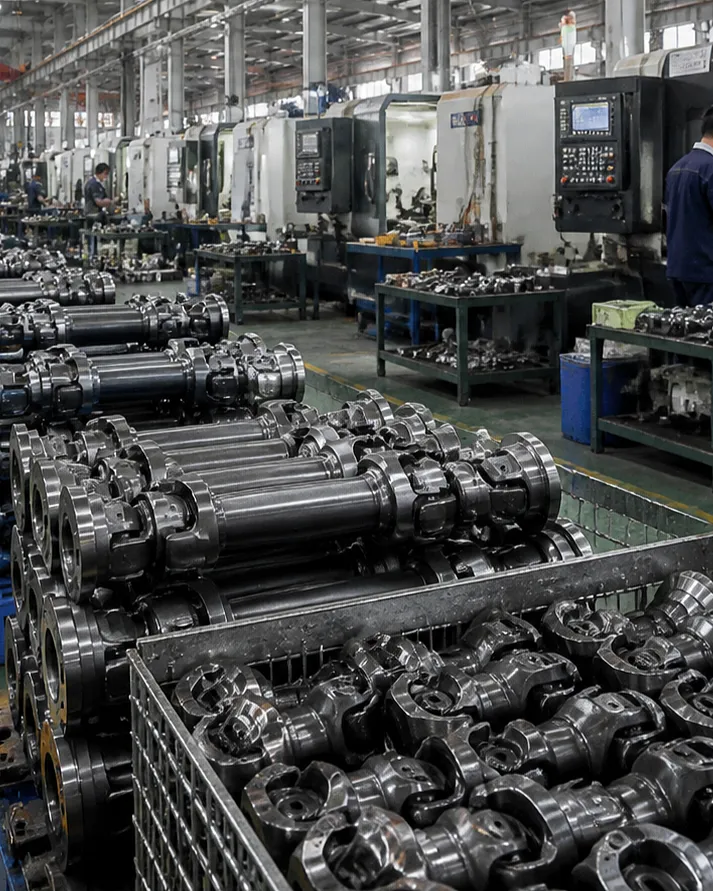
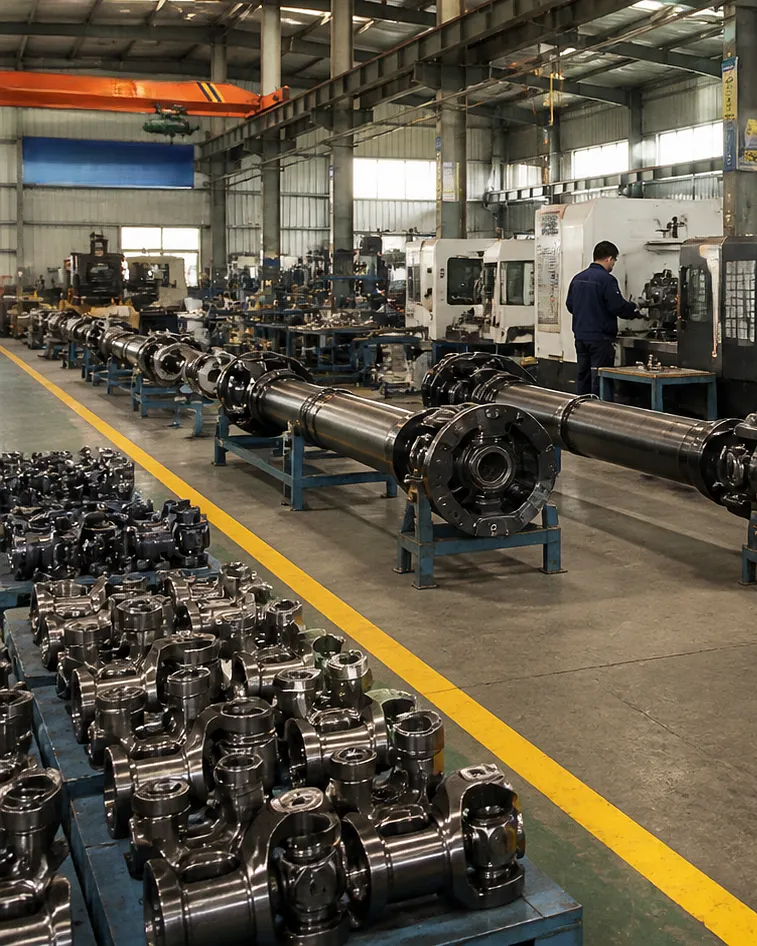
Ever Power factory floor
Ever Power precision machining

ISO 9001

Certified Quality Management, every production lot documented

30+ Years

Manufacturing cardan coupling solutions for global heavy industry

2.5M+ Nm

Maximum torque capacity in custom mill-duty designs

6–8 Wks

Standard lead time for custom cardan coupling orders to the UK

Ever Power’s supply chain infrastructure supports rapid delivery to UK buyers through established freight partnerships with LCL and FCL sea freight consolidators operating from major Chinese ports to Felixstowe, Southampton, and Liverpool. For urgent replacement orders — a not uncommon situation when a critical production coupling fails unexpectedly — Ever Power maintains a stock programme covering the most frequently ordered cross kit sizes and bearing assemblies, enabling air freight dispatch within 48 hours of order placement. UK buyers benefit from English-language technical support, with Ever Power’s engineering team available to discuss application-specific queries, review installation drawings, and advise on the correct grease specification for the operating environment.

Ready to discuss your specific cardan coupling requirement? Our technical sales team responds within one business day.

📧 Get a Quote from Ever Power

Customer Success Story: Sheffield Long Products Mill
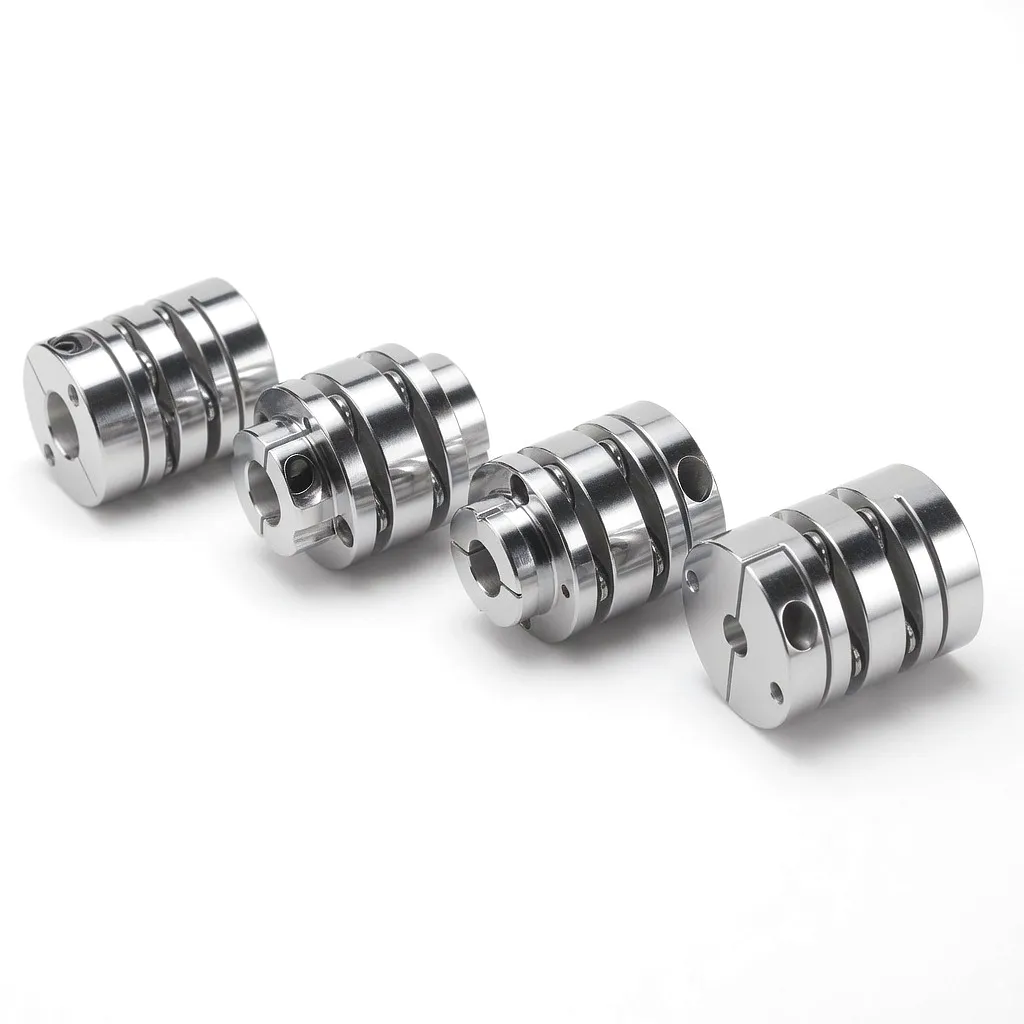
Industrial coupling installation

Case Study — Sheffield, South Yorkshire

A speciality long products rolling mill in Sheffield, producing high-specification structural angles and channels for the construction and offshore sectors, had been experiencing unacceptable cardan coupling service lives on its roughing stand drive. The existing couplings — sourced from a catalogue supplier — were designed for a nominal torque that met the steady-state rolling requirement, but the mill’s relatively aged gearbox configuration produced significant torsional shock at bite that the standard units could not absorb reliably. Over 18 months, the mill had replaced three complete coupling assemblies on the same drive position, with each unscheduled replacement costing an estimated £42,000 in lost production per incident in addition to the coupling and labour costs.

The mill’s engineering manager contacted Ever Power through the company’s UK industrial distributor. After reviewing the production data — including rolling torque logs recorded by the drive system’s monitoring equipment — Ever Power’s engineering team identified the root cause: the peak-to-nominal torque ratio at bite was reaching 4.2x, well above the 2.5x design factor of the installed coupling. Ever Power proposed a custom heavy-duty cardan coupling specification using a 34CrNiMo6 forged yoke, an 18CrNiMo7-6 case-hardened cross with an enlarged trunnion diameter, and a 4.8x peak torque design factor — all within the original coupling’s installation envelope, requiring no modification to the drive structure.

The replacement cardan coupling was delivered to the Sheffield site within seven weeks of order placement, complete with full material traceability documentation and an inspection report covering dimensional verification, hardness testing, and a factory spin-test record. Installation was carried out during a planned maintenance window by the mill’s own mechanical team using installation drawings and torque specifications supplied by Ever Power. The coupling entered service in the fourth quarter and at the time of this publication has accumulated over fourteen months of continuous operation without any maintenance intervention beyond scheduled re-greasing — eliminating the unscheduled downtime events that had plagued the drive position for the previous eighteen months. The mill engineering team has subsequently specified Ever Power cardan couplings for two further drive positions across the same rolling line.

What Our Customers Say

The custom cross specification Ever Power developed for our roughing stand completely solved a recurring failure issue that had cost us over £120,000 in downtime over 18 months. The technical detail in their engineering proposal was exceptional — they clearly understood the dynamics of a long products mill drive, and the final design has performed beyond expectations. We would not hesitate to specify Ever Power cardan couplings for future projects on this site.

James H., Senior Mechanical Engineer

Long Products Rolling Mill, Sheffield, South Yorkshire

We needed a replacement cardan coupling for a marine shaft line with an unusual flange pattern and a tight length restriction. Ever Power’s team turned around a drawing for review within three working days and had the physical unit at our Southampton fitting facility in under eight weeks. The dimensional fit was perfect, the documentation package was complete, and the price was genuinely competitive for a fully custom item. The drive has now completed a full North Sea operating season without any issues.

David M., Chief Engineer

Offshore Support Vessel Operator, Southampton, Hampshire

As a procurement specialist sourcing heavy drive components for a group of paper mills across the North of England, I deal with multiple cardan coupling suppliers. Ever Power stands out for the depth of their technical support and the quality of their delivery documentation. Every lot arrives with material certificates, hardness test records, and a dimensional inspection report — exactly what our quality team needs for incoming goods inspection. The lead time performance has been consistent, and the pricing is transparent from the quotation stage. I regard Ever Power as a key strategic supply partner for our drive maintenance programme.

Rachel T., Category Procurement Manager

Paper and Packaging Group, Leeds, West Yorkshire

Product Range Gallery
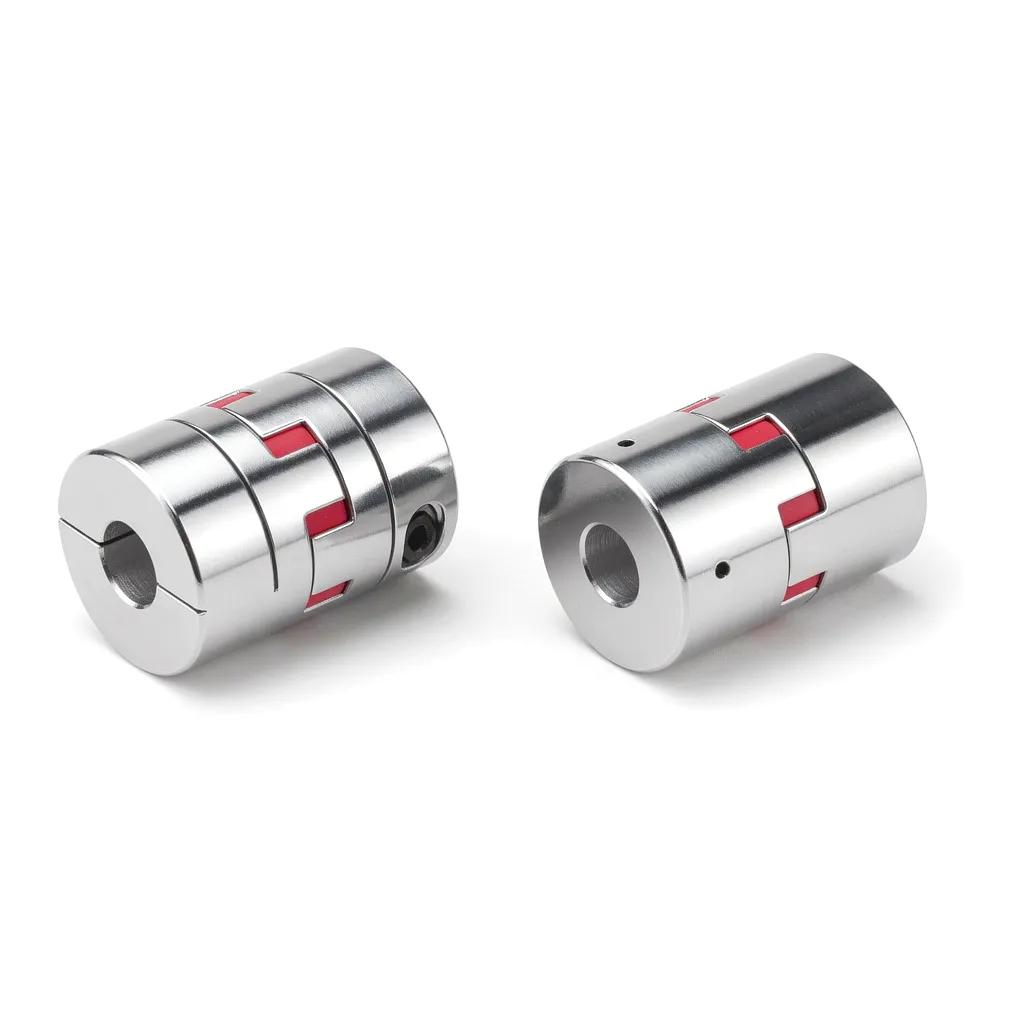
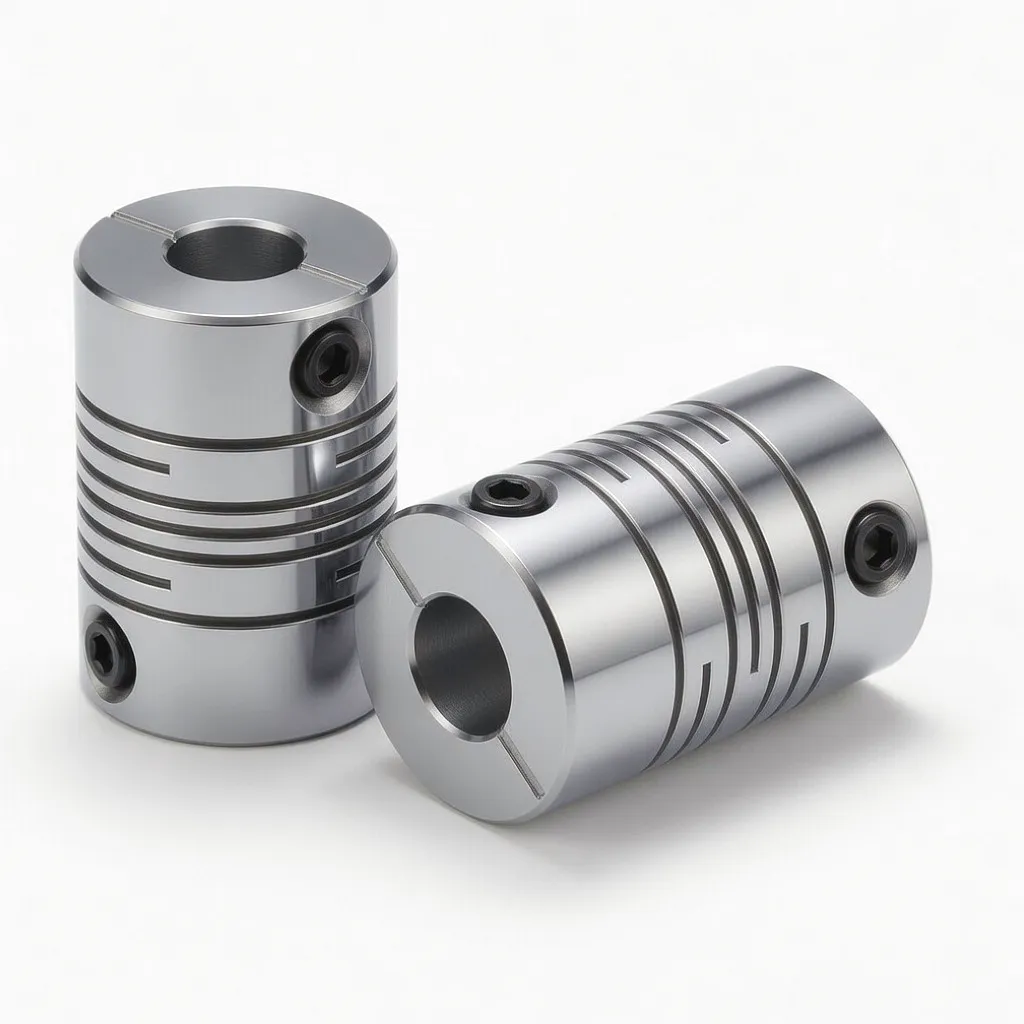
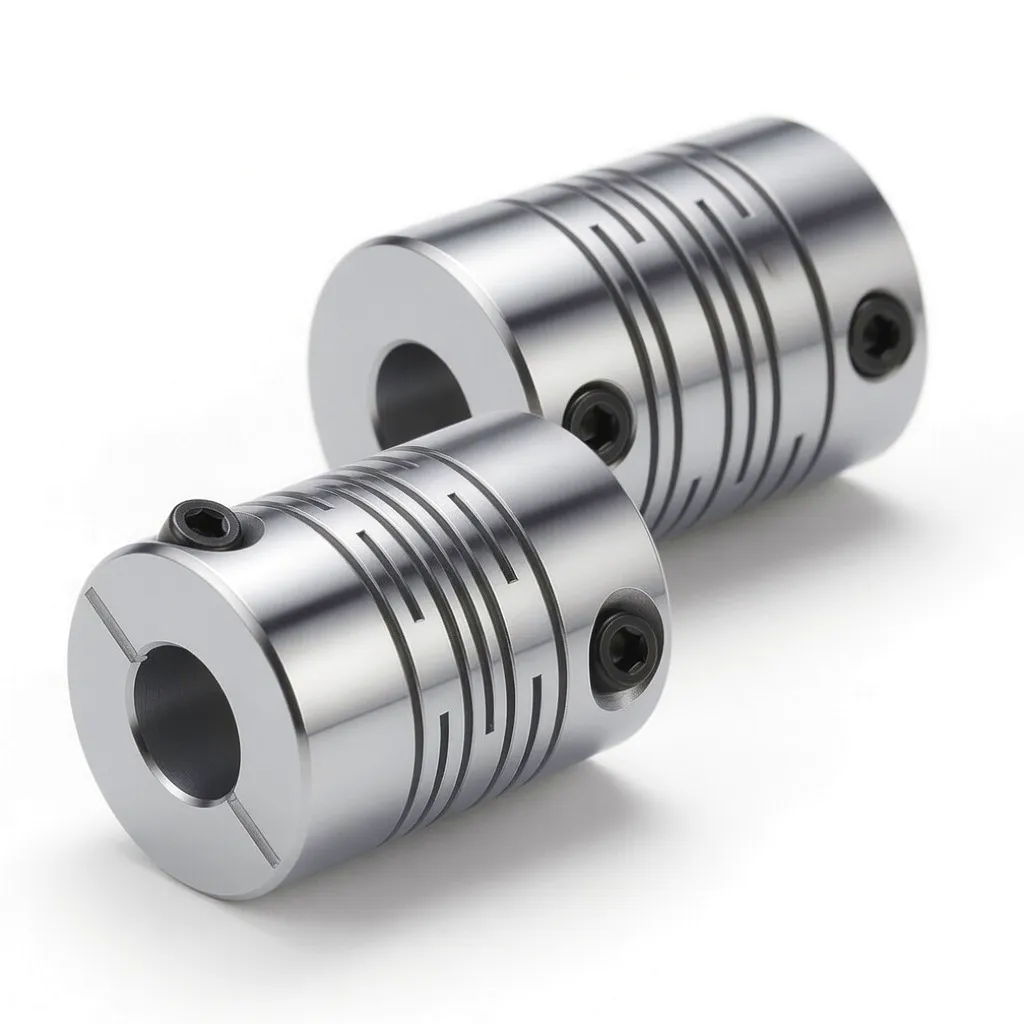
Jaw flexible coupling
Flexible beam coupling
Flexible beam coupling variant
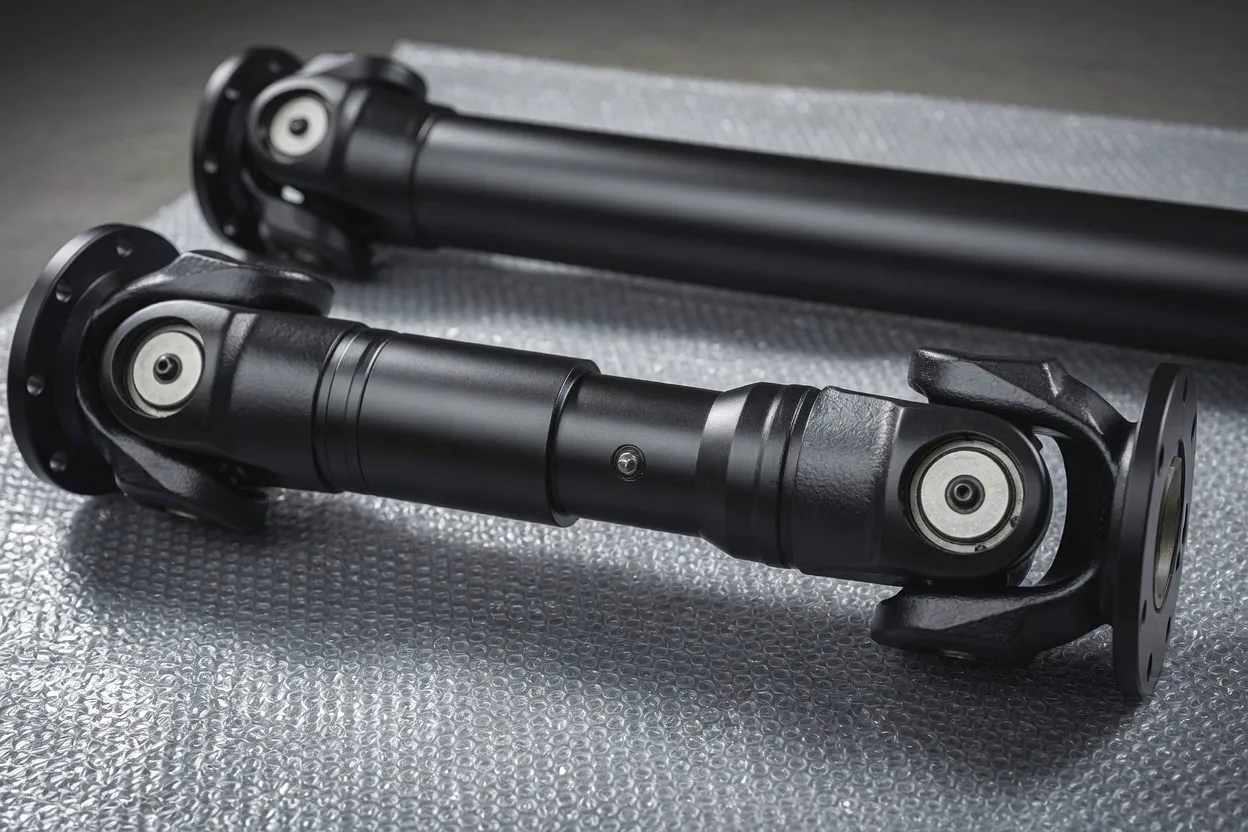
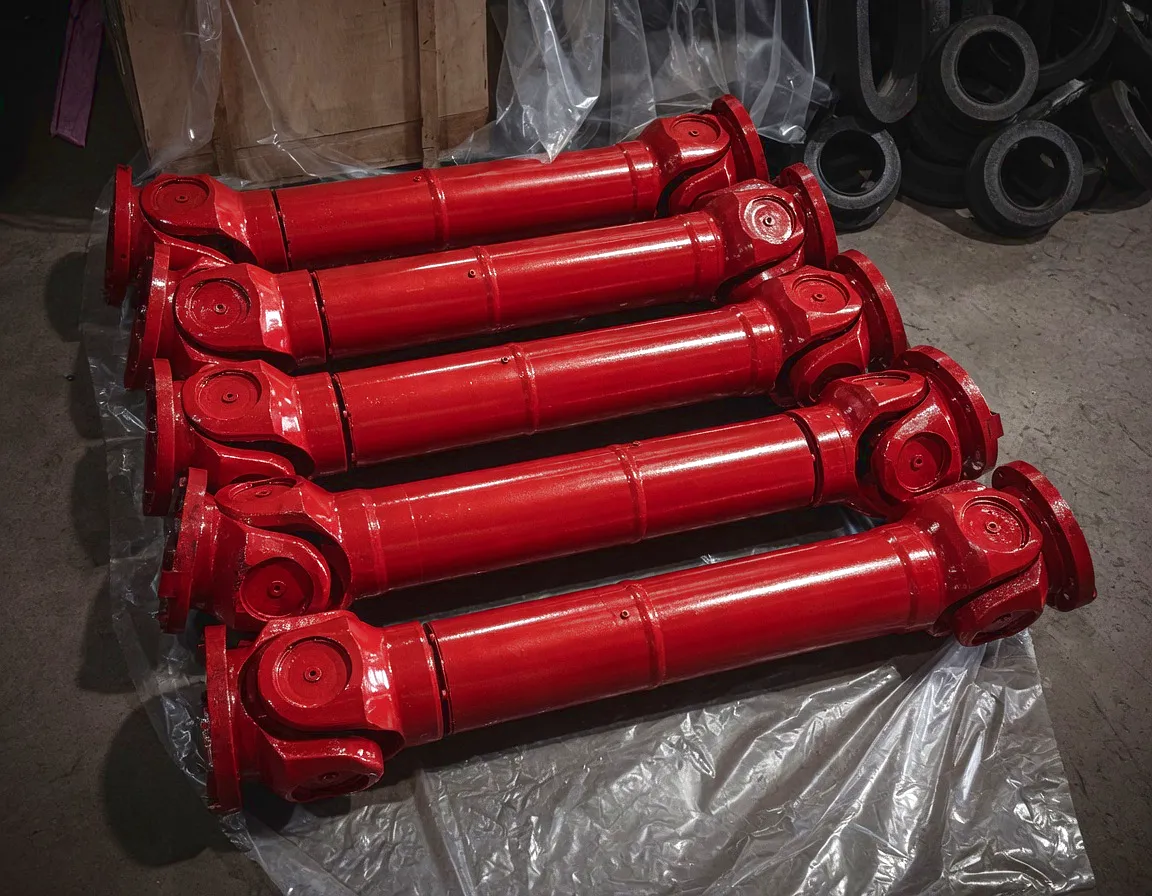
Cardan coupling assembly
Cardan coupling installed on shaft
Cardan coupling complete assembly

Frequently Asked Questions

Common questions from UK engineers and procurement professionals about cardan couplings.

What are the main components inside a cardan coupling and what does each one actually do?
A cardan coupling consists of two yokes (the structural forks attached to each shaft), a cross or spider (the cruciform trunnion piece connecting the yokes), four bearing cup assemblies with needle roller bearings (providing low-friction articulation), and a sealing and lubrication system. In double-joint designs, a centring element and splined slip tube are added. Each yoke transmits torque from its shaft into the cross; the cross allows the two yokes to operate at different angles; the needle bearings ensure the cross can articulate freely with minimal friction; and the seals protect the bearings from contamination while retaining grease.
How much does a custom cardan coupling cost, and can I get a price quote for a heavy-duty rolling mill application in the UK?
Custom cardan coupling pricing depends on the torque class, duty cycle, overall dimensions, material specification, and delivery requirements. Light and medium-duty standard units start from a few hundred pounds per assembly; heavy-duty and mill-duty custom designs can range from several thousand to tens of thousands of pounds depending on size and complexity. For UK buyers, the fastest way to get an accurate price is to email the technical details — including nominal torque, peak torque, joint angle, speed, and shaft interface geometry — to [email protected]. Ever Power typically returns a detailed quotation within one to two business days.
Which type of steel is used for the cross component of a cardan coupling, and why does the material grade matter so much?
In standard and medium-duty cardan couplings, the cross is typically manufactured from 20CrMnTi or equivalent case-hardening steel, carburised to achieve a surface hardness of 58–62 HRC with a tough lower-hardness core. For heavy and mill-duty applications, 20CrNiMo or 18CrNiMo7-6 grades are preferred because the higher nickel and molybdenum content improves core toughness and fatigue strength at the elevated section sizes involved. The cross is the highest-stressed single component in the assembly, and using an incorrect or substandard material grade is the most common root cause of premature failure in cardan couplings sourced from low-cost suppliers.
Where in the UK can I find a reliable supplier who can deliver a cardan coupling to Birmingham within a short lead time?
Ever Power supplies cardan coupling assemblies directly to industrial buyers across the UK, including Birmingham and the wider West Midlands manufacturing region. Standard catalogue units are typically held in stock for same-week dispatch; custom-engineered units are delivered within six to eight weeks from order placement. Freight is handled through established forwarding partners with regular consolidated sea shipments arriving at UK ports and onward road delivery to site. For urgent requirements, air freight dispatch can be arranged from the Ever Power factory within 48 hours for stocked spare parts and cross kit sizes.
How do I know when the cardan coupling on my industrial drive needs to be replaced or serviced?
The most common indicators of a cardan coupling requiring service or replacement include: increased vibration measured at the driveline bearings or gearbox, audible knocking or clunking at low speed or during load changes (indicating bearing wear or cross wear), visible grease leakage from the bearing cups (indicating seal failure), increased backlash detected during drive reversals, and physical inspection evidence of fretting corrosion on the splined slip section. A planned maintenance interval — typically every 6 to 12 months for re-greasing and visual inspection — catches most deterioration before it reaches failure stage. If in doubt about the service condition of a unit, Ever Power’s technical team can review inspection photos or dimensional data and advise on whether service or replacement is the appropriate action.
What is the difference between a single-joint and a double-joint cardan coupling, and which configuration should I be specifying for my application?
A single-joint cardan coupling — one cross connecting two yokes — transmits torque across an angular offset but introduces a cyclic velocity fluctuation at the output shaft, the magnitude of which increases with joint angle. A double-joint configuration uses two single joints with a centring mechanism between them to ensure both joints operate at equal angles, cancelling the velocity variation and producing constant-velocity output. If your application is sensitive to velocity variation — such as a precision machine tool, a dynamometer, or a web-handling drive — specify the double-joint configuration. If the application is a simple heavy-duty drive where some velocity variation is acceptable and does not affect product quality or cause harmful resonance, the single-joint unit is a simpler and more economical choice.
Who should I contact at Ever Power to get a technical quotation for a cardan coupling for my steel mill in Sheffield or a processing plant in Birmingham?
The best point of contact is the Ever Power technical sales team at [email protected]. Whether you are based in Sheffield, Birmingham, Leeds, Manchester, Bristol, or anywhere else in the UK, the team handles enquiries in English and responds within one business day. When sending your enquiry, include as much technical detail as possible — nominal torque, peak torque, speed, joint angle, shaft sizes, flange bolt patterns, overall length constraints, and any relevant process environment information. The more context you provide, the more accurate and detailed the initial technical proposal will be.

Ever Power — Cardan Coupling Specialists

Discuss Your Drive Application with Our Engineering Team

Custom cardan coupling design, standard range supply, and full technical documentation for UK industrial buyers. ISO 9001 certified. 30+ years of precision manufacturing experience.

📧 Get a Quote Now

edit by gzl