What Exactly Is a Cardan Coupling?
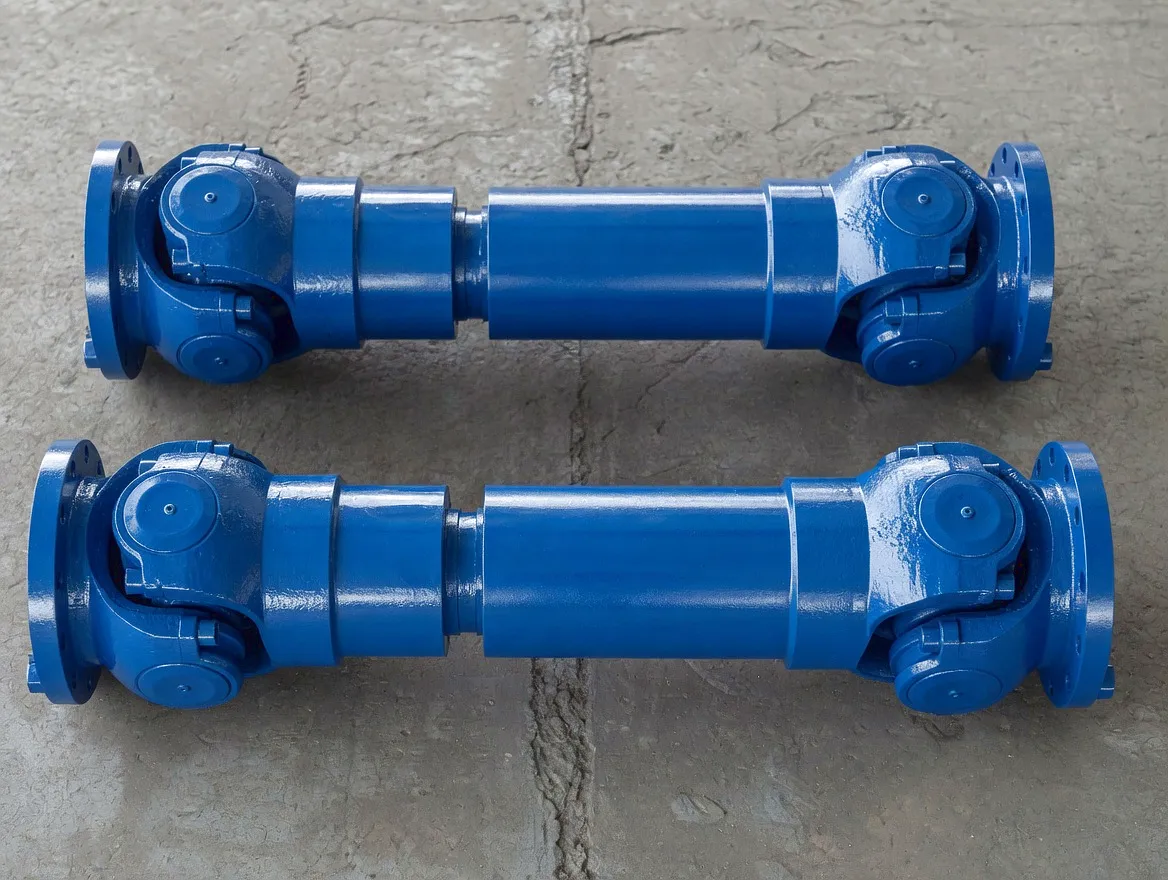
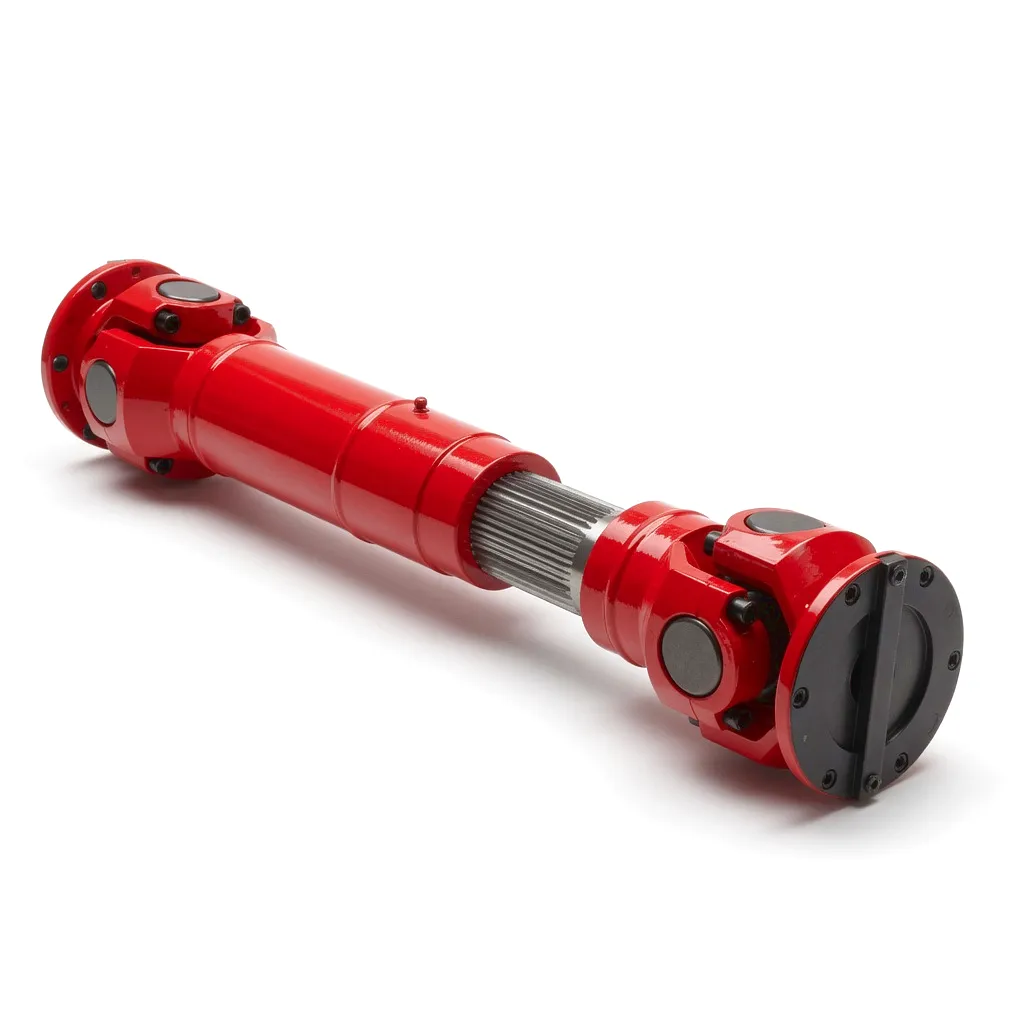
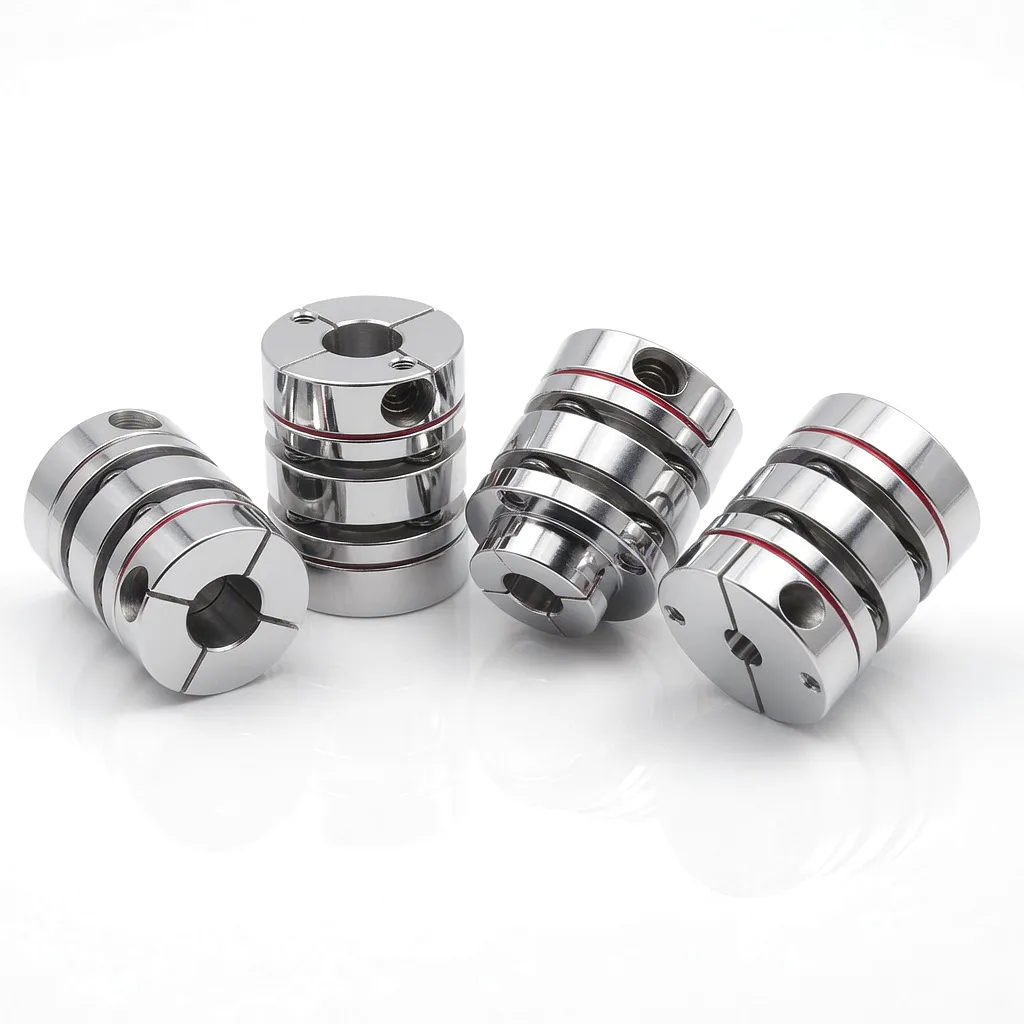
A cardan coupling is a mechanical device engineered to transmit rotational torque between two shafts that are not in perfect linear alignment. Unlike flexible jaw couplings or disc couplings, the cardan coupling accommodates both angular misalignment and, in double-joint configurations, parallel offset — making it the preferred solution where shaft axes diverge by angles ranging from a few degrees up to 35° or even beyond in specialised designs. The name traces back to the Italian polymath Gerolamo Cardano, though the practical development of the device is attributed more directly to Robert Hooke, which is why you will frequently encounter the term “Hooke’s joint” in British engineering documentation and British Standards publications.
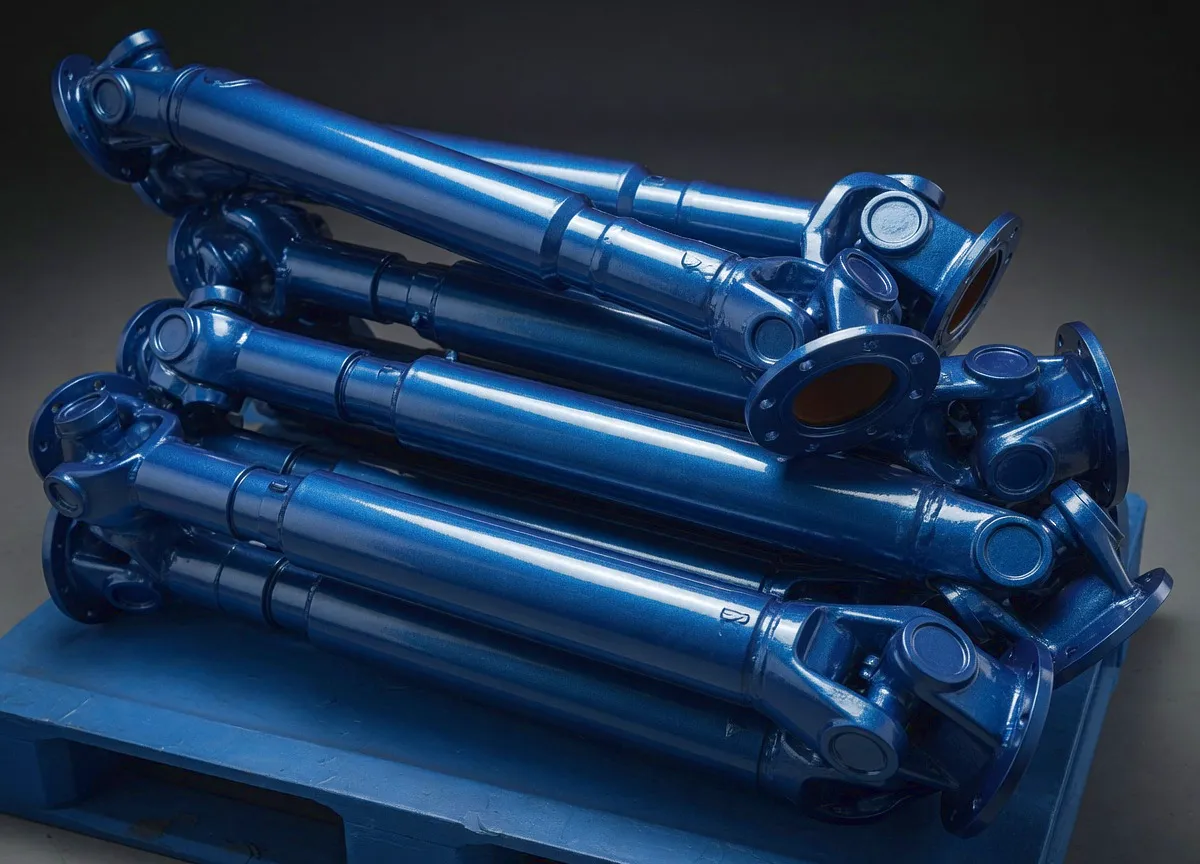
In British industry — particularly in the heavy engineering corridors of the West Midlands, Yorkshire, and the Northeast — the cardan coupling forms the backbone of rolling mills, extruders, drivelines for rail maintenance vehicles, marine propulsion systems, and printing presses. Its strength-to-weight ratio, combined with its capacity to operate continuously under high cyclic loads, makes it a component that maintenance engineers often specify once and rely on for years. Understanding the anatomy of a cardan coupling means understanding why it outperforms alternatives in demanding duty cycles, and why the quality of its internal components translates directly into machine reliability.
The Core Components: An Inside-Out Anatomy
Component 01
The Yoke (Fork)
Component 02
The Cross (Spider / Trunnion Cross)
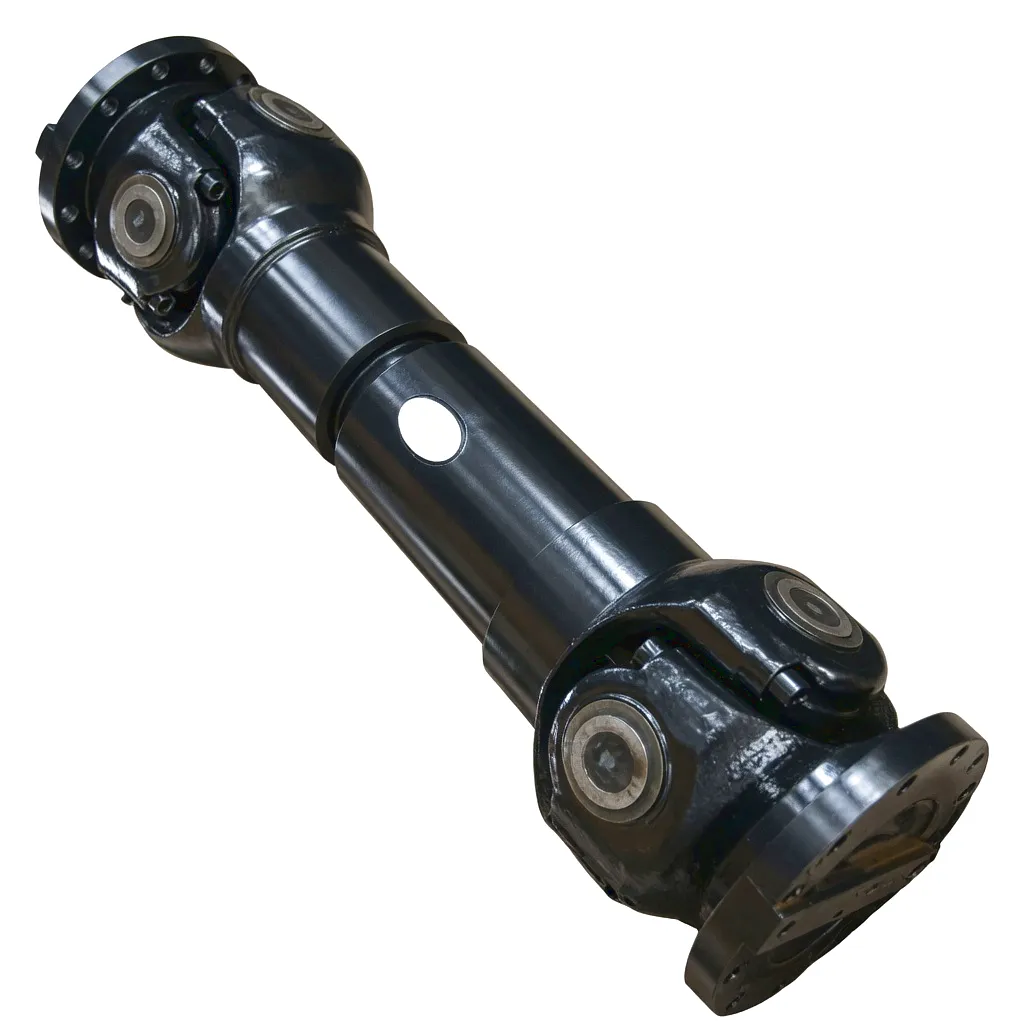
If the yoke is the arm of a cardan coupling, the cross — also called the spider or trunnion cross — is its heart. This cruciform piece, machined from a single billet of alloy steel, provides the four trunnion pins on which the bearing assemblies rotate. The four-pin geometry is what enables the two yokes to rotate at different angles to each other while still transmitting torque continuously. The cross is the single component that bears the highest bending and shear stresses in the entire assembly, which is why it is almost universally manufactured from case-hardened alloy steel with a carburised surface, providing a hard wear-resistant outer layer over a tough, impact-resistant core.
The trunnion pin diameter, pin-centre distance, and pin surface finish are the three dimensional parameters most closely scrutinised during quality inspection. Surface roughness on the trunnion journal is typically specified at Ra 0.4 µm or better to ensure optimal needle bearing life. In heavy industrial cardan coupling units destined for rolling mill drive lines in locations like Rotherham or Scunthorpe, the cross is regularly subjected to peak torque events that can multiply the nominal load by a factor of three or more during mill bite impacts. For this reason, manufacturers such as Ever Power engineer the cross geometry with generous fillet radii at the root of each trunnion, minimising stress concentration and extending fatigue life well beyond standard design expectations.
Component 03
Bearing Cups and Needle Roller Bearings
Component 04
The Centering Element and Ball Stud
In double-joint cardan coupling configurations — which are the configuration of choice wherever constant-velocity (CV) output is required — a centering element is positioned between the two single joints to maintain a fixed geometric relationship between the input and output shafts. The centering element, which typically takes the form of a ball-and-socket or centring ball stud assembly, ensures that each single joint in the double-joint arrangement operates at equal and opposite angles to the centreline. This equal-angle condition is the physical requirement that cancels out the velocity fluctuation inherent in each individual Hooke’s joint, producing smooth constant-velocity output at the driven shaft — a fundamental requirement for applications such as marine propeller shafts, automotive driveshafts, and the feed drives of precision CNC machine tools found in West Midlands manufacturing facilities.
The ball stud at the centre of the centring mechanism is manufactured from case-hardened alloy steel, and its spherical surface is ground to achieve a consistent contact area against the mating socket. Grease retention grooves machined into the ball surface ensure that lubricant is maintained at the sliding contact interface throughout the operating life. The centring element itself is typically fabricated from a polymer or sintered bronze material that provides low-friction sliding characteristics while tolerating the oscillatory motion imposed by the shaft articulation angle. In high-cycle applications, the centring mechanism is the component most likely to show wear first, which is why it is engineered as a serviceable item in premium cardan coupling designs — allowing targeted replacement without disturbing the rest of the assembly.
Component 05
Seals, Grease Nipples, and Lubrication Provisions
No discussion of cardan coupling anatomy is complete without addressing the sealing system and lubrication provisions, because no mechanical component — regardless of how precisely it is made — will perform reliably if contamination enters the bearing zones or if grease escapes under centrifugal action. The sealing system of a cardan coupling operates under a demanding combination of conditions: oscillatory motion at variable angles, centrifugal forces at high rotational speeds, and exposure to external contaminants that in industrial environments can include water, process scale, cutting fluids, and fine metallic particles.
Each bearing cup is fitted with a seal — typically a nitrile rubber (NBR) or fluoroelastomer (FKM/Viton) lip seal in premium units — that prevents both ingress of contaminants and egress of lubricant. In cardan coupling units specified for high-speed applications, additional labyrinth-type seal elements are incorporated to provide secondary protection without introducing excessive friction torque. The lubrication system is accessed through grease nipples threaded into the cross body or the bearing cap retaining system, positioned such that grease under pressure can be driven through to reach each needle bearing in sequence. The grease specification matters: EP2 lithium complex grease is the standard in the UK market, though high-temperature or high-speed variants may require specialist greases with specific NLGI grades, shear stability ratings, and temperature ranges that are specified in the engineering documentation supplied with the coupling.
Working Principle: How Torque Moves Through a Cardan Coupling
The operating principle of a cardan coupling is rooted in a simple geometric truth: when two shafts connected by a Hooke’s joint rotate about their respective axes, the cross must oscillate about two perpendicular axes simultaneously to keep both yokes engaged. This dual-axis oscillation is what allows the assembly to accommodate an angular misalignment between the shaft centrelines. The driving yoke rotates at constant angular velocity; the cross transmits this rotation through its trunnion pins to the driven yoke. Because the two pairs of trunnion pins are in perpendicular planes, the driven yoke’s instantaneous angular velocity fluctuates relative to that of the driving yoke — a phenomenon known as the velocity ratio variation or the “kinematic non-uniformity” of the single Hooke’s joint.
The magnitude of this velocity fluctuation increases as the shaft intersection angle increases. The relationship is: the output velocity v_out equals v_in multiplied by cos(beta) divided by (1 minus sin²(beta) times sin²(theta)), where beta is the joint angle and theta is the input shaft rotation angle. At joint angles below 5°, this fluctuation is negligibly small, but at 20° it becomes large enough to induce noticeable torsional vibrations in the driveline — which is why the double-joint constant-velocity configuration, with its geometric cancellation of velocity variation, is critical in precision applications. Understanding this principle is also why cardan coupling manufacturers specify maximum operating angles: not because the coupling cannot physically articulate further, but because the torque amplification associated with high joint angles rapidly increases bearing loads and reduces service life.
The torque transmission path in a cardan coupling runs from the input shaft, through the keyway or spline into the driving yoke, then through the trunnion pins and needle bearings into the cross, and finally back through the opposite pair of trunnion pins into the driven yoke, and from there to the output shaft. Every interface in this path — the shaft-to-yoke connection, the needle bearing contact, the cross journal surface — must be engineered to tolerate both the nominal transmitted torque and the dynamic torque peaks generated by the machinery. In rolling mills, for example, the bite impact when a billet enters the rolls can generate transient torques four to five times the nominal running torque, and the cardan coupling must absorb these without yielding, cracking, or losing dimensional integrity.
Key Mechanical Facts
● Single joint: velocity varies with angle
● Double joint: constant velocity output
● Angle range: up to 35° (standard)
● Torque path: yoke → cross → yoke
Materials: What Cardan Coupling Components Are Made From
Yoke / Fork
Forged Alloy Steel
42CrMo4 / 4140 steel, hardened and tempered to 28–34 HRC. Forged grain flow ensures superior fatigue resistance under cyclic bending loads.
Cross / Spider
Case-Hardened Alloy Steel
20CrMnTi / 8620 steel, carburised to case depth 0.8–1.2 mm, case hardness 58–62 HRC, tough core at 30–38 HRC. Maximum wear resistance on trunnion journals.
Bearing Cups
Bearing Steel
GCr15 / 52100 through-hardened bearing steel, 60–64 HRC. Internal bore ground to H7 tolerance. Resists rolling contact fatigue from needle elements.
Seals
NBR / FKM Elastomer
Nitrile rubber (NBR) for general industrial use; Viton (FKM) for elevated temperatures up to 200°C or where chemical resistance to process fluids is required.
Slip Spline Tube
E355 / 1026 Steel
Seamless precision tube or solid bar, splined to DIN 5481 or customer specification. Phosphate-treated and greased for smooth axial plunge without fretting corrosion.
Product Technical and Performance Parameters
The table below presents representative technical data for standard cardan coupling series manufactured by Ever Power. Custom specifications are available across all parameters — contact the technical sales team for duty-specific design calculations.
| Parameter | Light Duty (SWC-B) | Medium Duty (SWC-C) | Heavy Duty (SWC-D) | Mill Duty (SWC-WD) |
|---|---|---|---|---|
| Nominal Torque (Nm) | Up to 3,150 | 3,150 – 31,500 | 31,500 – 315,000 | 315,000 – 2,500,000+ |
| Peak Torque Factor | 2.0x | 2.5x | 3.0x | 4.0x – 5.0x |
| Max. Joint Angle (°) | 35° | 25° | 20° | 15° – 18° |
| Max. Operating Speed (rpm) | Up to 3,000 | Up to 1,500 | Up to 750 | Up to 300 |
| Yoke Material | 42CrMo4 / Ductile Iron | 42CrMo4 Forged | 42CrMo4 Forged | 34CrNiMo6 Forged |
| Cross Material | 20CrMnTi Case Hd. | 20CrMnTi Case Hd. | 20CrNiMo Case Hd. | 18CrNiMo7-6 Case Hd. |
| Trunnion Hardness (HRC) | 58 – 62 | 58 – 62 | 60 – 64 | 60 – 64 |
| Seal Type | NBR Lip | NBR Lip / Labyrinth | FKM Lip + Labyrinth | FKM Multi-Lip + Felt |
| Flange Connection | DIN / Keyway / Spline | DIN / Spline / Custom | Flange / Spline | Heavy Flange / Involute Spline |
| Axial Plunge (mm) | Optional | 50 – 200 | 100 – 500 | 200 – 1,000+ |
| Surface Treatment | Paint / Zinc Plate | Paint / Phosphate | Epoxy Paint | High-Build Epoxy |
Core Technical Advantages of Cardan Coupling Design
Why industrial engineers across the UK consistently specify cardan couplings for demanding drive applications.
High Angular Misalignment Capacity
Standard cardan coupling units accommodate operating angles up to 35° continuously, and engineered custom designs can exceed this in intermittent service. No flexible element coupling, disc coupling, or jaw coupling comes close to this angular range, making cardan couplings irreplaceable wherever driven and driving shaft centrelines cannot be aligned due to structural, thermal, or process constraints.
High Torque-to-Weight Ratio
The all-steel construction and needle-bearing articulation of a cardan coupling delivers exceptional torque capacity relative to the component mass. Mill-duty units transmitting over two million Newton-metres are feasible at weights and envelope dimensions that no alternative coupling type can match. This efficiency is critical in large drive systems where minimising rotating mass reduces bearing loads throughout the machine.
Axial Displacement Compensation
The splined slip tube section within a cardan coupling permits controlled axial movement along the shaft centreline, absorbing thermal expansion, vibration, and positional variations without imposing axial thrust loads on the connected machine bearings. This is a significant structural advantage in hot mill environments or long driveshafts where thermal differential between start-up and operating temperature can generate centimetres of linear movement.
No Elastomeric Elements — No Temperature Limits
Unlike flexible jaw, tyre, or disc couplings, the cardan coupling contains no rubber or polymer drive elements in the torque path. All torque is transmitted through hardened steel-to-steel interfaces and needle bearings. This gives the cardan coupling a wide operating temperature range — typically from -40°C to +200°C in standard configurations — making it reliable in both cold-store environments and high-temperature process drives without risk of elastomeric degradation, hardening, or creep.
Component-Level Serviceability
A well-designed cardan coupling can be serviced at the component level — bearing cup assemblies, seals, and the cross can all be replaced individually without purchasing a new complete unit. This dramatically reduces the total lifetime cost of the drive system and aligns with the planned maintenance culture prevalent in UK manufacturing facilities that operate under OEE and TPM frameworks. Replacement cross kits and bearing assemblies stocked locally mean that unscheduled downtime is measured in hours rather than weeks.
Industrial Application Scenarios Across the UK
Ever Power: Precision Manufacturing and Customisation Capability
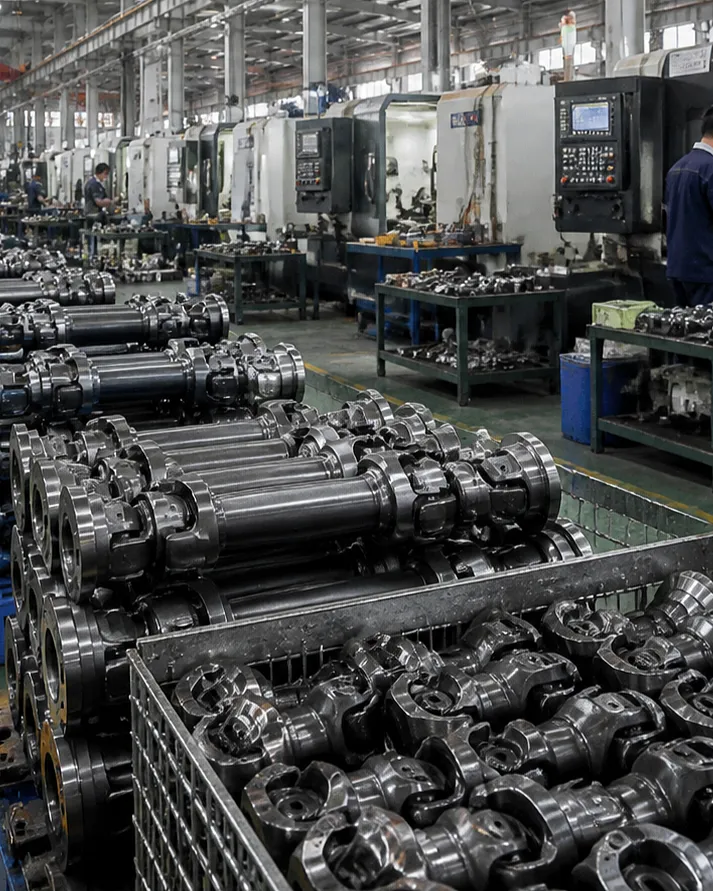
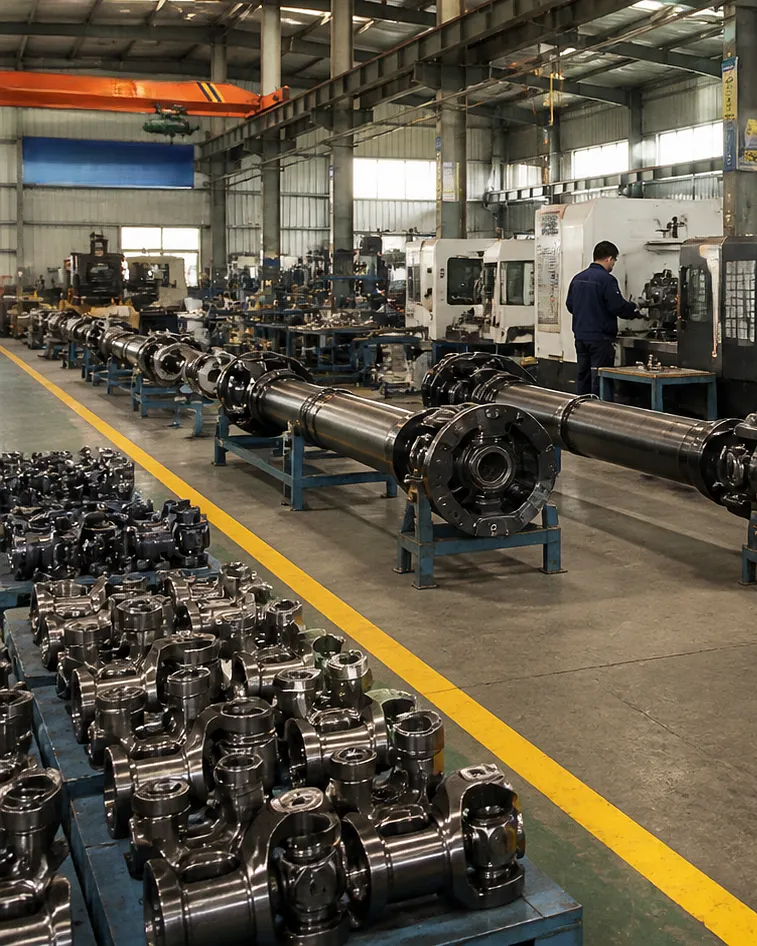
Ever Power stands as one of the most capable cardan coupling manufacturers supplying the UK and global industrial markets today. The company’s manufacturing facility is equipped with a dedicated heavy machining shop, where CNC vertical and horizontal turning centres with swing diameters up to 3,000 mm handle the roughing and precision finishing of large yoke forgings. Turning, hobbing, and gear grinding operations for splined tube assemblies are carried out on dedicated gear-cutting and grinding machines maintained to achieve tooth-to-tooth DIN 3962 quality levels. The entire machining flow is controlled under a documented quality management system aligned with ISO 9001:2015, and a resident quality assurance team carries out in-process inspection at each critical stage using calibrated dimensional measurement equipment traceable to national standards.
What distinguishes Ever Power from catalogue suppliers is the depth and flexibility of its custom engineering service. When a UK buyer presents a drive application that does not fit a standard range — whether due to an unusual shaft interface geometry, a non-standard operating angle, a particularly aggressive duty cycle, or a need for a bespoke overall length to fit within a constrained machine envelope — Ever Power’s engineering team develops a complete custom design from first principles. This process includes a full torsional fatigue calculation using the ISO 10300 framework, a bearing life calculation to ISO/TS 16281, and a detailed material specification review, all of which are documented and supplied to the buyer as part of the technical dossier accompanying the order.
ISO 9001
Certified Quality Management, every production lot documented
30+ Years
Manufacturing cardan coupling solutions for global heavy industry
2.5M+ Nm
Maximum torque capacity in custom mill-duty designs
6–8 Wks
Standard lead time for custom cardan coupling orders to the UK
Ever Power’s supply chain infrastructure supports rapid delivery to UK buyers through established freight partnerships with LCL and FCL sea freight consolidators operating from major Chinese ports to Felixstowe, Southampton, and Liverpool. For urgent replacement orders — a not uncommon situation when a critical production coupling fails unexpectedly — Ever Power maintains a stock programme covering the most frequently ordered cross kit sizes and bearing assemblies, enabling air freight dispatch within 48 hours of order placement. UK buyers benefit from English-language technical support, with Ever Power’s engineering team available to discuss application-specific queries, review installation drawings, and advise on the correct grease specification for the operating environment.
Ready to discuss your specific cardan coupling requirement? Our technical sales team responds within one business day.
Customer Success Story: Sheffield Long Products Mill
What Our Customers Say
“
The custom cross specification Ever Power developed for our roughing stand completely solved a recurring failure issue that had cost us over £120,000 in downtime over 18 months. The technical detail in their engineering proposal was exceptional — they clearly understood the dynamics of a long products mill drive, and the final design has performed beyond expectations. We would not hesitate to specify Ever Power cardan couplings for future projects on this site.
James H., Senior Mechanical Engineer
Long Products Rolling Mill, Sheffield, South Yorkshire
“
We needed a replacement cardan coupling for a marine shaft line with an unusual flange pattern and a tight length restriction. Ever Power’s team turned around a drawing for review within three working days and had the physical unit at our Southampton fitting facility in under eight weeks. The dimensional fit was perfect, the documentation package was complete, and the price was genuinely competitive for a fully custom item. The drive has now completed a full North Sea operating season without any issues.
David M., Chief Engineer
Offshore Support Vessel Operator, Southampton, Hampshire
“
As a procurement specialist sourcing heavy drive components for a group of paper mills across the North of England, I deal with multiple cardan coupling suppliers. Ever Power stands out for the depth of their technical support and the quality of their delivery documentation. Every lot arrives with material certificates, hardness test records, and a dimensional inspection report — exactly what our quality team needs for incoming goods inspection. The lead time performance has been consistent, and the pricing is transparent from the quotation stage. I regard Ever Power as a key strategic supply partner for our drive maintenance programme.
Rachel T., Category Procurement Manager
Paper and Packaging Group, Leeds, West Yorkshire
Product Range Gallery
Frequently Asked Questions
Common questions from UK engineers and procurement professionals about cardan couplings.
Ever Power — Cardan Coupling Specialists
Discuss Your Drive Application with Our Engineering Team
Custom cardan coupling design, standard range supply, and full technical documentation for UK industrial buyers. ISO 9001 certified. 30+ years of precision manufacturing experience.
edit by gzl